


Colonization and local host response following intramammary Staphylococcus chromogenes challenge in dry cows
- PMID: 34711282
- PMCID: PMC8554945
- DOI: 10.1186/s13567-021-01007-8
Colonization and local host response following intramammary Staphylococcus chromogenes challenge in dry cows
Abstract
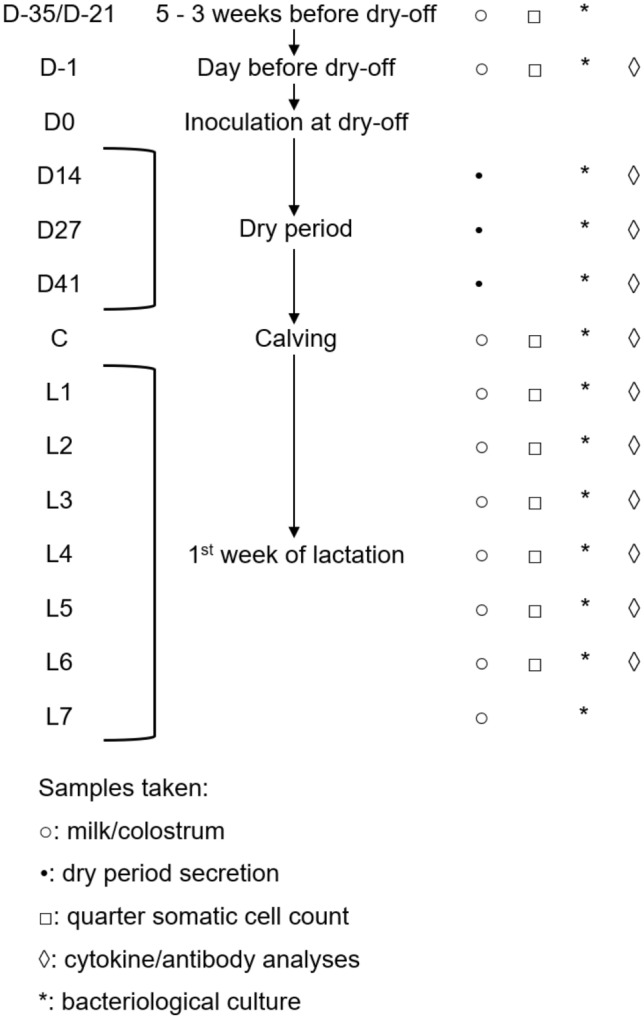
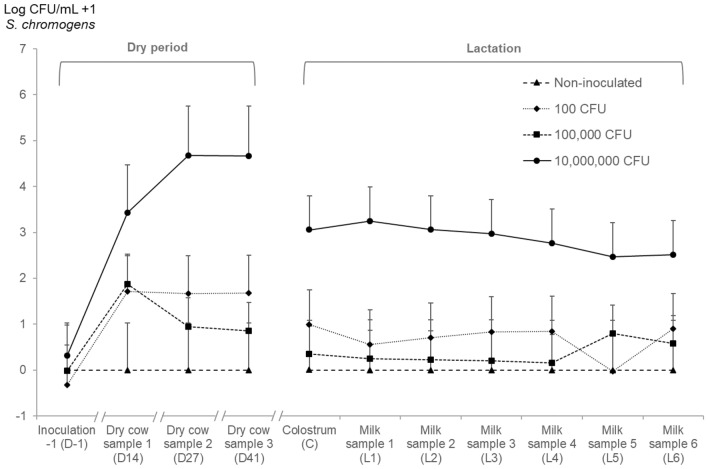
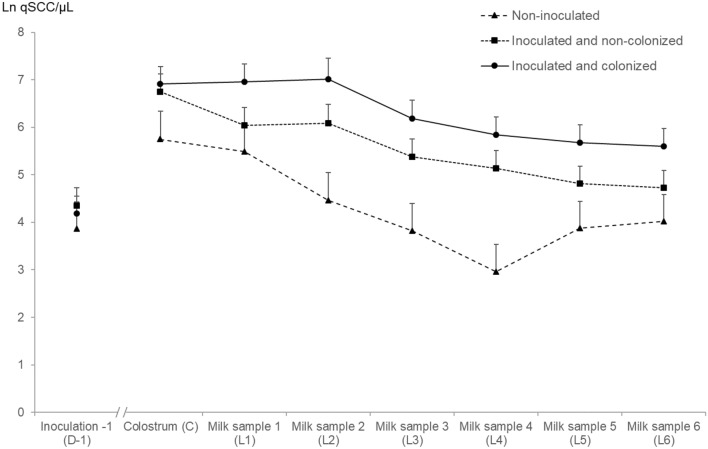
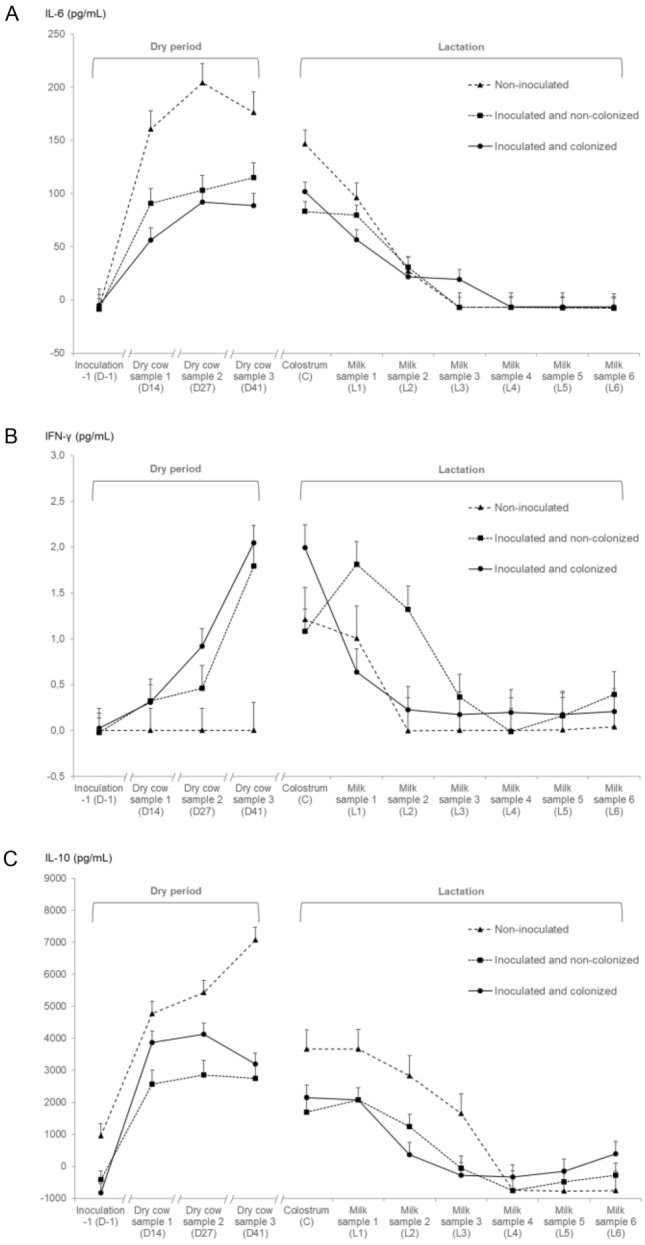
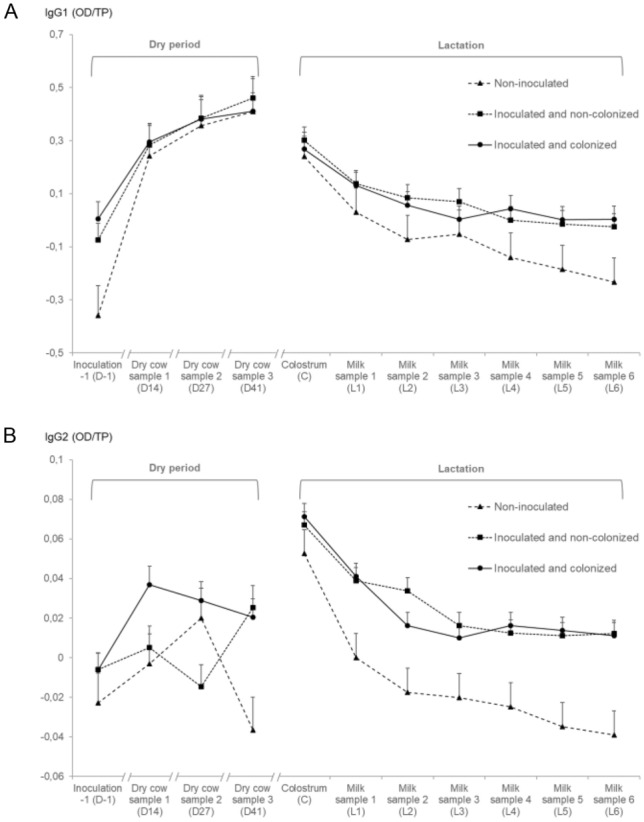
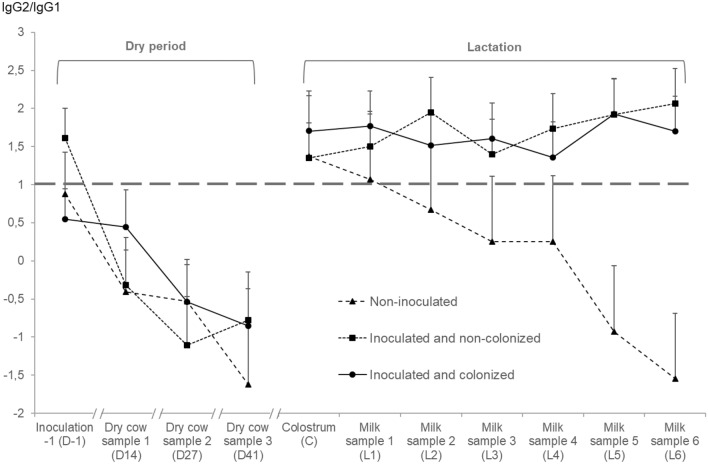
Although extensive research has been performed on bovine non-aureus staphylococci (NAS), several aspects such as bacteria-host interaction remain largely unstudied. Moreover, only a few mastitis pathogen challenge studies in cows have been conducted in the dry period, an important period that allows intramammary infection (IMI) to cure and new IMI to occur. We challenged 16 quarters of 4 Holstein Friesian cows at dry off with 100; 100 000 or 10 000 000 CFU of the udder-adapted S. chromogenes IM strain. Four quarters from one cow served as negative controls. Internally sealed quarters remained untouched, whereas non-sealed quarters were sampled 3 times during the dry period. After parturition, colostrum and daily milk samples were taken during the first week of lactation of all quarters. In total, 8 quarters appeared to be colonized, since S. chromogenes IM was recovered at least once during the experiment, as substantiated using Multilocus Sequence Typing. S. chromogenes IM shedding was highest in dry quarters inoculated with 10 000 000 CFU. Colonized quarters had the highest quarter somatic cell count (qSCC) in early lactation. Inoculated quarters (both colonized and non-colonized) had lower IL-6 and IL-10 concentrations in the dry period, whilst IFN-γ levels tended to be higher in colonized quarters compared to non-inoculated quarters. Also, IgG2 levels were higher in inoculated compared to non-inoculated quarters and the IgG2/IgG1 ratio was on average above 1. To conclude, we showed that dry quarters can be colonized with S. chromogenes IM, resulting in a shift towards a Th1 response in late gestation and early lactation characterised by an increased IgG2 concentration. However, further research is needed to confirm our findings.
Keywords: Dry period; IFN-γ; IL-10; IL-6; IgG1; IgG2; Staphylococcus chromogenes; intramammary challenge; non-aureus staphylococci.
© 2021. The Author(s).
Conflict of interest statement
The authors declare that they have no competing interests.
Figures
References
-
- Piepers S, De Meulemeester L, de Kruif A, Opsomer G, Barkema HW, De Vliegher S. Prevalence and distribution of mastitis pathogens in subclinically infected dairy cows in Flanders, Belgium. J Dairy Res. 2007;74:478–483. - PubMed
-
- Pyörälä S, Taponen S. Coagulase-negative staphylococci—emerging mastitis pathogens. Vet Microbiol. 2009;134:3–8. - PubMed
-
- Schukken YH, González RN, Tikofsky LL, Schulte HF, Santisteban CG, Welcome FL, Bennett GJ, Zurakowski MJ, Zadoks RN. CNS mastitis: nothing to worry about? Vet Microbiol. 2009;134:9–14. - PubMed
-
- Tenhagen BA, Köster G, Wallmann J, Heuwieser W. Prevalence of mastitis pathogens and their resistance against antimicrobial agents in dairy cows in Brandenburg, Germany. J Dairy Sci. 2006;89:2542–2551. - PubMed
-
- Wuytack A, De Visscher A, Piepers S, Boyen F, Haesebrouck F, De Vliegher S. Distribution of non-aureus staphylococci from quarter milk, teat apices, and rectal feces of dairy cows, and their virulence potential. J Dairy Sci. 2020;103:10658–10675. - PubMed
MeSH terms
Supplementary concepts
Grants and funding
LinkOut - more resources
Full Text Sources
Medical
