


Modulating Sirtuin Biology and Nicotinamide Adenine Diphosphate Metabolism in Cardiovascular Disease-From Bench to Bedside
- PMID: 34712151
- PMCID: PMC8546231
- DOI: 10.3389/fphys.2021.755060
Modulating Sirtuin Biology and Nicotinamide Adenine Diphosphate Metabolism in Cardiovascular Disease-From Bench to Bedside
Abstract
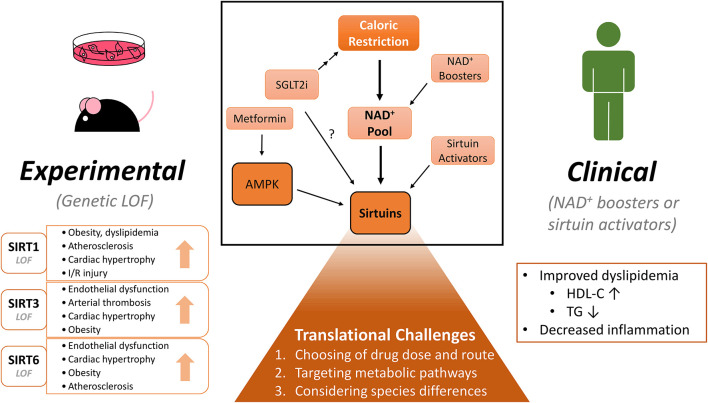
Sirtuins (SIRT1-7) comprise a family of highly conserved deacetylases with distribution in different subcellular compartments. Sirtuins deacetylate target proteins depending on one common substrate, nicotinamide adenine diphosphate (NAD+), thus linking their activities to the status of cellular energy metabolism. Sirtuins had been linked to extending life span and confer beneficial effects in a wide array of immune-metabolic and cardiovascular diseases. SIRT1, SIRT3, and SIRT6 have been shown to provide protective effects in various cardiovascular disease models, by decreasing inflammation, improving metabolic profiles or scavenging oxidative stress. Sirtuins may be activated collectively by increasing their co-substrate NAD+. By supplementing NAD+ precursors, NAD+ boosters confer pan-sirtuin activation with protective cardiometabolic effects in the experimental setting: they improve endothelial dysfunction, protect from experimental heart failure, hypertension and decrease progression of liver steatosis. Different precursor molecules were applied ranging from nicotinamide (NAM), nicotinamide mononucleotide (NMN) to nicotinamide riboside (NR). Notably, not all experimental results showed protective effects. Moreover, the results are not as striking in clinical studies as in the controlled experimental setting. Species differences, (lack of) genetic heterogeneity, different metabolic pathways, dosing, administration routes and disease contexts may account for these challenges in clinical translation. At the clinical scale, caloric restriction can reduce the risks of cardiovascular disease and raise NAD+ concentration and sirtuin expression. In addition, antidiabetic drugs such as metformin or SGLT2 inhibitors may confer cardiovascular protection, indirectly via sirtuin activation. Overall, additional mechanistic insight and clinical studies are needed to better understand the beneficial effects of sirtuin activation and NAD+ boosters from bench to bedside.
Keywords: NAD+ boosters; caloric restriction; cardiovascular diseases; sirtuins; translational studies.
Copyright © 2021 Wang, Paneni, Stein and Matter.
Conflict of interest statement
The authors declare that the research was conducted in the absence of any commercial or financial relationships that could be construed as a potential conflict of interest.
Figures
References
Publication types
LinkOut - more resources
Full Text Sources
