


Renal NOXA1/NOX1 Signaling Regulates Epithelial Sodium Channel and Sodium Retention in Angiotensin II-induced Hypertension
- PMID: 34714114
- PMCID: PMC8978567
- DOI: 10.1089/ars.2021.0047
Renal NOXA1/NOX1 Signaling Regulates Epithelial Sodium Channel and Sodium Retention in Angiotensin II-induced Hypertension
Abstract
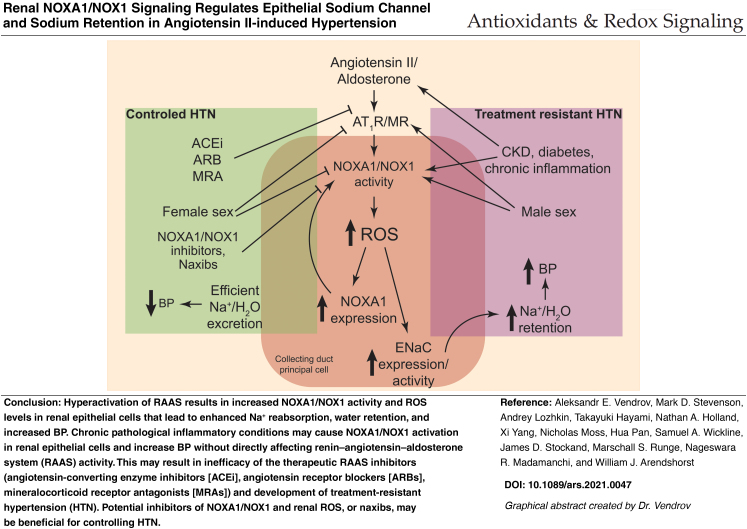
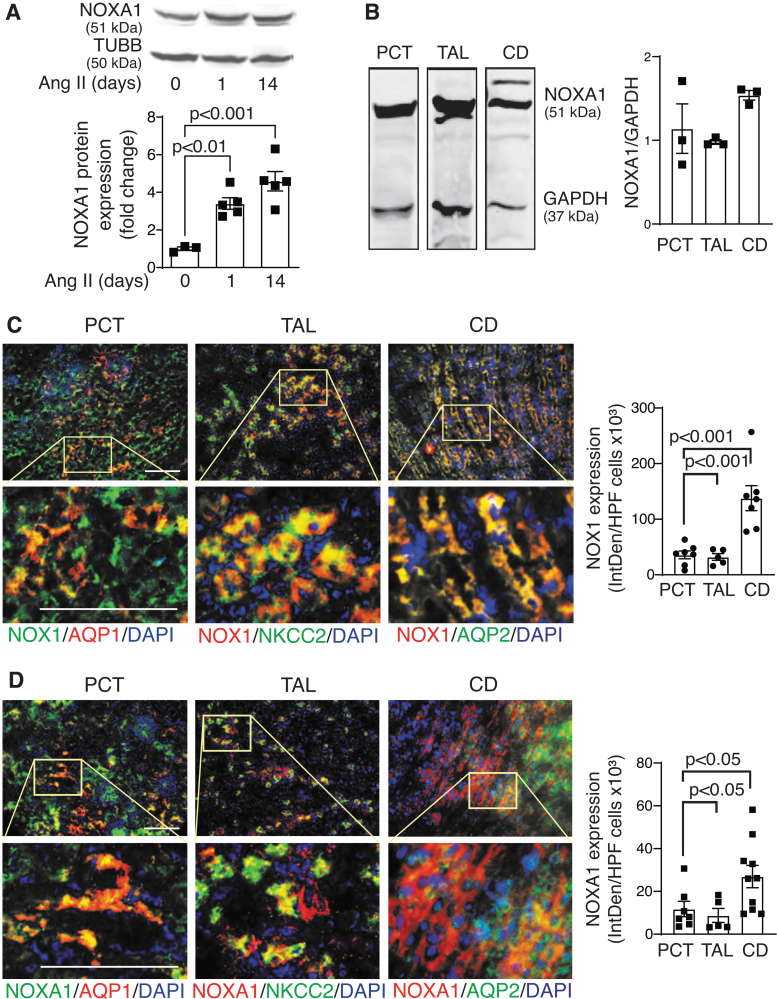
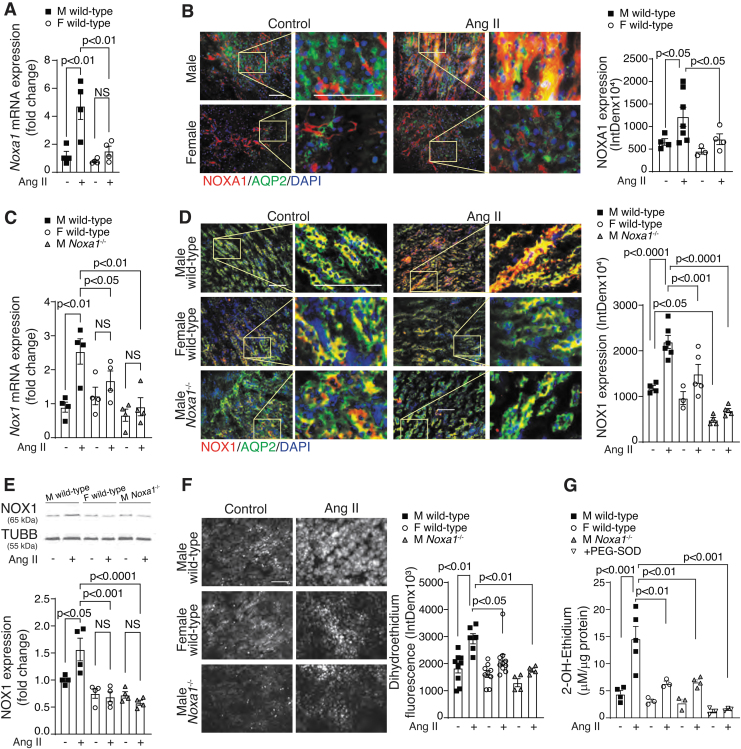
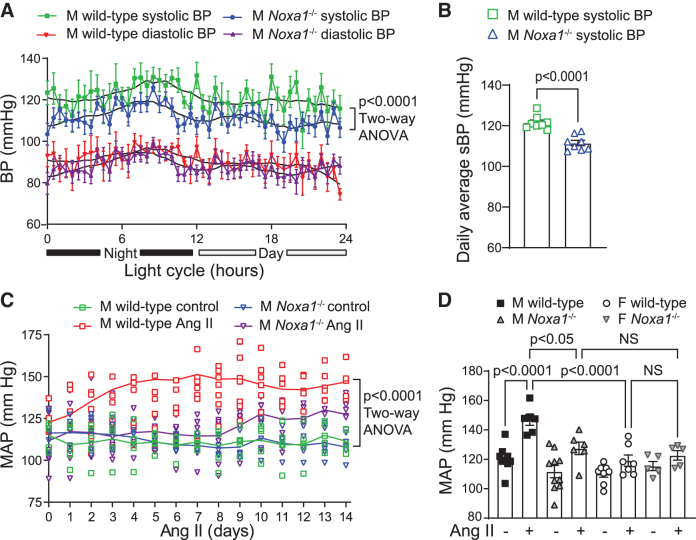
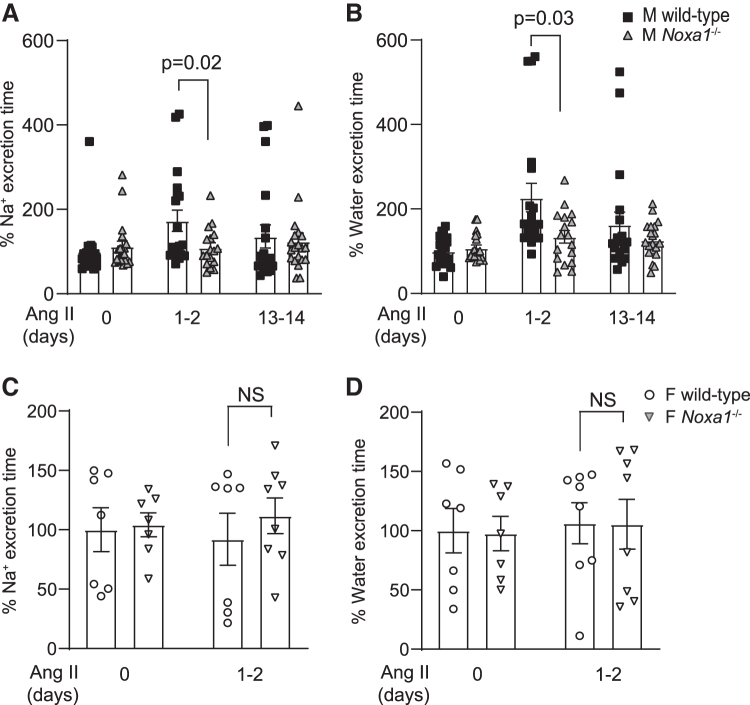
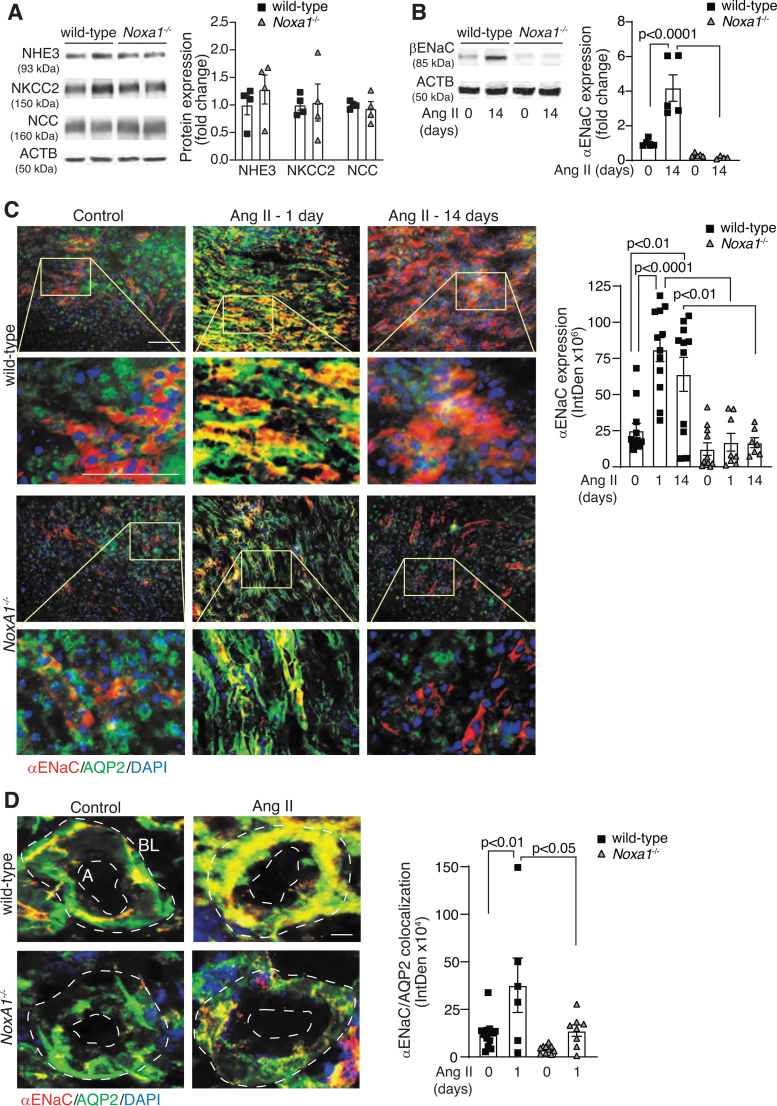
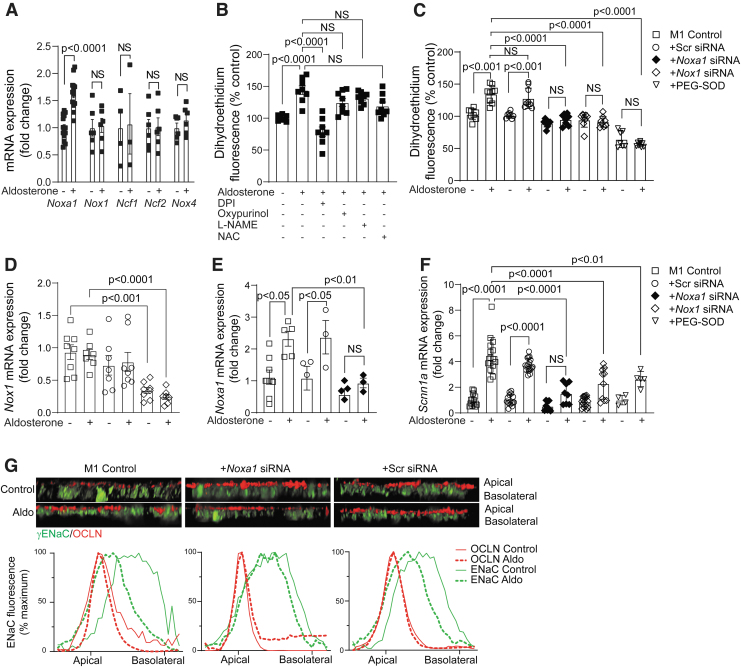
Aims: NADPH oxidase (NOX)-derived reactive oxygen species (ROS) are implicated in the pathophysiology of hypertension in chronic kidney disease patients. Genetic deletion of NOX activator 1 (Noxa1) subunit of NOX1 decreases ROS under pathophysiological conditions. Here, we investigated the role of NOXA1-dependent NOX1 activity in the pathogenesis of angiotensin II (Ang II)-induced hypertension (AIH) and possible involvement of abnormal renal function. Results: NOXA1 is present in epithelial cells of Henle's thick ascending limb and distal nephron. Telemetry showed lower basal systolic blood pressure (BP) in Noxa1-/-versus wild-type mice. Ang II infusion for 1 and 14 days increased NOXA1/NOX1 expression and ROS in kidney of male but not female wild-type mice. Mean BP increased 30 mmHg in wild-type males, with smaller increases in Noxa1-deficient males and wild-type or Noxa1-/- females. In response to an acute salt load, Na+ excretion was similar in wild-type and Noxa1-/- mice before and 14 days after Ang II infusion. However, Na+ excretion was delayed after 1-2 days of Ang II in male wild-type versus Noxa1-/- mice. Ang II increased epithelial Na+ channel (ENaC) levels and activation in the collecting duct principal epithelial cells of wild-type but not Noxa1-/- mice. Aldosterone induced ROS levels and Noxa1 and Scnn1a expression and ENaC activity in a mouse renal epithelial cell line, responses abolished by Noxa1 small-interfering RNA. Innovation and Conclusion: Ang II activation of renal NOXA1/NOX1-dependent ROS enhances tubular ENaC expression and Na+ reabsorption, leading to increased BP. Attenuation of AIH in females is attributed to weaker NOXA1/NOX1-dependent ROS signaling and efficient natriuresis. Antioxid. Redox Signal. 36, 550-566.
Keywords: epithelial sodium channels; hypertension; kidney; reactive oxygen species; sex difference; tubular epithelial cells.
Conflict of interest statement
S.A.W. has equity in Altamira Therapeutics Ltd. M.S.R. is a member of the Board of Directors at Eli Lilly and Company.
Figures
References
-
- Ambasta RK, Schreiber JG, Janiszewski M, Busse R, and Brandes RP. Noxa1 is a central component of the smooth muscle NADPH oxidase in mice. Free Radic Biol Med 41: 193–201, 2006. - PubMed
-
- Baiardi G, Macova M, Armando I, Ando H, Tyurmin D, and Saavedra JM. Estrogen upregulates renal angiotensin II AT1 and AT2 receptors in the rat. Regul Pept 124: 7–17, 2005. - PubMed
-
- Balaban RS, Soltoff SP, Storey JM, and Mandel LJ. Improved renal cortical tubule suspension: spectrophotometric study of O2 delivery. Am J Physiol 238: F50–F59, 1980. - PubMed
-
- Barbaro NR, Foss JD, Kryshtal DO, Tsyba N, Kumaresan S, Xiao L, Mernaugh RL, Itani HA, Loperena R, Chen W, Dikalov S, Titze JM, Knollmann BC, Harrison DG, and Kirabo A. Dendritic cell amiloride-sensitive channels mediate sodium-induced inflammation and hypertension. Cell Rep 21: 1009–1020, 2017. - PMC - PubMed
Publication types
MeSH terms
Substances
LinkOut - more resources
Full Text Sources
Medical
Molecular Biology Databases
Miscellaneous
