


Results from Phase I Extension Study Assessing Pexidartinib Treatment in Six Cohorts with Solid Tumors including TGCT, and Abnormal CSF1 Transcripts in TGCT
- PMID: 34716196
- PMCID: PMC9401544
- DOI: 10.1158/1078-0432.CCR-21-2007
Results from Phase I Extension Study Assessing Pexidartinib Treatment in Six Cohorts with Solid Tumors including TGCT, and Abnormal CSF1 Transcripts in TGCT
Abstract
Purpose: To assess the response to pexidartinib treatment in six cohorts of adult patients with advanced, incurable solid tumors associated with colony-stimulating factor 1 receptor (CSF1R) and/or KIT proto-oncogene receptor tyrosine kinase activity.
Patients and methods: From this two-part phase I, multicenter study, pexidartinib, a small-molecule tyrosine kinase inhibitor that targets CSF1R, KIT, and FMS-like tyrosine kinase 3 (FLT3), was evaluated in six adult patient cohorts (part 2, extension) with advanced solid tumors associated with dysregulated CSF1R. Adverse events, pharmacokinetics, and tumor responses were assessed for all patients; patients with tenosynovial giant cell tumor (TGCT) were also evaluated for tumor volume score (TVS) and patient-reported outcomes (PRO). CSF1 transcripts and gene expression were explored in TGCT biopsies.
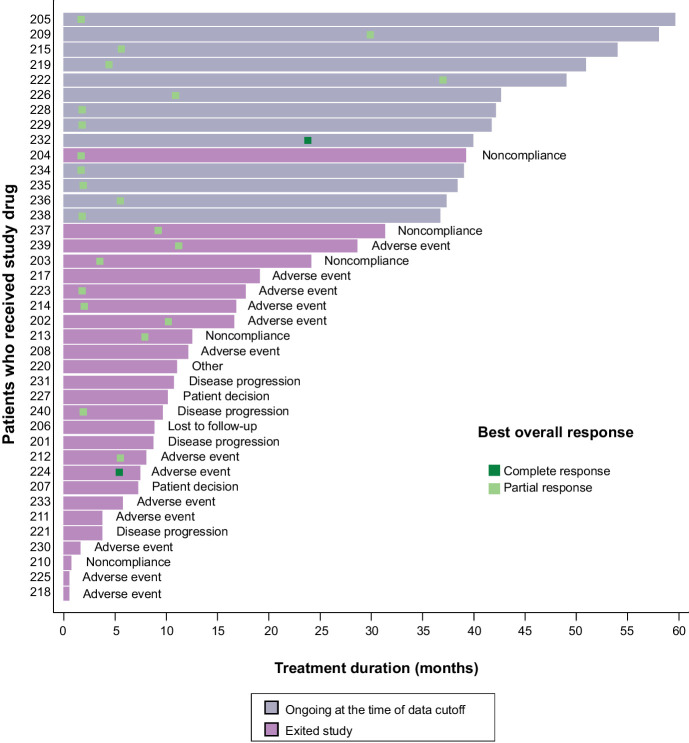
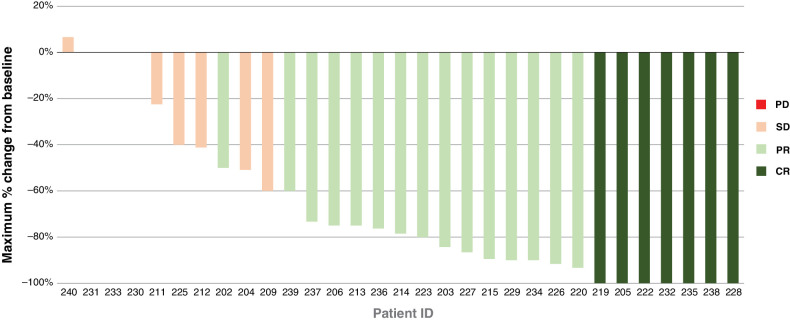
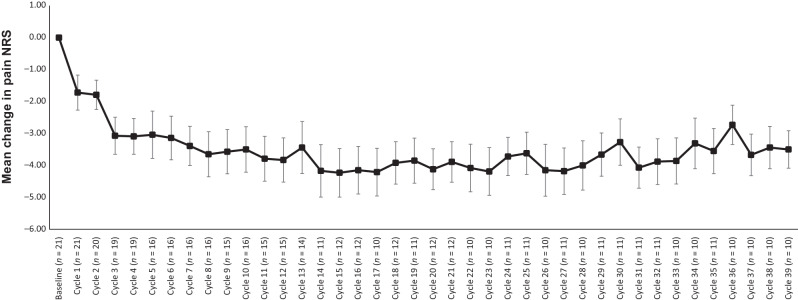
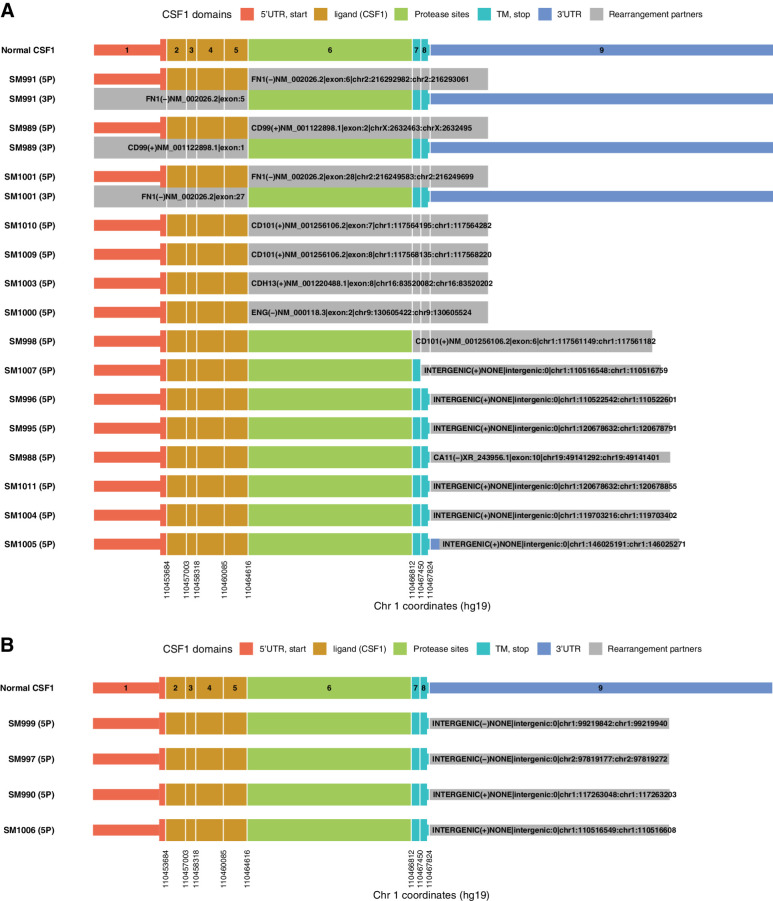
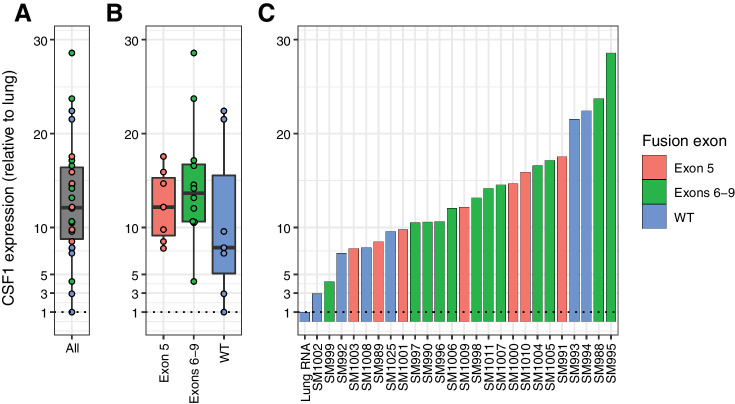
Results: Ninety-one patients were treated: TGCT patients (n = 39) had a median treatment duration of 511 days, while other solid tumor patients (n = 52) had a median treatment duration of 56 days. TGCT patients had response rates of 62% (RECIST 1.1) and 56% (TVS) for the full analysis set. PRO assessments for pain showed improvement in patient symptoms, and 76% (19/25) of TGCT tissue biopsy specimens showed evidence of abnormal CSF1 transcripts. Pexidartinib treatment of TGCT resulted in tumor regression and symptomatic benefit in most patients. Pexidartinib toxicity was manageable over the entire study.
Conclusions: These results offer insight into outcome patterns in cancers whose biology suggests use of a CSF1R inhibitor. Pexidartinib results in tumor regression in TGCT patients, providing prolonged control with an acceptable safety profile.
Trial registration: ClinicalTrials.gov NCT01004861.
©2021 The Authors; Published by the American Association for Cancer Research.
Figures
References
-
- Cassier PA, Italiano A, Gomez-Roca CA, Le Tourneau C, Toulmonde M, Cannarile MA, et al. CSF1R inhibition with emactuzumab in locally advanced diffuse-type tenosynovial giant cell tumours of the soft tissue: a dose-escalation and dose-expansion phase 1 study. Lancet Oncol 2015;16:949–56. - PubMed
-
- Gelderblom H, Cropet C, Chevreau C, Boyle R, Tattersall M, Stacchiotti S, et al. Nilotinib in locally advanced pigmented villonodular synovitis: a multicentre, open-label, single-arm, phase 2 trial. Lancet Oncol 2018;19:639–48. - PubMed
-
- Turalio (Pexidartinib) Capsules, for Oral Use [prescribing information]. Basking Ridge, NJ: Daiichi Sankyo, Inc; 2020.
-
- Staals EL, Ferrari S, Donati DM, Palmerini E. Diffuse-type tenosynovial giant cell tumour: current treatment concepts and future perspectives. Eur J Cancer 2016;63:34–40. - PubMed
Publication types
MeSH terms
Substances
Associated data
Grants and funding
LinkOut - more resources
Full Text Sources
Medical
Research Materials
Miscellaneous
