


Comparative efficacy of azithromycin versus clarithromycin in combination with beta-lactams to treat community-acquired pneumonia in hospitalized patients: a systematic review
- PMID: 34719987
- PMCID: PMC8645313
- DOI: 10.1177/03000605211049943
Comparative efficacy of azithromycin versus clarithromycin in combination with beta-lactams to treat community-acquired pneumonia in hospitalized patients: a systematic review
Abstract
Objective: The objective was to compare the efficacy of azithromycin and clarithromycin in combination with beta-lactams to treat community-acquired pneumonia among hospitalized adults.
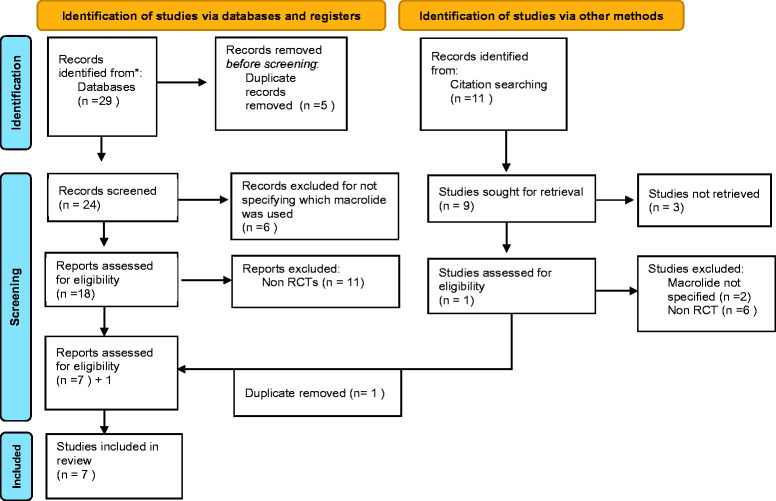
Methods: Five databases (PubMed, Google Scholar, Trip, Medline, and Clinical Key) were searched to identify randomized clinical trials with patients exposed to azithromycin or clarithromycin in combination with a beta-lactam. All articles were critically reviewed for inclusion in accordance with the Preferred Reporting Items for Systematic Reviews and Meta-Analyses (PRISMA) guidelines.
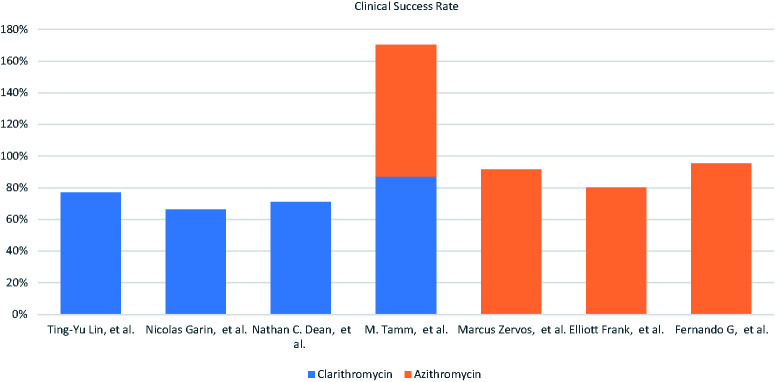
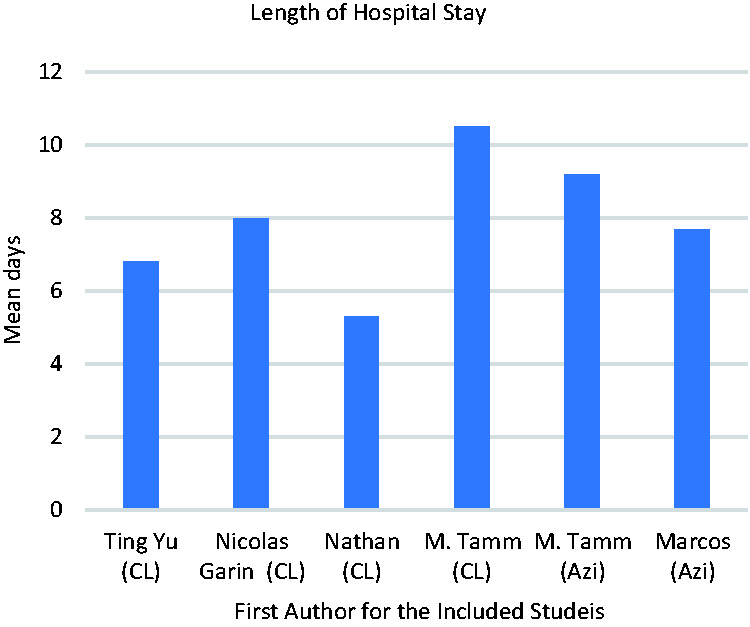
Results: Seven clinical trials were included. The treatment success rate for azithromycin-beta-lactam after 10 to 14 days was 87.55% and that for clarithromycin-beta-lactam after 5 to 7 days of therapy was 75.42%. Streptococcus pneumoniae was commonly found in macrolide groups, with 130 and 80 isolates in the clarithromycin-based and azithromycin-based groups, respectively. The length of hospital stay was an average of 8.45 days for patients receiving a beta-lactam-azithromycin combination and 7.25 days with a beta-lactam-clarithromycin combination.
Conclusion: Macrolide inter-class differences were noted, with a higher clinical success rate for azithromycin-based combinations. However, a shorter length of hospital stay was achieved with a clarithromycin-beta-lactam regimen. Thus, a macrolide combined with a beta-lactam should be chosen using susceptibility data from the treating facility.
Keywords: Community-acquired pneumonia; Streptococcus pneumoniae; azithromycin; beta-lactam; clarithromycin; macrolide; meta-analysis; respiratory tract infection; susceptibility data.
Conflict of interest statement
Figures

References
-
- WHO | Disease burden and mortality estimates [Internet]. WHO. World Health Organization; 2019. [cited 2021 Apr 25]. Available from: http: //www.who.int/healthinfo/global_burden_disease/estimates/en/
-
- Ramirez JA, Wiemken TL, Peyrani P, et al. Adults hospitalized with pneumonia in the United States: incidence, epidemiology, and mortality. Clin Infect Dis 2017; 65: 1806–1812. Available from: https://pubmed.ncbi.nlm.nih.gov/29020164/ - PubMed
-
- ABCs 2018 Strep pneumoniae report | CDC [Internet]. [cited 2021 Apr 25]. Available from: https://www.cdc.gov/abcs/reports-findings/survreports/spneu18.html
-
- Ynthia W, Hitney CG, Onica F, Arley MM, Ames Adler JH, et al. Increasing prevalence of multidrug-resistant Streptococcus pneumoniae in the United States. Vol. 343. 1917. DOI: 10.1056/NEJM200012283432603 - PubMed
Publication types
MeSH terms
Substances
LinkOut - more resources
Full Text Sources
