


The Significant Role of Depression in Elderly Patients with Bladder Cancer
- PMID: 34723216
- PMCID: PMC8546926
- DOI: 10.1016/j.euros.2021.08.007
The Significant Role of Depression in Elderly Patients with Bladder Cancer
Abstract
Background: Considering the relatively high 5-yr survival rate (76.9%) for bladder cancer (BC), its overall prevalence will probably continue to increase. Therefore, it is important to understand the effects of BC diagnosis and management, including psychological sequelae.
Objective: To determine the prevalence of depression among elderly patients with BC and identify patient characteristics associated with depression.
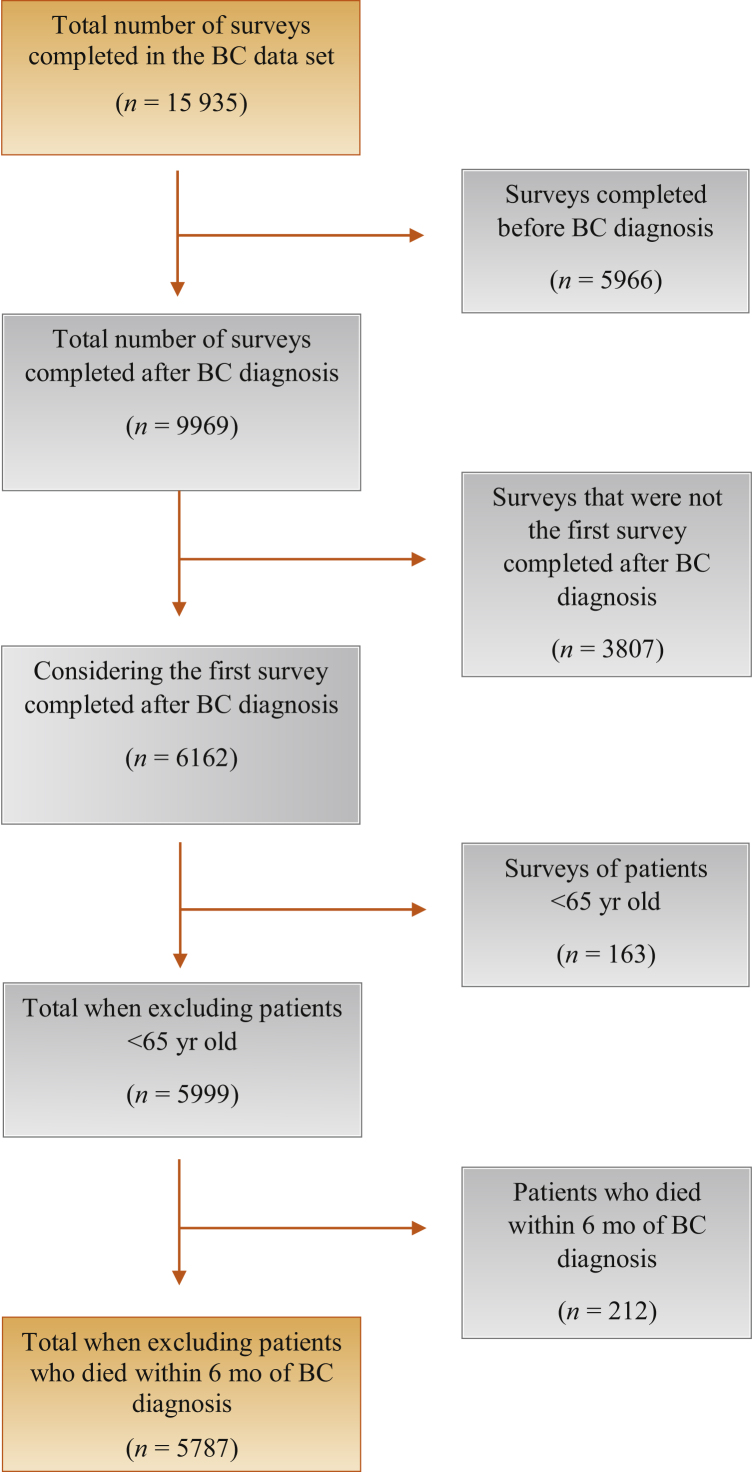
Design setting and participants: Survey responses from a population-based sample of 5787 patients older than 65 yr with a history of BC were retrieved from the Surveillance, Epidemiology and End Results-Medicare Health Outcomes Survey registry, spanning 1999-2014.
Outcome measurements and statistical analysis: The primary outcome measured is the prevalence of a positive depression screen. Cancer characteristics and demographic, socioeconomic, health-related, and activities of daily living (ADL)-related data were reviewed. Univariate analysis was conducted to identify correlation between a positive depression screen and patient characteristics. Multivariate analysis was performed to identify independent predictors of depression.
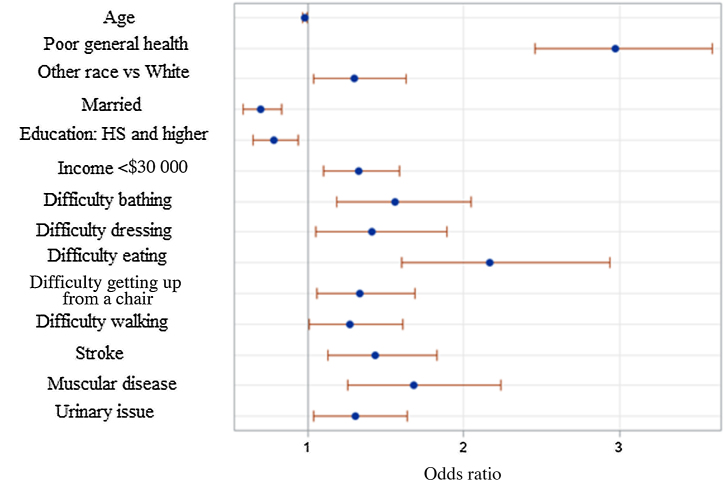
Results and limitations: The prevalence of a positive depression screen was 14.0%. Poor general health (p < 0.001), impairment of ADL (p < 0.001), greater number of comorbidities (p < 0.001), and income <$30 000 (p < 0.001) were identified as correlates of depression. Univariate analysis found no association between a positive depression screen and time since the initial cancer diagnosis (p = 0.858) or cancer stage (p = 0.90). Multivariate analysis showed higher levels of education (p = 0.0097), increasing age (p = 0.0027), and marriage (p < 0.0001) were protective against the development of depression. Limitations include the lack of consideration of treatment outcomes and whether patients have active disease or only a history of cancer.
Conclusions: Depression affects a substantial percentage (14%) of elderly patients with BC. Poor general health and impaired ability to complete ADL were the greatest risk factors for depression. Acknowledgment of sociodemographic factors may improve awareness of depression in patients with BC and a potential need for psychosocial support.
Patient summary: Depression affects a significant proportion of patients with bladder cancer. Social and demographic factors influence a patient's risk of depression. Acknowledgment of these factors may improve the detection of depression and a possible need for intervention.
Keywords: Bladder cancer; Depression; Patient-reported outcomes; Urologic cancer.
© 2021 The Author(s).
Figures
Comment in
-
Geriatrics.J Urol. 2022 Jun;207(6):1325-1327. doi: 10.1097/JU.0000000000002659. Epub 2022 Mar 23. J Urol. 2022. PMID: 35319258 No abstract available.
References
-
- National Cancer Institute. Cancer stat facts: bladder cancer. https://seer.cancer.gov/statfacts/html/urinb.html.
LinkOut - more resources
Full Text Sources
