


Cerebrospinal Fluid Analysis Post-COVID-19 Is Not Suggestive of Persistent Central Nervous System Infection
- PMID: 34724243
- PMCID: PMC8653324
- DOI: 10.1002/ana.26262
Cerebrospinal Fluid Analysis Post-COVID-19 Is Not Suggestive of Persistent Central Nervous System Infection
Abstract
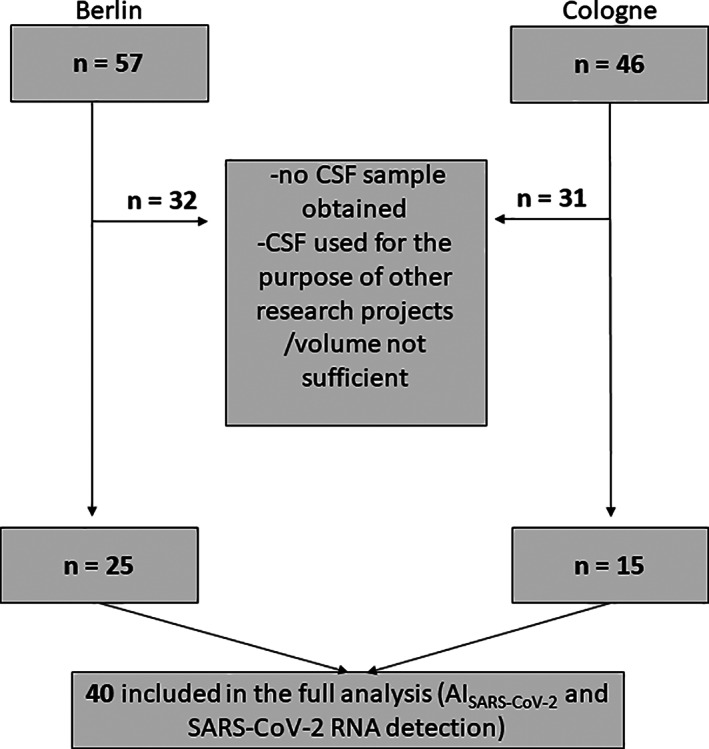
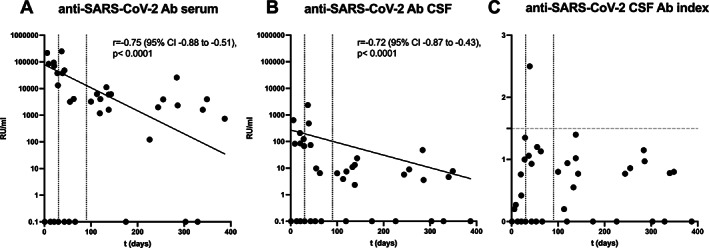
This study was undertaken to assess whether SARS-CoV-2 causes a persistent central nervous system infection. SARS-CoV-2-specific antibody index and SARS-CoV-2 RNA were studied in cerebrospinal fluid following COVID-19. Cerebrospinal fluid was assessed between days 1 and 30 (n = 12), between days 31 and 90 (n = 8), or later than 90 days (post-COVID-19, n = 20) after COVID-19 diagnosis. SARS-CoV-2 RNA was absent in all patients, and in none of the 20 patients with post-COVID-19 syndrome were intrathecally produced anti-SARS-CoV-2 antibodies detected. The absence of evidence of SARS-CoV-2 in cerebrospinal fluid argues against a persistent central nervous system infection as a cause of neurological or neuropsychiatric post-COVID-19 syndrome. ANN NEUROL 2022;91:150-157.
© 2021 The Authors. Annals of Neurology published by Wiley Periodicals LLC on behalf of American Neurological Association.
Conflict of interest statement
CW received personal compensation from BioNTech for participating in an educational discussion. The other authors have nothing to report.
Figures
References
-
- Schweitzer F, Kleineberg NN, Göreci Y, et al. Neuro‐COVID‐19 is more than anosmia: clinical presentation, neurodiagnostics, therapies, and prognosis. Curr Opin Neurol 2021;34:423–431. - PubMed
Publication types
MeSH terms
Substances
Grants and funding
LinkOut - more resources
Full Text Sources
Medical
Miscellaneous
