Factors Influencing Distribution of Coccidioides immitis in Soil, Washington State, 2016
- PMID: 34730378
- PMCID: PMC8565518
- DOI: 10.1128/mSphere.00598-21
Factors Influencing Distribution of Coccidioides immitis in Soil, Washington State, 2016
Abstract
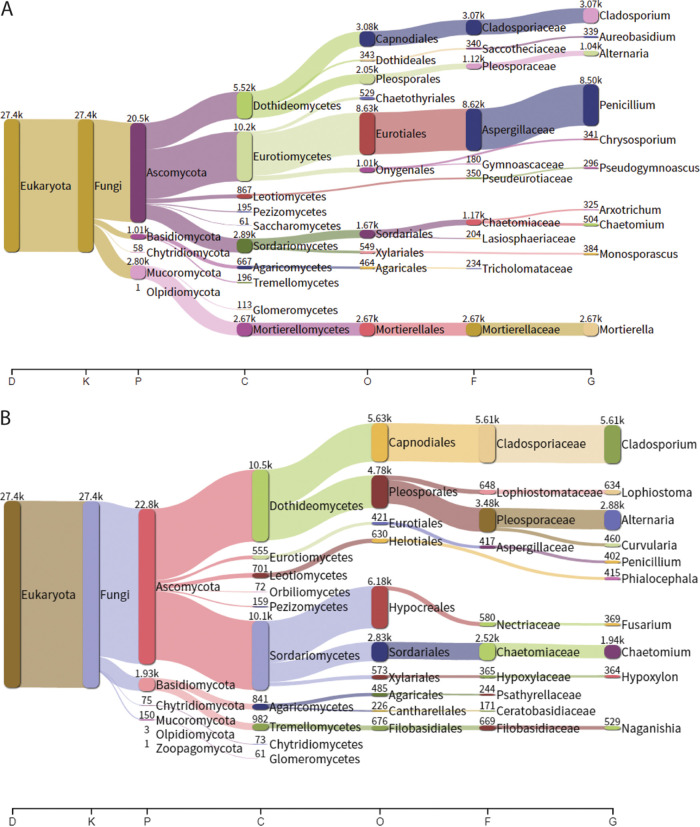
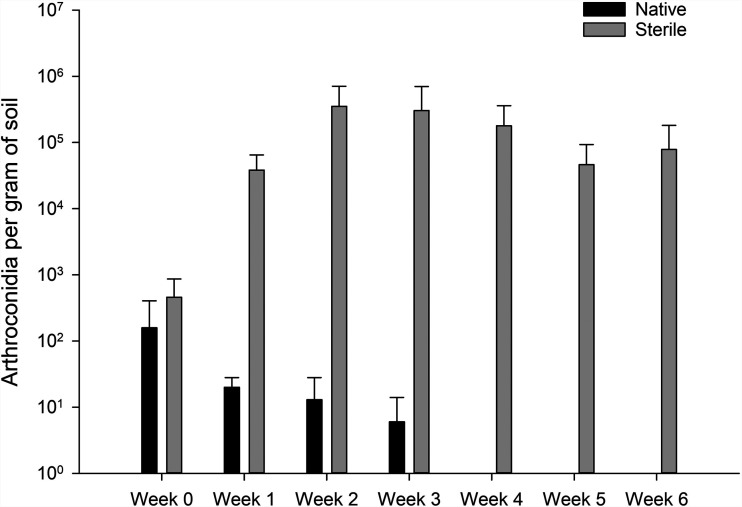
Coccidioides immitis and Coccidioides posadasii are causative agents of Valley fever, a serious fungal disease endemic to regions with hot, arid climate in the United States, Mexico, and Central and South America. The environmental niche of Coccidioides spp. is not well defined, and it remains unknown whether these fungi are primarily associated with rodents or grow as saprotrophs in soil. To better understand the environmental reservoir of these pathogens, we used a systematic soil sampling approach, quantitative PCR (qPCR), culture, whole-genome sequencing, and soil chemical analysis to identify factors associated with the presence of C. immitis at a known colonization site in Washington State linked to a human case in 2010. We found that the same strain colonized an area of over 46,000 m2 and persisted in soil for over 6 years. No association with rodent burrows was observed, as C. immitis DNA was as likely to be detected inside rodent holes as it was in the surrounding soil. In addition, the presence of C. immitis DNA in soil was correlated with elevated levels of boron, calcium, magnesium, sodium, and silicon in soil leachates. We also observed differences in the microbial communities between C. immitis-positive and -negative soils. Our artificial soil inoculation experiments demonstrated that C. immitis can use soil as a sole source of nutrients. Taken together, these results suggest that soil parameters need to be considered when modeling the distribution of this fungus in the environment. IMPORTANCE Coccidioidomycosis is considered a highly endemic disease for which geographic range is likely to expand from climate change. A better understanding of the ecological niche of Coccidioides spp. is essential for generating accurate distribution maps and predicting future changes in response to the changing environment. Our study used a systematic sampling strategy, advanced molecular detection methods, and soil chemical analysis to identify environmental factors associated with the presence of C. immitis in soil. Our results demonstrate the fungus can colonize the same areas for years and is associated with chemical and microbiological soil characteristics. Our results suggest that in addition to climate parameters, soil characteristics need to be considered when building habitat distribution models for this pathogen.
Keywords: Coccidioides; Valley fever; coccidioidomycosis.
Figures


Comment in
-
The Association between Coccidioides immitis and Rodent Habitats in Washington State Remains Unresolved.mSphere. 2022 Aug 31;7(4):e0029422. doi: 10.1128/msphere.00294-22. Epub 2022 Jul 11. mSphere. 2022. PMID: 35862806 Free PMC article. No abstract available.
References
-
- McCotter OZ, Benedict K, Engelthaler DM, Komatsu K, Lucas KD, Mohle-Boetani JC, Oltean H, Vugia D, Chiller TM, Sondermeyer Cooksey GL, Nguyen A, Roe CC, Wheeler C, Sunenshine R. 2019. Update on the epidemiology of coccidioidomycosis in the United States. Med Mycol 57:S30–S40. doi: 10.1093/mmy/myy095. - DOI - PMC - PubMed
-
- Barker BM. 2018. Coccidioidomycosis in animals, p 81–114. In Sybren de Hoog G, Guillot J, Verweij PE, Seyedmousavi S (ed), Emerging and epizootic fungal infections in animals. Springer, Cham, Switzerland.
-
- Marsden-Haug N, Hill H, Litvintseva AP, Engelthaler DM, Driebe EM, Roe CC, Ralston C, Hurst S, Goldoft M, Gade L, Wohrle R, Thompson GR, Brandt ME, Chiller T, Centers for Disease Control and Prevention (CDC) . 2014. Coccidioides immitis identified in soil outside of its known range–Washington, 2013. MMWR Morb Mortal Wkly Rep 63:450. - PMC - PubMed
MeSH terms
Substances
LinkOut - more resources
Full Text Sources
Medical
Miscellaneous