


Emerging approaches of wound healing in experimental models of high-grade oral mucositis induced by anticancer therapy
- PMID: 34733419
- PMCID: PMC8555685
- DOI: 10.18632/oncotarget.28091
Emerging approaches of wound healing in experimental models of high-grade oral mucositis induced by anticancer therapy
Abstract
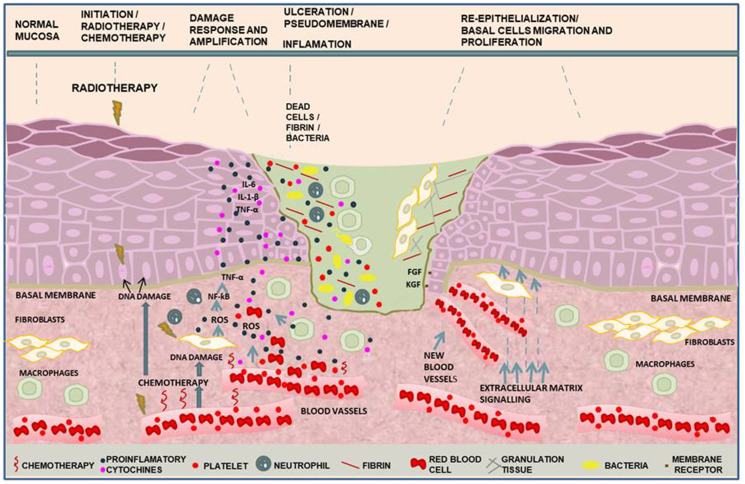
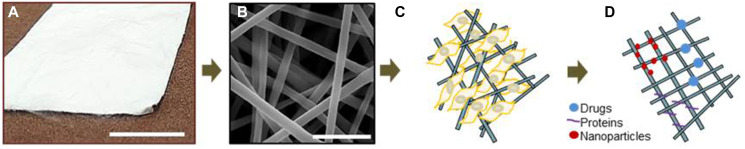
Clinical guidelines for oral mucositis (OM) still consist in palliative care. Herein, we summarize cellular and molecular mechanisms of OM ulceration in response to chemical therapies in animal models. We discuss evidenced anti-inflammatory and anti-oxidant drugs which have not been ever used for OM, such as synthetic peptides as well as cell therapy with mesenchymal stem cells; amniotic membranes, mucoadhesive polymers loaded with anti-inflammatory agents and natural or synthetic electrospun. These approaches have been promising to allow the production of drug-loaded membranes, scaffolds for cells encapsulation or guided tissue regeneration.
Keywords: inflammation; oral mucositis; polymers; regeneration; tissue engineering.
Copyright: © 2021 Chor et al.
Conflict of interest statement
CONFLICTS OF INTEREST Authors have no conflicts of interest to declare.
Figures
References
-
- Parkhill AL. Oral Mucositis and Stomatitis Associated with Conventional and Targeted Anticancer Therapy. Journal of Pharmacovigilance. 2013; 1:112.
-
- Sonis ST, Elting LS, Keefe D, Peterson DE, Schubert M, Hauer-Jensen M, Bekele BN, Raber-Durlacher J, Donnelly JP, Rubenstein EB, and Mucositis Study Section of the Multinational Association for Supportive Care in Cancer, and International Society for Oral Oncology. Perspectives on cancer therapy-induced mucosal injury: pathogenesis, measurement, epidemiology, and consequences for patients. Cancer. 2004; 100:1995–2025. 10.1002/cncr.20162. - DOI - PubMed
LinkOut - more resources
Full Text Sources
