


American Indian and Alaska Native Knowledge and Public Health for the Primary Prevention of Missing or Murdered Indigenous Persons
- PMID: 34734212
- PMCID: PMC8563020
American Indian and Alaska Native Knowledge and Public Health for the Primary Prevention of Missing or Murdered Indigenous Persons
Abstract
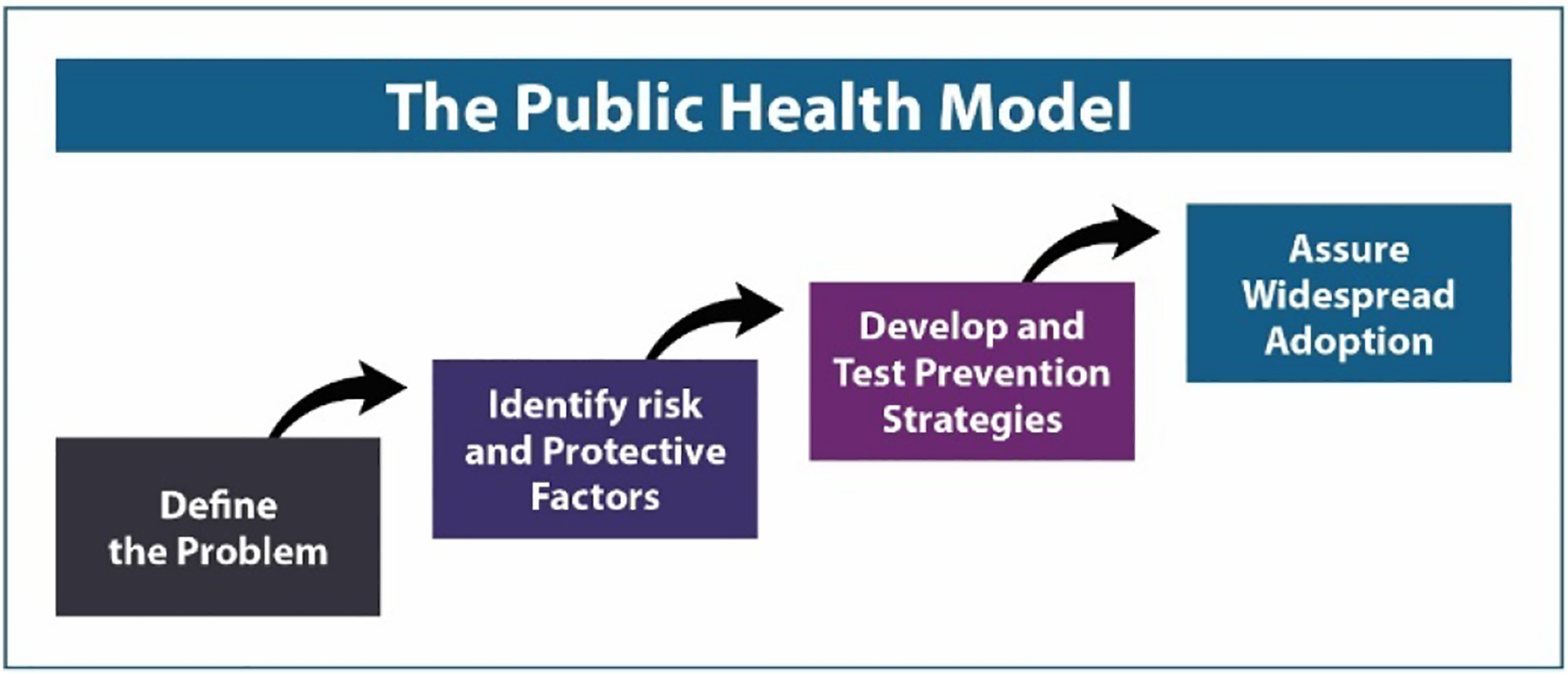
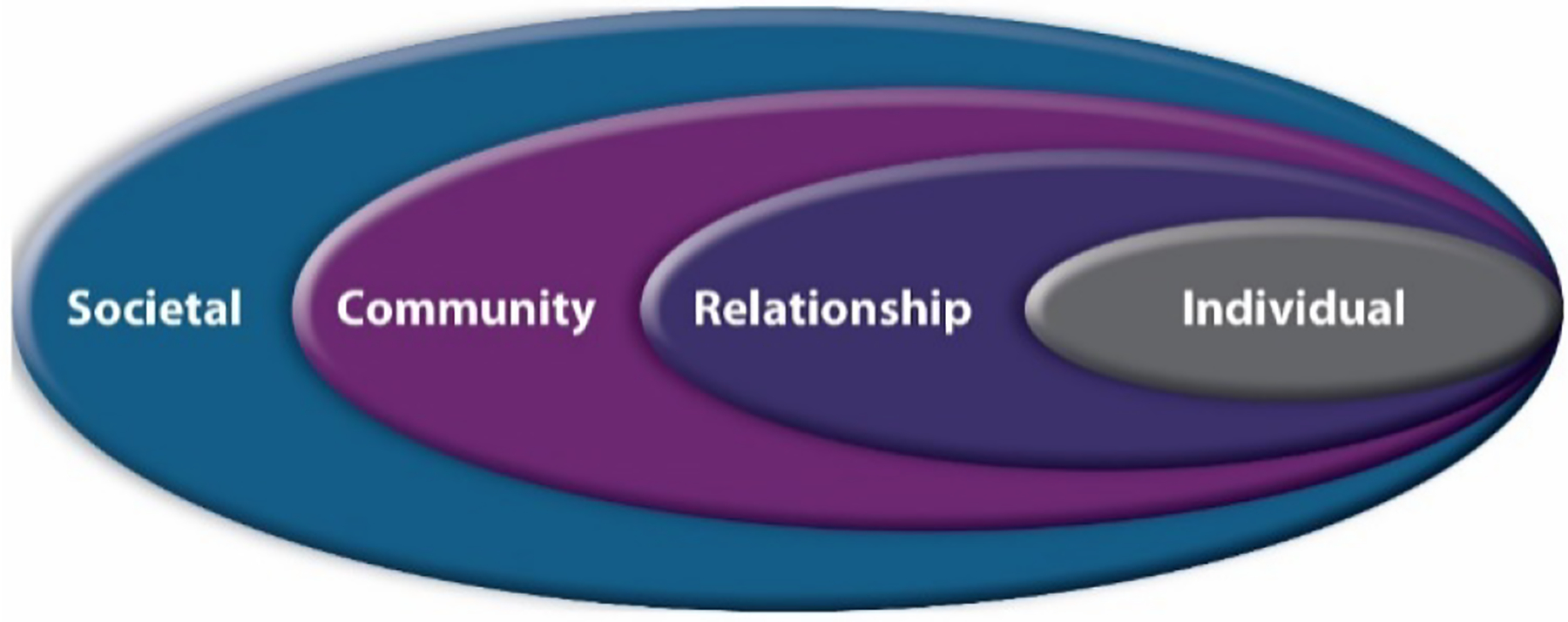
Violence against American Indian and Alaska Native (AIAN) women, children, two-spirit individuals,1 men, and elders is a serious public health issue. Violence may result in death (homicide), and exposure to violence has lasting effects on the physical and mental health of individuals, including depression and anxiety, substance abuse, chronic and infectious diseases, and life opportunities, such as educational attainment and employment. All communities are affected by some form of violence, but some are at an increased risk because of intergenerational, structural, and social factors that influence the conditions in communities where people live, learn, work, and play. Using a violence prevention public health approach, we discuss the role public health can play in addressing and preventing the prevalence of missing or murdered indigenous persons (MMIP).2 This paper is written as a public health primer and includes a selective overview of public health and Native public health research. It also includes case studies and Native experts' reflections and suggestions regarding the use of public health knowledge and theory, as well as Native knowledge and cultural practices to combat violence. An effective public health prevention approach is facilitated by complex, contextual knowledge of communities and people, including individual and community risk factors, as well as protective factors in strengthening Native communities and preventing MMIP. Public health promotes and protects the health of people and the communities where they live, learn, work, and play. To prevent violence, public health seeks to create safe, stable, and nurturing relationships and environments for all people. MMIP affects communities, families, and loved ones, and its victims may be women and girls, children, men, two-spirit individuals, and elders. Violence is defined as "the intentional use of physical force or power, threatened or actual, against oneself, another person, or against a group or community, that either results in or has a high likelihood of resulting in injury, death, psychological harm, maldevelopment, or deprivation."3 Violence, including adverse childhood experiences (ACEs), has a lasting impact on health, spanning injury, disease outcomes, risk behaviors, maternal and child health, mental health problems, and death.4 This paper serves as a public health primer to prevent MMIP. MMIP context is provided by weaving public health, research, and applied examples from AIAN experts, best practices in public health, and legal approaches using traditional wisdom and culture. Woven throughout the text, author perspectives are provided as applied examples to contextualize and complement the topics raised based on the individual experiences of several authors.
Figures
References
-
- “The use of the term two-spirit has been known to facilitate an individual’s reconnection with tribal understandings of non-binary sexual and gender identities, as well as traditional spiritual or ceremonial roles that two spirits have held, thus reaffirming their identities ….” Elm Jessica H. L. et al. , “I’m in This World for a Reason”: Resilience and Recovery Among American Indian and Alaska Native Two-Spirit Women, 20 J. Lesbian Stud 352, 353 (2016) - PMC - PubMed
- (citing Walters Karina L. et al. , “My Spirit in My Heart”: Identity Experiences and Challenges Among American Indian Two-Spirit Women, 10 J. Lesbian Stud 125 (2006); - PubMed
- Walters Karina L. et al. , Sexual Orientation Bias Experiences and Service Needs of Gay, Lesbian, Bisexual, Transgendered, and Two-Spirited American Indians, 13 J. Gay & Lesbian Soc. Servs 133 (2001);
- Wilson Alex, How We Find Ourselves: Identity Development and Two-Spirit People, 66 Harv. Educ. Rev 303 (1996).
-
- The authors recognize that, while the term MMIP is used, this work is complex and evolving. Other terms commonly used may include, but are not limited to, missing or murdered indigenous women (MMIW) and missing or murdered indigenous women, girls, and two-spirit people (MMIWG2S).
-
- World Health Org., World Report on Violence and Health 4 (Krug Etienne G. et al. , eds., 2002).
-
- Ctrs. for Disease Control & Prevention, Preventing Adverse Childhood Experience: Leveraging the Best Available Evidence 8 (2019);
- Ctrs. for Disease Control & Prevention, Preventing Multiple Forms of Violence: A Strategic Vision for Connecting the Dots 5 (2016).
-
- The Public Health Approach to Violence Prevention, Ctrs. for Disease Control & Prevention (last reviewed Jan. 28, 2020), https://www.cdc.gov/violenceprevention/publichealthissue/publichealthapp....
Grants and funding
LinkOut - more resources
Full Text Sources