. 2021 Nov 4;20(1):209.
doi: 10.1186/s12934-021-01696-y.

Codon pair optimization (CPO): a software tool for synthetic gene design based on codon pair bias to improve the expression of recombinant proteins in Pichia pastoris

Affiliations

Codon pair optimization (CPO): a software tool for synthetic gene design based on codon pair bias to improve the expression of recombinant proteins in Pichia pastoris

Yide Huang et al. Microb Cell Fact. .

Abstract

Background: Codon optimization is a common method to improve protein expression levels in Pichia pastoris and the current strategy is to replace rare codons with preferred codons to match the codon usage bias. However, codon-pair contexts have a profound effect on translation efficiency by influencing both translational elongation rates and accuracy. Until now, it remains untested whether optimized genes based on codon pair bias results in higher protein expression levels compared to codon usage bias.

Results: In this study, an algorithm based on dynamic programming was introduced to develop codon pair optimization (CPO) which is a software tool to provide simple and efficient codon pair optimization for synthetic gene design in Pichia pastoris. Two reporters (MT1-MMP E2C6 and ADAM17 A9B8 scFvs) were employed to test the effects of codon pair bias and CPO optimization on their protein expression levels. Four variants of MT1-MMP E2C6 and ADAM17 A9B8 for each were generated, one variant with the best codon-pair context, one with the worst codon-pair context, one with unbiased codon-pair context, and another optimized based on codon usage. The expression levels of variants with the worst codon-pair context were almost undetectable by Western blot and the variants with the best codon-pair context were expressed well. The expression levels on MT1-MMP E2C6 and ADAM17 A9B8 were more than five times and seven times higher in the optimized sequences based on codon-pair context compared to that based on codon usage, respectively. The results indicated that the codon-pair context-based codon optimization is more effective in enhancing expression of protein in Pichia pastoris.

Conclusions: Codon-pair context plays an important role on the protein expression in Pichia pastoris. The codon pair optimization (CPO) software developed in this study efficiently improved the protein expression levels of exogenous genes in Pichia pastoris, suggesting gene design based on codon pair bias is an alternative strategy for high expression of recombinant proteins in Pichia pastoris.

Keywords: Codon pair bias; Codon pair optimization; Pichia pastoris; Synthetic gene design.


Conflict of interest statement

The authors declare that they have no known competing financial interests or personal relationships that could have appeared to influence the work reported in this paper.

Figures
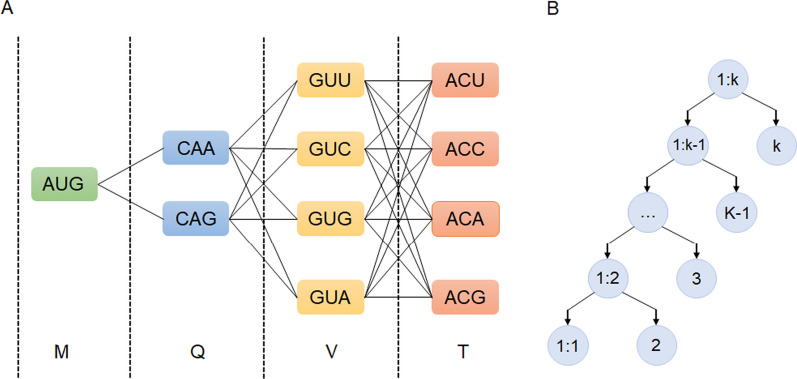
Fig. 1
Fig. 1
The sketch figures of the codon optimization algorithm. A The demo graph G of the sequence MQVT, M: Methionine, Q: Glutamine, V: Valine, T: Threonine. B The recursively decomposed tree
Fig. 2
Fig. 2
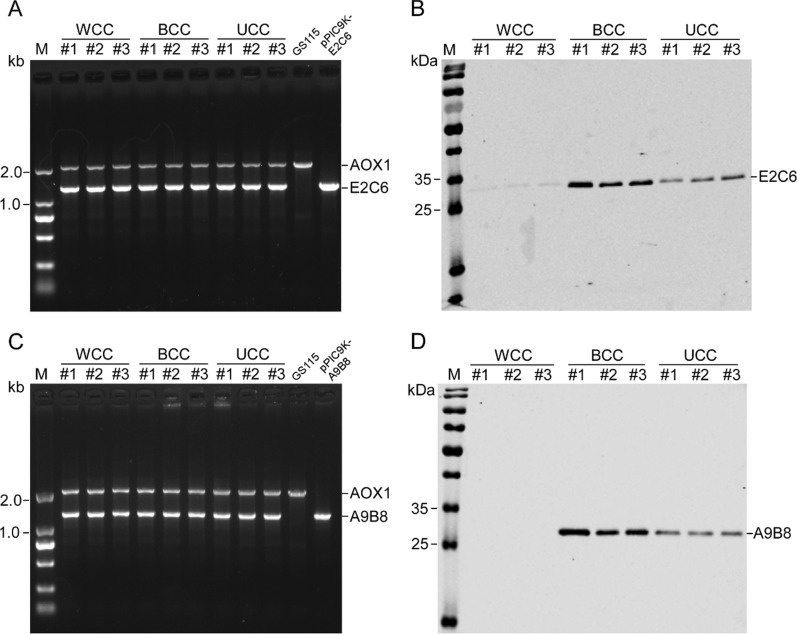
The expression of variants of MT1-MMP E2C6 and ADAM17 A9B8 with the worst, the best, and the unbiased codon-pair context in Pichia pastoris. A, C Analysis of integrants using AOX1 general primers by PCR. Lane GS115 is a control using the host GS115 genome as the template, which show AOX1 gene, and lane pPIC9K-E2C6 or pPIC9K-A9B8 is another control using recombinant plasmid pPIC9K-E2C6 or pPIC9K-A9B8 as the template, which shows synthetic gene of MT1-MMP E2C6 and ADAM17 A9B8. B, D The expression of variants in Pichia pastoris. MT1-MMP E2C6 and ADAM17 A9B8 in the supernatant are detected by Western blot using anti-his tag primary antibody. #1, #2 and #3 represent three different recombinant strains. WCC the worst codon-pair context, BCC the best codon-pair context, UCC the unbiased codon-pair context
Fig. 3
Fig. 3
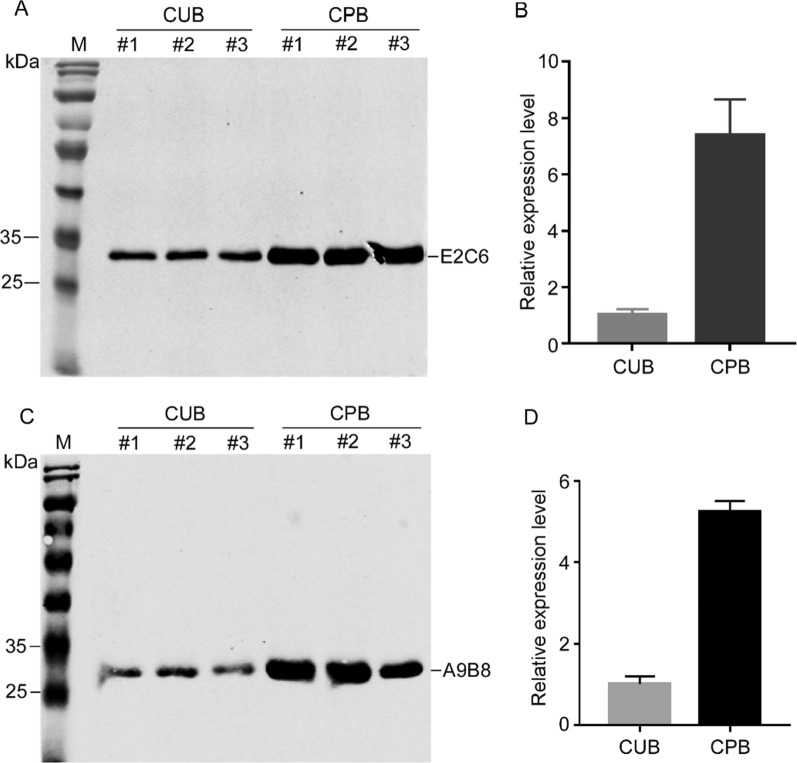
The expression of the optimized sequences designed with codon usage and codon-pair context in Pichia pastoris. A, C The expression analysis of MT1-MMP E2C6 and ADAM17 A9B8 by Western blot using anti-his tag primary antibody. B, D The quantitative analysis to A, C. #1, #2 and #3 represent three different recombinant strains. M protein marker, CUB codon usage bias, CPB codon pair bias
Fig. 4
Fig. 4
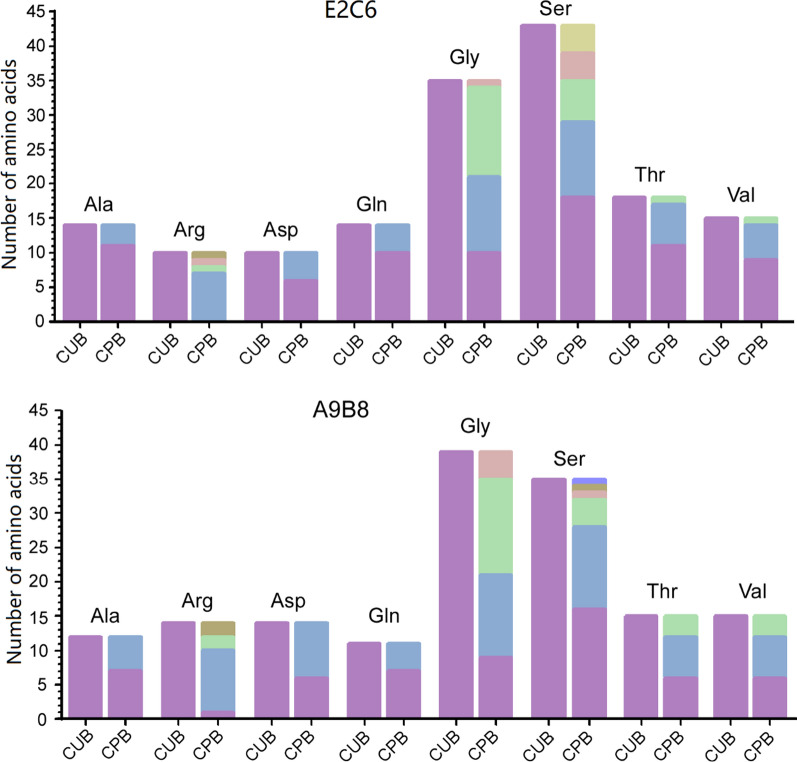
The usage of synonymous codons in the optimized sequences. The type and number of amino acids appearing no less than 10 times in the optimized sequences were listed. Different colors in the column represent different synonymous codons of the specific amino acids. CUB codon usage bias, CPB codon pair bias
Fig. 5
Fig. 5
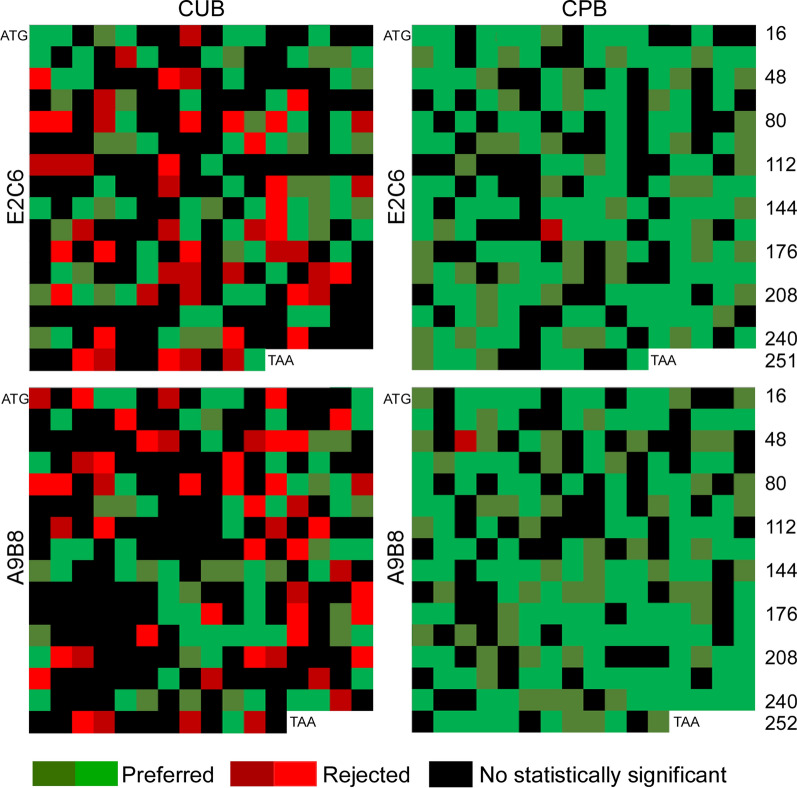
The codon-pair context map of optimized sequences of MT1-MMP E2C6 and ADAM17 A9B8. In order to better demonstrate codon-pair context of optimized sequences of MT1-MMP E2C6 and ADAM17 A9B8 based on CUB and CPB, the codons of optimized sequences were arranged into the map with 16 × 16 cells from left to right in sequence. Each cell in the map corresponds to a codon encoding a specific amino acid. The start codon ATG is displayed in the upper left corner of map and the stop codon TAA in the bottom right corner of map and the number of codons on the right of maps. The codon in the cell with its 5′ neighbor codon was colored in red for rejected contexts, green for preferred ones and black for ones without statistical significance. The intensity of red and green indicates the extent of the preference or rejection. CUB codon usage bias, CPB codon pair bias

References

    1. Gouy M, Gautier C. Codon usage in bacteria: correlation with gene expressivity. Nucleic Acids Res. 1982;10(22):7055–7074. doi: 10.1093/nar/10.22.7055. - DOI - PMC - PubMed
    1. Sharp PM, Tuohy TM, Mosurski KR. Codon usage in yeast: cluster analysis clearly differentiates highly and lowly expressed genes. Nucleic Acids Res. 1986;14(13):5125–5143. doi: 10.1093/nar/14.13.5125. - DOI - PMC - PubMed
    1. Campbell WH, Gowri G. Codon usage in higher plants, green algae, and cyanobacteria. Plant Physiol. 1990;92(1):1–11. doi: 10.1104/pp.92.1.1. - DOI - PMC - PubMed
    1. Wain-Hobson S, Nussinov R, Brown RJ, Sussman JL. Preferential codon usage in genes. Gene. 1981;13(4):355–364. doi: 10.1016/0378-1119(81)90015-9. - DOI - PubMed
    1. Tats A, Tenson T, Remm M. Preferred and avoided codon pairs in three domains of life. BMC Genom. 2008;9:463. doi: 10.1186/1471-2164-9-463. - DOI - PMC - PubMed

Supplementary concepts

LinkOut - more resources