. 2021 Nov 5;12(1):6415.
doi: 10.1038/s41467-021-26760-4.

Oral prodrug of remdesivir parent GS-441524 is efficacious against SARS-CoV-2 in ferrets

Affiliations

Oral prodrug of remdesivir parent GS-441524 is efficacious against SARS-CoV-2 in ferrets

Robert M Cox et al. Nat Commun. .

Abstract

Remdesivir is an antiviral approved for COVID-19 treatment, but its wider use is limited by intravenous delivery. An orally bioavailable remdesivir analog may boost therapeutic benefit by facilitating early administration to non-hospitalized patients. This study characterizes the anti-SARS-CoV-2 efficacy of GS-621763, an oral prodrug of remdesivir parent nucleoside GS-441524. Both GS-621763 and GS-441524 inhibit SARS-CoV-2, including variants of concern (VOC) in cell culture and human airway epithelium organoids. Oral GS-621763 is efficiently converted to plasma metabolite GS-441524, and in lungs to the triphosphate metabolite identical to that generated by remdesivir, demonstrating a consistent mechanism of activity. Twice-daily oral administration of 10 mg/kg GS-621763 reduces SARS-CoV-2 burden to near-undetectable levels in ferrets. When dosed therapeutically against VOC P.1 gamma γ, oral GS-621763 blocks virus replication and prevents transmission to untreated contact animals. These results demonstrate therapeutic efficacy of a much-needed orally bioavailable analog of remdesivir in a relevant animal model of SARS-CoV-2 infection.


Conflict of interest statement

All authors affiliated with Gilead Sciences may hold stock or stock options in Gilead Sciences Inc. R.K.P. was the principal investigator of a Gilead-sponsored research agreement with Georgia State University. He has received funding from Gilead Sciences Inc. to support parts of this work. All other authors declare no competing interests.

Figures
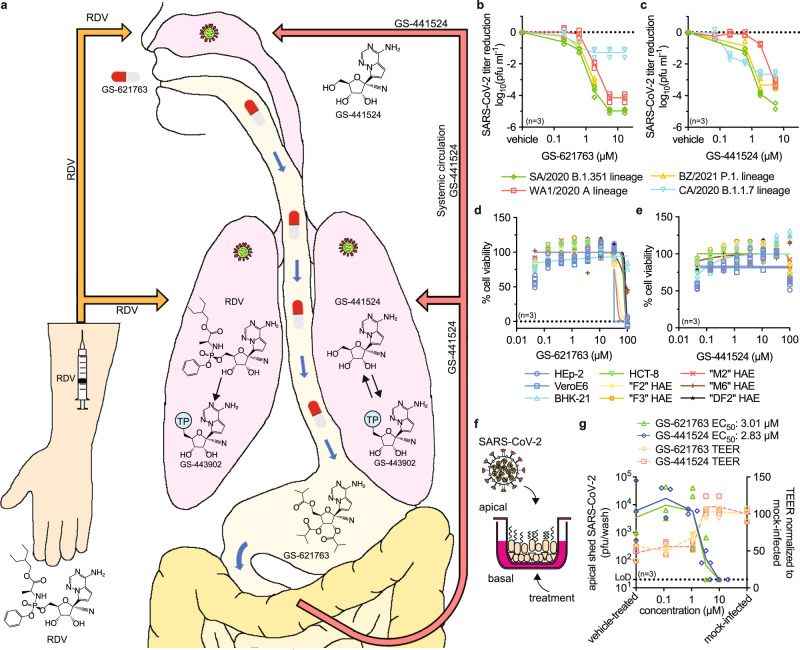
Fig. 1
Fig. 1. Antiviral potency of remdesivir analog GS-621763.
a Schematic depicting metabolism of remdesivir (RDV; orange arrows) and GS-621763 (red/white pills; red arrows) after injection or oral uptake, respectively. Remdesivir distributes into tissues (e.g., lung) and is efficiently metabolized intracellularly to GS-443902 (TP = triphosphate). Conversely, GS-441524 is the dominant plasma metabolite after intestinal absorption of orally administered GS-627163 and is subsequently anabolized to GS-443902 in the tissues. bc Virus yield reduction of SARS-CoV-2 clinical isolates WA1/2020 (red squares), CA/2020 (blue triangles), SA/2020 (green diamonds), and BZ/2021 (yellow triangles) representing the A, B.1.1.7 (α), B.1.351 (β) and P.1 (γ) lineages, respectively, by GS-621763 (b) and GS-441524 (c) on VeroE6 cells. EC50 concentrations are specified in Supplementary Table 1. de In vitro cytotoxicity profiles of GS-621763 (d) and GS-441524 (e) on VeroE6 (blue squares), HEp-2 (purple circles), BHK-21 (light blue triangles), HCT-8 (green triangles) and a panel of primary HAE cells from independent donors (“F2” (yellow diamonds), “F3” (orange circles), “M2” (red “×” symbols), “M6” (brown “+” symbols), “DF2” (black stars)). f schematic of well-differentiated air-liquid interface HAE cultures. g HAEs were infected from the apical side with SARS-CoV-2 VOC γ and treated from the basolateral side with GS-621763 or GS-441524. Apically shed virus titers (green triangles and blue diamonds for GS-621763 or GS-441524, respectively) on day after infection and the impact of treatment on preserving tissue integrity (transepithelial electrical resistance (TEER) (orange triangles and red squares for GS-621763 or GS-441524, respectively) are shown. LoD, the limit of detection. In (be, g), symbols represent individual biological repeats (n = 3), lines (bc, g) intersect the mean, lines in (de) depict nonlinear regression models.
Fig. 2
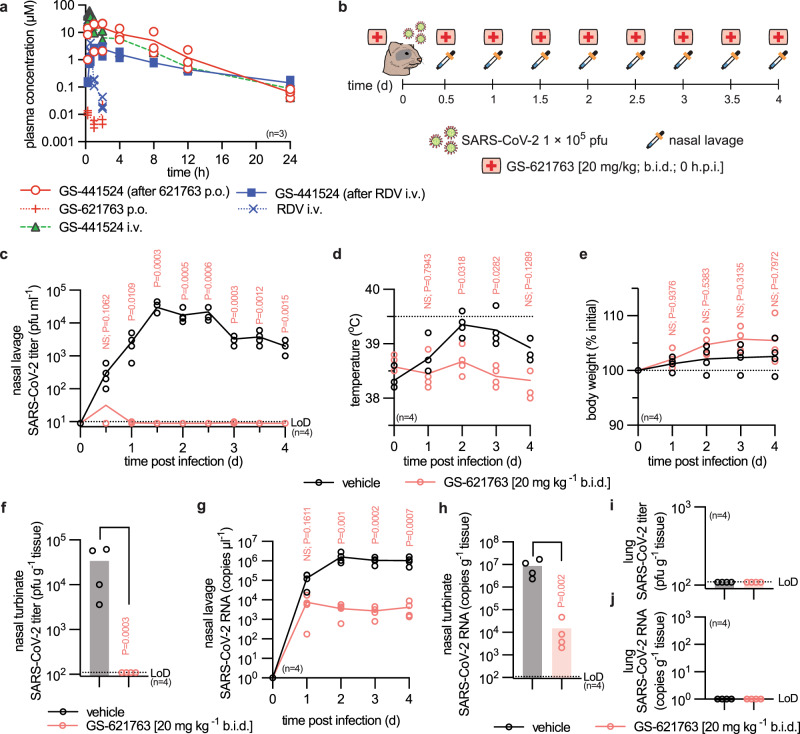
Fig. 2. Prophylactic efficacy of GS-621763.
a Single-dose PK study in ferrets showing plasma concentrations of GS-441524, GS-621763, and remdesivir (RDV) as specified after dosing with GS-621763 (30 mg/kg; p.o.; red “+” symbols), remdesivir (10 mg/kg; i.v.; blue “×” symbols), and GS-441524 (20 mg/kg; i.v.; green triangles). Symbols represent individual biological repeats (n = 3), lines depict sample means. b, Schematic of the prophylactic efficacy study design. Ferrets were infected intranasally with 1 × 105 pfu WA1/2020 (virus symbol). Groups (n = 4) were gavaged b.i.d. (first aid symbol) with vehicle or GS-621763 (20 mg/kg) starting at the time of infection. Nasal lavages (pipet symbol) were harvested twice daily. All animals were terminated 4 days after infection. c Virus titers from nasal lavages; LoD, limit of detection. d Temperature measurements collected once daily. e Body weight measured once daily. f Infectious titers of SARS-CoV-2 in nasal turbinates harvested four days after infection. g SARS-CoV-2 RNA copies present in nasal lavages. h, SARS-CoV-2 RNA copies detected in nasal turbinates. ij SARS-CoV-2 infectious particles (i) and SARS-CoV-2 RNA copies (j) in lungs four days after infection. Symbols for vehicle-treated and GS-621763 treated ferrets are shown as black and red circles, respectively (cj). The number of independent biological repeats (individual animals) is shown in each subpanel, symbols represent independent biological repeats, lines (ce, g) and bar graphs (f, hj) connect or show samples mean, respectively, and P values are stated. 2-way ANOVA with Sidak’s post hoc multiple comparison tests (ce, g) or two-tailed t test (f, h).
Fig. 3
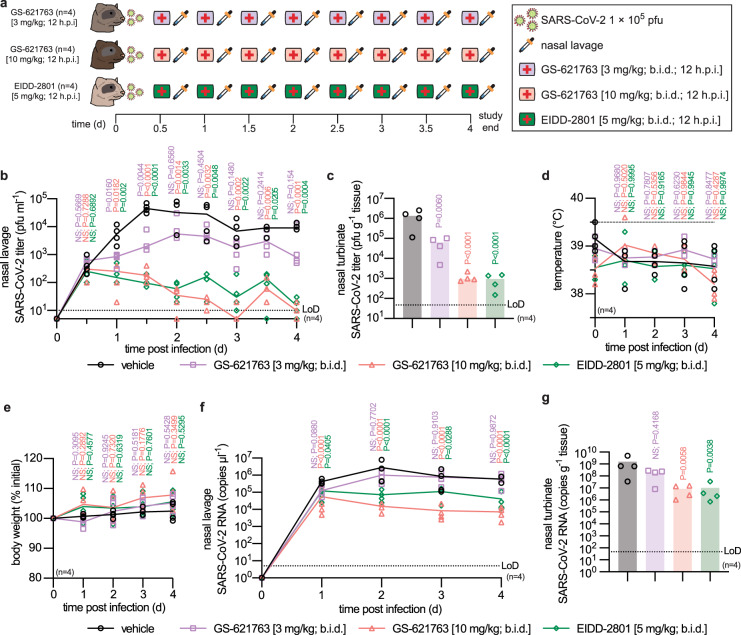
Fig. 3. Therapeutic efficacy of GS-621763.
a Schematic of the therapeutic efficacy study design. Ferrets were infected intranasally with 1 × 105 pfu WA1/2020. Symbols as described for Fig. 2a. Starting 12 h after infection, groups of ferrets (n = 4) were gavaged b.i.d. with vehicle (black circles in b–g), GS-621763 (3 mg/kg (purple first aid symbol; purple circles in bg) or 10 mg/kg (pink first aid symbol; red circles in bg)), or treated with EIDD-2801 (5 mg/kg (green first aid symbol; green diamonds in b-g)). Nasal lavages were harvested twice daily. Animals were terminated 4 days after infection. b Virus titers from nasal lavages. c, Infectious titers of SARS-CoV-2 in nasal turbinates harvested four days after infection. d Temperature measurements collected once daily. e Body weight measured once daily. f SARS-CoV-2 RNA copies present in nasal lavages. g SARS-CoV-2 RNA copies detected in nasal turbinates. The number of independent biological repeats (individual animals) is shown in each subpanel. Symbols represent independent biological repeats, lines (b, d, e, f) and bar graphs (c, g) connect or show samples mean, respectively, and P values are stated. 1-way (c, g) or 2-way (b, d, e, f) ANOVA with Dunnett’s post hoc multiple comparison tests. LoD limit of detection.
Fig. 4
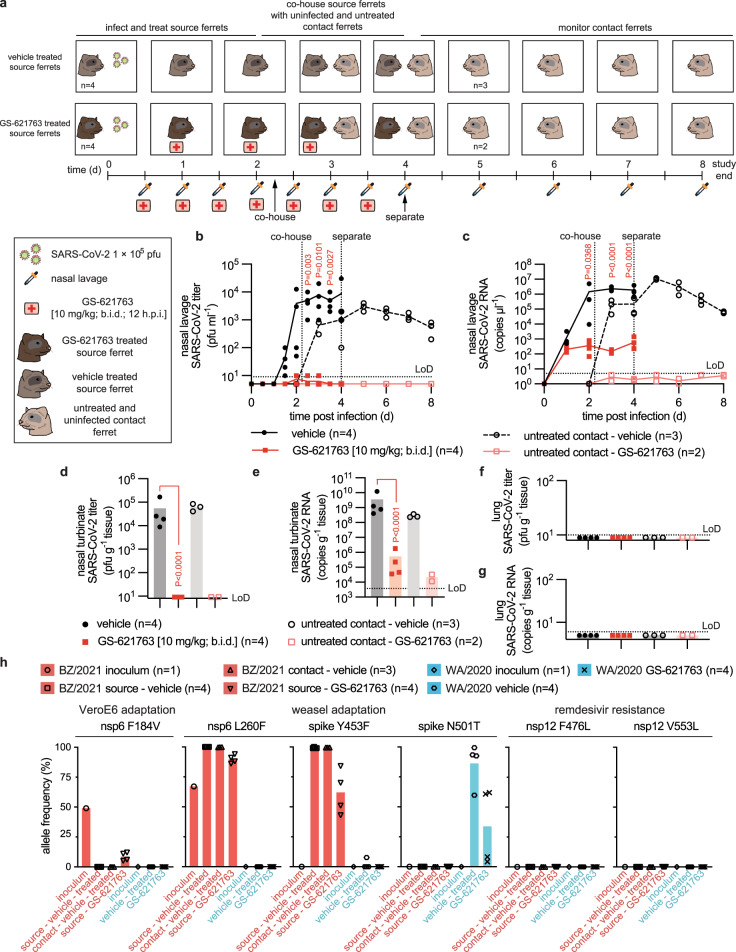
Fig. 4. GS-621763 blocks replication and transmission of SARS-CoV-2 VOC γ a, Schematic of the efficacy and contact transmission study design.
All ferrets were infected intranasally with 1 × 105 pfu BZ/2021 (virus symbol). Symbols as described for Fig. 2a. Groups of ferrets (n = 4) were gavaged b.i.d. with vehicle (black circles in bg) or GS-621763 (10 mg/kg; red squares in bg) starting at 12 h after infection. Nasal lavages were harvested twice daily. On the second day after infection, vehicle and GS-621763 ferrets were cohoused with untreated contact ferrets (black open circles and red open squares for vehicle and GS-621763 contact ferrets, respectively). Source ferrets were terminated 4 days after infection and all contact animals were terminated on study day 8. b Virus titers from nasal lavages. c, SARS-CoV-2 RNA copies present in nasal lavages. d Infectious titers of SARS-CoV-2 in nasal turbinates harvested four days after infection. e SARS-CoV-2 RNA copies detected in nasal turbinates. f Infectious titers of SARS-CoV-2 in lung tissue. g SARS-CoV-2 RNA copies present in lung tissue. In (bg), the number of independent biological repeats (individual animals) is shown in each subpanel. Symbols represent independent biological repeats, lines (b, c) and bar graphs (dg) connect or show sample means, respectively, and P values are stated. 1-way (d, e) or 2-way (b, c) ANOVA with Tukey’s (d, e) or Sidak’s (b, c) post hoc multiple comparison tests. h, Metagenome sequence analysis of inoculum WA1/2020 (blue bar; black diamonds; n = 1) and BZ/2021 (red bar; black circles; n = 1) viruses, BZ/2021 RNA extracted from ferret nasal turbinates four days after infection (red bars; black squares and downward pointing triangles for vehicle (n = 4) and GS-621763 treated (n = 4) ferrets, respectively), WA1/202 RNA extracted from ferret nasal turbinates four days after infection (blue bars; black hexagons and “×” symbols for vehicle (n = 4) and GS-621763 treated (n = 4) ferrets, respectively) and BZ/2021 populations extracted from nasal lavages of contacts of vehicle-treated source animals (red bars; black upward pointing triangles; n = 3). Relative allele frequencies of signature residues are shown. Symbols represent independent biological repeats (virus population of individual animals), columns show group means. LoD limit of detection.

References

    1. U.S. Food & Drug Administration. FDA Approves First Treatment for COVID-19. https://www.fda.gov/news-events/press-announcements/fda-approves-first-t... (last accessed 06/06/2021), 2020).
    1. Mackman RL, et al. Prodrugs of a 1′-CN-4-Aza-7,9-dideazaadenosine C-Nucleoside Leading to the Discovery of Remdesivir (GS-5734) as a Potent Inhibitor of Respiratory Syncytial Virus with Efficacy in the African Green Monkey Model of RSV. J. Med. Chem. 2021;64:5001–5017. doi: 10.1021/acs.jmedchem.1c00071. - DOI - PubMed
    1. Siegel D. Discovery and Synthesis of a Phosphoramidate Prodrugof a Pyrrolo[2,1-f][triazin-4-amino] Adenine C-Nucleoside (GS-5734) for theTreatment of Ebola and Emerging Viruses. J. Med. Chem. 2017;60:1648–1661. doi: 10.1021/acs.jmedchem.6b01594. - DOI - PubMed
    1. Meganck RM, Baric RS. Developing therapeutic approaches for twenty-first-century emerging infectious viral diseases. Nat. Med. 2021;27:401–410. doi: 10.1038/s41591-021-01282-0. - DOI - PubMed
    1. Toots, M. et al. Characterization of orally efficacious influenza drug with high resistance barrier in ferrets and human airway epithelia. Sci. Transl. Med. 11, eaax5866 (2019). - PMC - PubMed

Publication types