


Application of digital education in undergraduate nursing and medical interns during the COVID-19 pandemic: A systematic review
- PMID: 34741918
- PMCID: PMC8545701
- DOI: 10.1016/j.nedt.2021.105183
Application of digital education in undergraduate nursing and medical interns during the COVID-19 pandemic: A systematic review
Abstract
Background: Due to the rapid spread of coronavirus disease 2019 (COVID-19) around the world, the World Health Organization (WHO) declared it a global pandemic on March 11, 2020. This declaration had an unprecedented impact on health profession education, especially the clinical clerkship of nursing and medical students. The teaching hospitals had to suspend traditional bedside clinical teaching and switch to digital education.
Objective: To systematically synthesize the available literature on the application of digital education in undergraduate nursing and medical interns during the COVID-19 pandemic.
Design: A systematic review informed by PRISMA guidelines.
Data sources: Five electronic databases were systematically searched: PubMed, Embase, MEDLINE (OVID), CINAHL and the Cochrane Library.
Review methods: The retrieved articles were screened at the title, abstract, and full text stages. The Mixed-Methods Appraisal Tool (MMAT) was used to assess the quality of quantitative and mixed-method studies. Then, two reviewers extracted the quantitative data of the included studies.
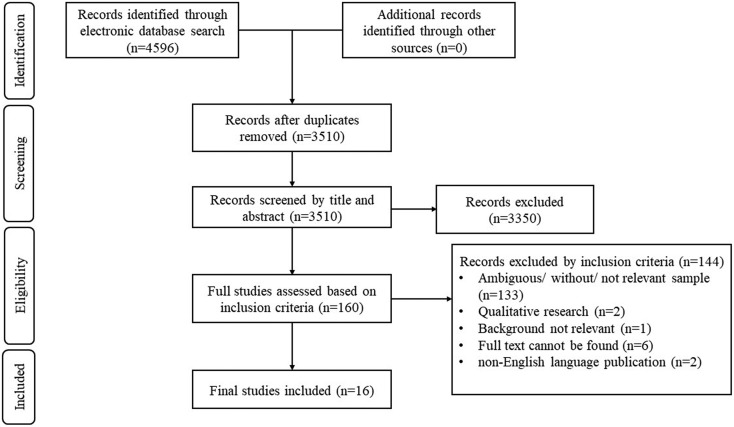
Results: A total of 4596 studies were identified following a comprehensive search, and 16 studies were included after removing duplicates and screening, which focused on undergraduate nursing students (3 studies) and medical students (13 studies). We found that the standalone digital education modalities were as effective as conventional learning for knowledge and practice. Different educational technologies have different effects on the knowledge and practice of interns.
Conclusion: Digital education plays a significant role in distance training for nursing and medical interns both now and in the future. The overall risk of bias was high, and the quality of evidence was found to be variable. There is a need for further research designing more quasi-experimental studies to assess the effectiveness of standalone digital education interventions for the remote training of nursing or medical interns to be fully prepared for emergencies.
Keywords: COVID-19; Clinical practicum; Digital education; Medical students; Nursing students; Undergraduate.
Copyright © 2021 Elsevier Ltd. All rights reserved.
Conflict of interest statement
There is no competing financial interest in the research. The purpose of the research did not reflect the official policy or position of the organization and government.
Figures
References
-
- Alpert J.B., Young M.G., Lala S.V., McGuinness G. Medical student engagement and educational value of a remote clinical radiology learning environment: creation of virtual read-out sessions in response to the COVID-19 pandemic. Acad. Radiol. 2021;28:112–118. - PubMed
-
- AlThiga H., Mohidin S., Park Y.S., Tekian A. Preparing for practice: nursing intern and faculty perceptions on clinical experiences. Med. Teach. 2017;39:S55–s62. - PubMed
-
- Bala L., Kinross J., Martin G., Koizia L.J., Kooner A.S., Shimshon G.J., Hurkxkens T.J., Pratt P.J., Sam A.H. A remote access mixed reality teaching ward round. Clin. Teach. 2021;18:386–390. - PubMed
-
- Bloom B.S. Effects of continuing medical education on improving physician clinical care and patient health: a review of systematic reviews. Int. J. Technol. Assess. Health Care. 2005;21:380–385. - PubMed
-
- Bristol T.J., Kyarsgaard V. Asynchronous discussion: a comparison of larger and smaller discussion group size. Nurs. Educ. Perspect. 2012;33:386–390. - PubMed
Publication types
MeSH terms
LinkOut - more resources
Full Text Sources
Medical
