


Structural racism and its pathways to asthma and atopic dermatitis
- PMID: 34743832
- PMCID: PMC9186508
- DOI: 10.1016/j.jaci.2021.09.020
Structural racism and its pathways to asthma and atopic dermatitis
Abstract
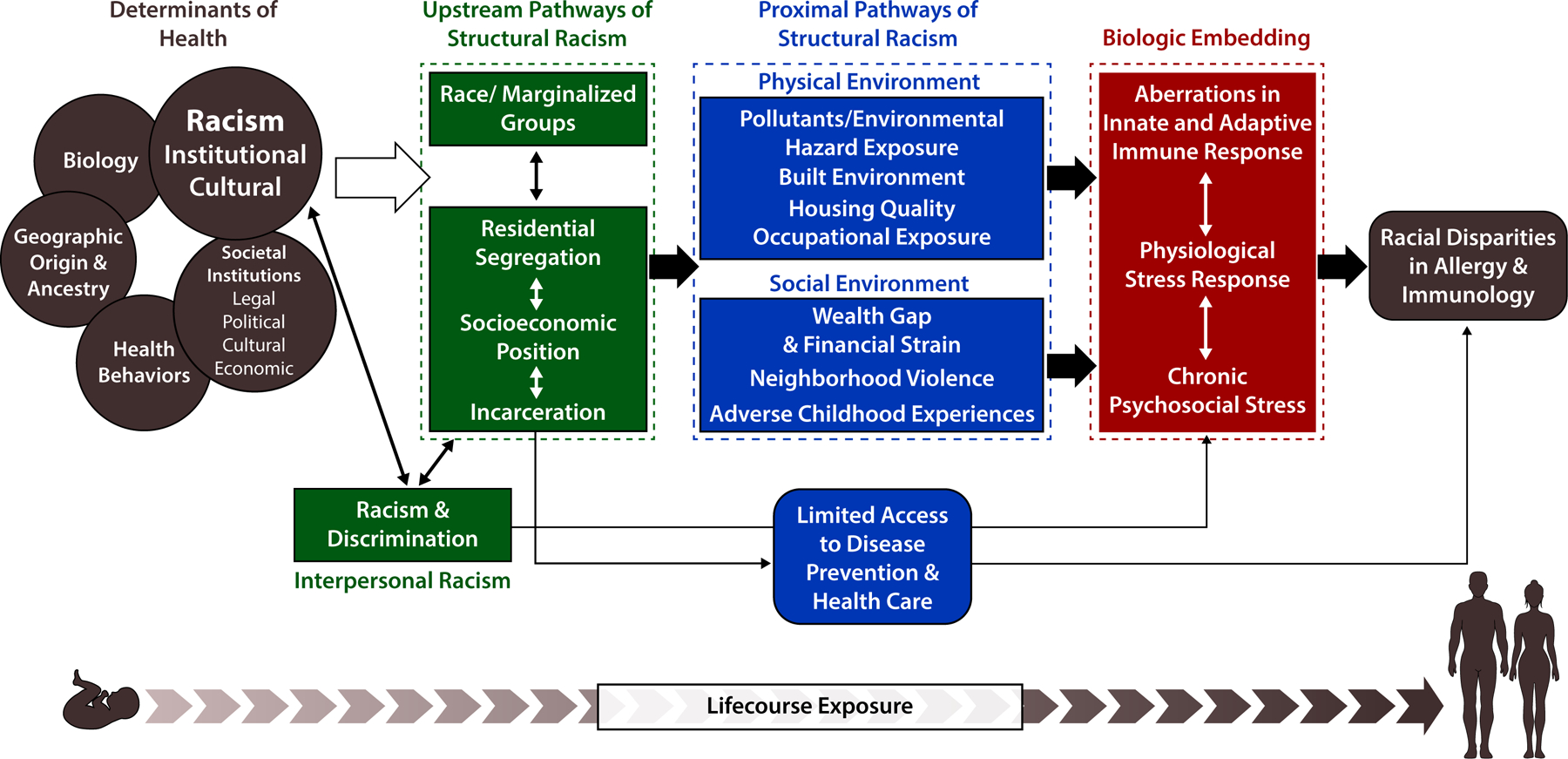
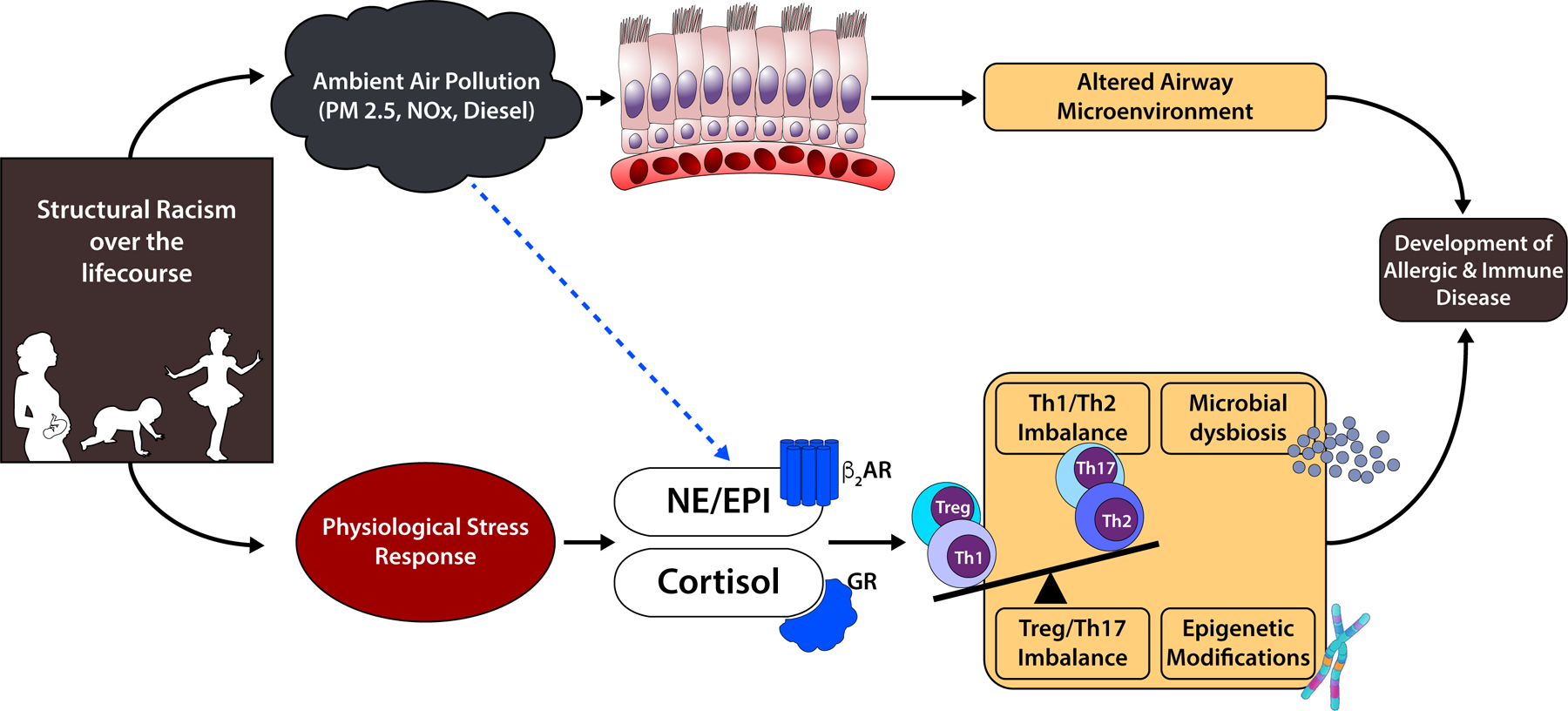
Black, Latinx, and Indigenous people in the United States experience a disproportionate burden of asthma and atopic dermatitis. The study of these disease disparities has focused on proximal socioenvironmental exposures and on the biomechanistic (including genetic) differences between racial and ethnic groups. Although biomedical research in allergy and immunology stands to benefit from the inclusion of diverse study populations, the narrow focus on biologic mechanisms disregards the complexity of interactions across biologic and structural factors, including the effects of structural racism. Structural racism is the totality of ways in which society fosters discrimination by creating and reinforcing inequitable systems through intentional policies and practices sanctioned by government and institutions. It is embedded across multiple levels, including the economic, educational, health care, and judicial systems, which are manifested in inequity in the physical and social environment. In this review, we present a conceptual framework and pull from the literature to demonstrate how structural racism is a root cause of atopic disease disparities by way of residential segregation, socioeconomic position, and mass incarceration, which may lead to aberrations in the innate and adaptive immune response and the augmentation of physiologic stress responses, contributing to a disproportionate disease burden for racial and ethnic populations.
Keywords: Racism; allergic dermatitis; asthma; atopy; health disparities.
Copyright © 2021 The Authors. Published by Elsevier Inc. All rights reserved.
Figures
References
-
- Eichenfield L, Tom W, Chamlin S, Feldman S, Hanifin J, Simpson E, et al. Guidelines of care for the management of atopic dermatitis. J Am Acad Dermatol [Internet] 2014;70(2):338–51. Available from: http://linkinghub.elsevier.com/retrieve/pii/S0190962213010955 - PMC - PubMed
-
- National Asthma Education and Prevention Program. Expert Panel Report 3: Guidelines for the Diagnosis and Management of Asthma. Natl Hear Lung Blood Inst 2007;
