Review
. 2021 Dec:51:179-189.
doi: 10.1016/j.coviro.2021.10.007. Epub 2021 Nov 5.

Therapeutic vaccination strategies against EBOV by rVSV-EBOV-GP: the role of innate immunity

Affiliations
Review

Therapeutic vaccination strategies against EBOV by rVSV-EBOV-GP: the role of innate immunity

Amanda N Pinski et al. Curr Opin Virol. 2021 Dec.

Abstract

Zaire Ebola virus (EBOV) is a member of the Filoviridae family. Infection with EBOV causes Ebola virus disease (EVD) characterized by excessive inflammation, lymphocyte death, coagulopathy, and multi-organ failure. In 2019, the FDA-approved the first anti-EBOV vaccine, rVSV-EBOV-GP (Ervebo® by Merck). This live-recombinant vaccine confers both prophylactic and therapeutic protection to nonhuman primates and humans. While mechanisms conferring prophylactic protection are well-investigated, those underlying protection conferred shortly before and after exposure to EBOV remain poorly understood. In this review, we review data from in vitro and in vivo studies analyzing early immune responses to rVSV-EBOV-GP and discuss the role of innate immune activation in therapeutic protection.


Figures

Figure 1.
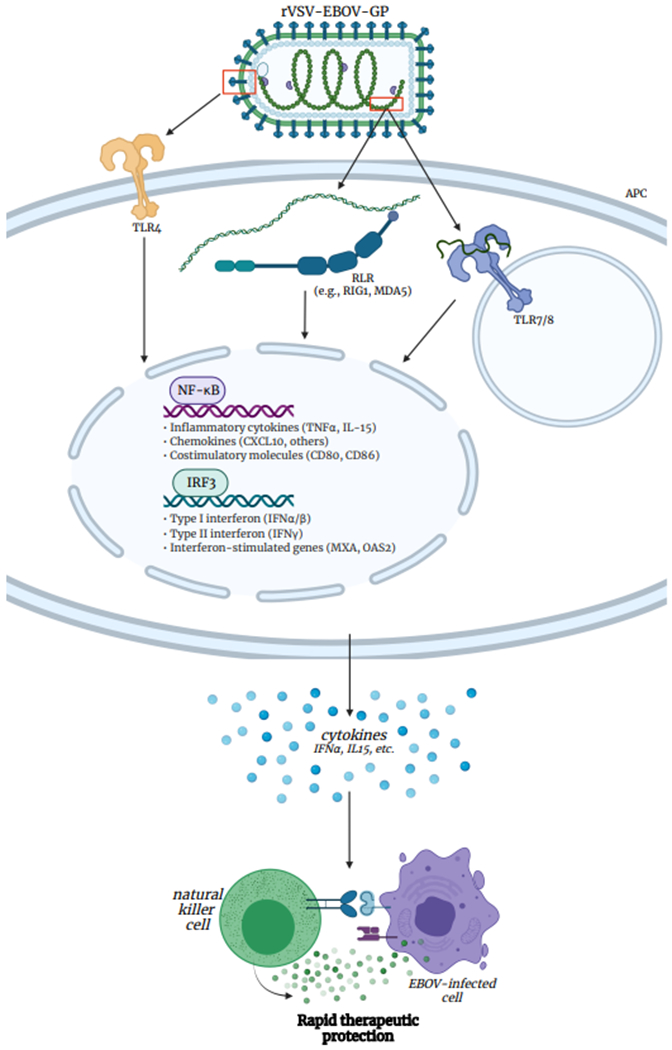
Figure 1.. Mechanism of rVSV-EBOV-GP-mediated rapid therapeutic protection.
Protection when vaccination occurs fewer than 7 days before EBOV challenge is primarily modulated by innate responses to the recombinant vesicular stomatitis vector (rVSV) and membrane EBOV glycoprotein (GP). Interactions of membrane-bound GP with Toll-like receptor (TLR) 4 induces the transcription of inflammatory and interferon-mediated responses by transcription factors NFκB and IRF3, respectively. Similarly, detection of VSV double-stranded RNA by RIG-1-like receptors (RLRs, e.g. RIG1, MDA5) or single-stranded RNA by endosomal TLR7 and TLR8 also lead to NFκB and IRF3. Release of type I interferon (e.g., IFNα, IFNβ), inflammatory cytokines (e.g., TNFα) and NK-activating cytokines (e.g., IL15) stimulates cytotoxic activity in NK cells. NK cell-mediated elimination of virally infected cells provides rapid protection and provides a window of time for efficient adaptive immunity mobilization.

References

    1. Feldmann H, Geisbert TW. Ebola haemorrhagic fever. Lancet. 2011;377:849–862. - PMC - PubMed
    1. Rivera A, Messaoudi I. Molecular mechanisms of Ebola pathogenesis. Journal of Leukocyte Biology. 2016;100:889–904. - PMC - PubMed
    1. Baize S, Leroy EM, Georges AJ, Georges-Courbot M-C, Capron M, Bedjabaga I, Lansoud-Soukate J, Mavoungou E. Inflammatory responses in Ebola virus-infected patients. Clin Exp Immunol. 2002;128:163–168. - PMC - PubMed
    1. Wauquier N, Becquart P, Padilla C, Baize S, Leroy EM. Human fatal zaire ebola virus infection is associated with an aberrant innate immunity and with massive lymphocyte apoptosis. PLoS Negl Trop Dis. 2010;4. - PMC - PubMed
    1. Geisbert TW, Hensley LE, Larsen T, Young HA, Reed DS, Geisbert JB, Scott DP, Kagan E, Jahrling PB, Davis KJ. Pathogenesis of Ebola hemorrhagic fever in cynomolgus macaques: evidence that dendritic cells are early and sustained targets of infection. Am J Pathol. 2003;163:2347–2370. - PMC - PubMed

Publication types