


Twenty years of integrated disease surveillance and response in Sub-Saharan Africa: challenges and opportunities for effective management of infectious disease epidemics
- PMID: 34749835
- PMCID: PMC8575546
- DOI: 10.1186/s42522-021-00052-9
Twenty years of integrated disease surveillance and response in Sub-Saharan Africa: challenges and opportunities for effective management of infectious disease epidemics
Abstract
Introduction: This systematic review aimed to analyse the performance of the Integrated Disease Surveillance and Response (IDSR) strategy in Sub-Saharan Africa (SSA) and how its implementation has embraced advancement in information technology, big data analytics techniques and wealth of data sources.
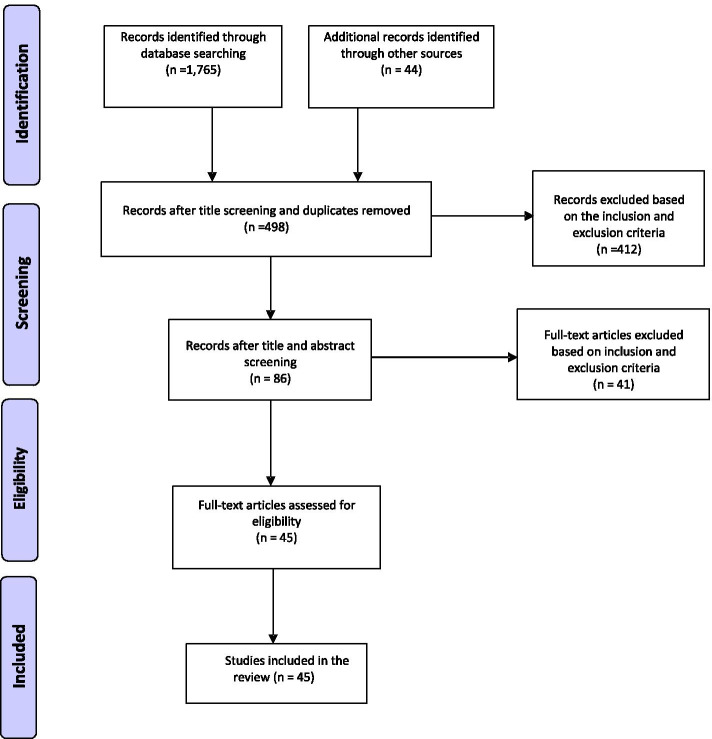
Methods: HINARI, PubMed, and advanced Google Scholar databases were searched for eligible articles. The review followed the Preferred Reporting Items for Systematic Reviews and Meta-Analysis Protocols.
Results: A total of 1,809 articles were identified and screened at two stages. Forty-five studies met the inclusion criteria, of which 35 were country-specific, seven covered the SSA region, and three covered 3-4 countries. Twenty-six studies assessed the IDSR core functions, 43 the support functions, while 24 addressed both functions. Most of the studies involved Tanzania (9), Ghana (6) and Uganda (5). The routine Health Management Information System (HMIS), which collects data from health care facilities, has remained the primary source of IDSR data. However, the system is characterised by inadequate data completeness, timeliness, quality, analysis and utilisation, and lack of integration of data from other sources. Under-use of advanced and big data analytical technologies in performing disease surveillance and relating multiple indicators minimises the optimisation of clinical and practice evidence-based decision-making.
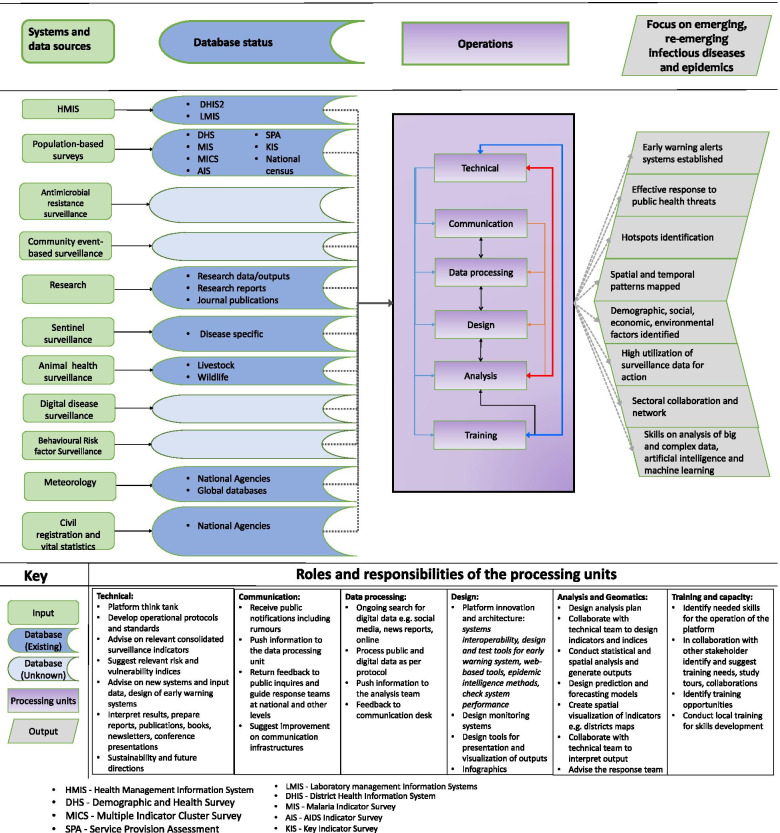
Conclusions: This review indicates that most countries in SSA rely mainly on traditional indicator-based disease surveillance utilising data from healthcare facilities with limited use of data from other sources. It is high time that SSA countries consider and adopt multi-sectoral, multi-disease and multi-indicator platforms that integrate other sources of health information to provide support to effective detection and prompt response to public health threats.
Keywords: Big data; Data source; Disease surveillance; One Health; Performance; Sub-Saharan Africa.
© 2021. The Author(s).
Conflict of interest statement
The authors declare that they have no competing interests.
Figures
References
-
- Talisuna AO, Okiro EA, Yahaya AA, Stephen M, Bonkoungou B, Musa EO, et al. Spatial and temporal distribution of infectious disease epidemics, disasters and other potential public health emergencies in the World Health Organisation Africa region, 2016–2018. Glob Health. 2020;16:9. doi: 10.1186/s12992-019-050-4. - DOI - PMC - PubMed
-
- Saker L, Lee K, Cannito B, Gilmore A, Campbell-Lendrum D. Globalization and infectious diseases: A review of the linkages. UNDP/World Bank/WHO Special Programme for Research and Training in Tropical Diseases (TDR), TDR/STR/SEB/ST/04.2. 2004. https://www.who.int/tdr/publications/documents/.
Publication types
LinkOut - more resources
Full Text Sources
Research Materials
Miscellaneous