


Digital Health Technologies for Remote Monitoring and Management of Inflammatory Bowel Disease: A Systematic Review
- PMID: 34751673
- PMCID: PMC8987011
- DOI: 10.14309/ajg.0000000000001545
Digital Health Technologies for Remote Monitoring and Management of Inflammatory Bowel Disease: A Systematic Review
Abstract
Introduction: Digital health technologies may be useful tools in the management of chronic diseases. We performed a systematic review of digital health interventions in the management of patients with inflammatory bowel diseases (IBD) and evaluated its impact on (i) disease activity monitoring, (ii) treatment adherence, (iii) quality of life (QoL) measures, and/or (iv) health care utilization.
Methods: Through a systematic review of multiple databases through August 31, 2020, we identified randomized controlled trials in patients with IBD comparing digital health technologies vs standard of care (SoC) for clinical management and monitoring and reporting impact on IBD disease activity, treatment adherence, QoL, and/or health care utilization or cost-effectiveness. We performed critical qualitative synthesis of the evidence supporting digital health interventions in patients with IBD and rated certainty of evidence using Grading of Recommendations Assessment, Development and Evaluation.
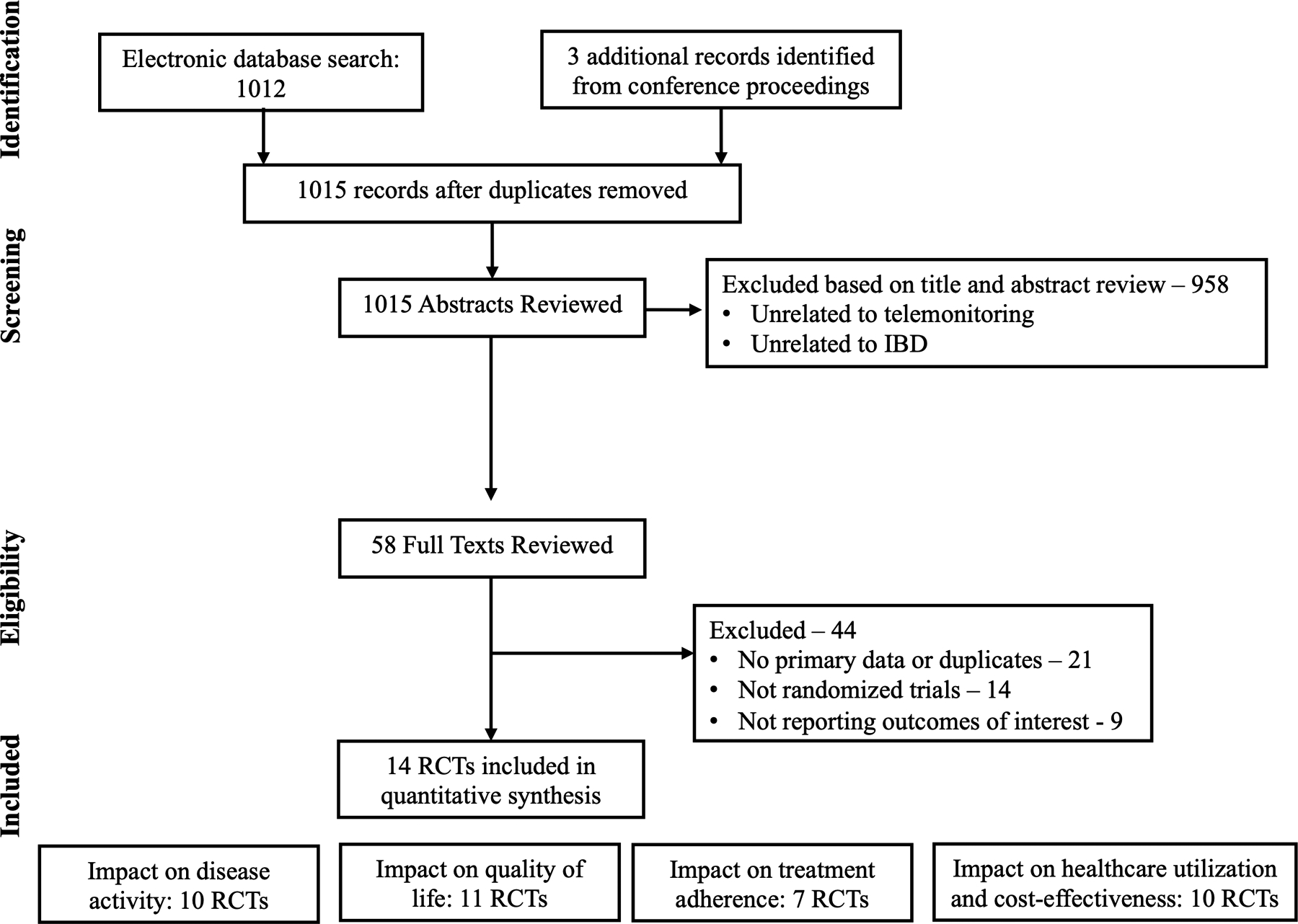
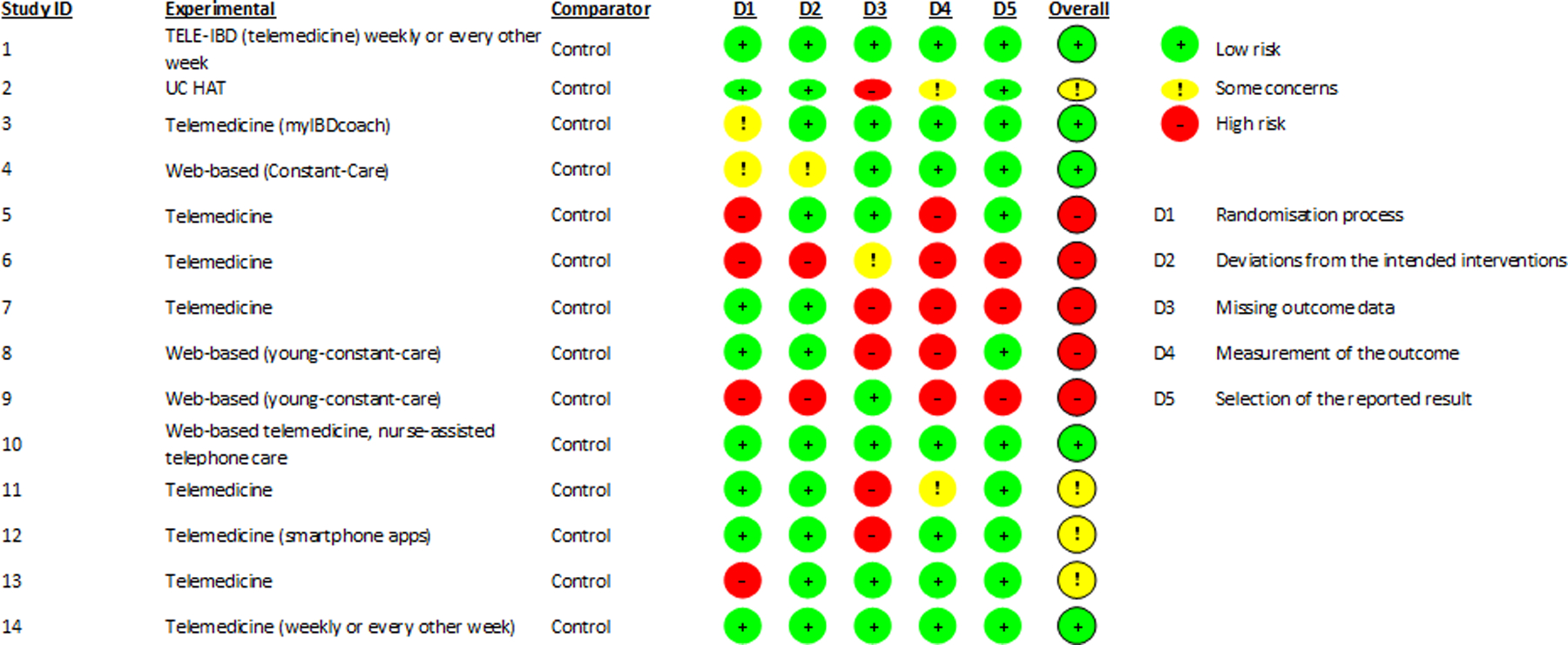
Results: Overall, we included 14 randomized controlled trials (median, 98 patients; range 34-909 patients; follow-up <12 months) that compared web-based interventions, mobile applications, and different telemedicine platforms with SoC (clinic-based encounters). Although overall disease activity and risk of relapse were comparable between digital health technologies and SoC (very low certainty of evidence), digital health interventions were associated with lower rate of health care utilization and health care costs (low certainty of evidence). Digital health interventions did not significantly improve patients' QoL and treatment adherence compared with SoC (very low certainty of evidence). Trials may have intrinsic selection bias due to nature of digital interventions.
Discussion: Digital health technologies may be effective in decreasing health care utilization and costs, though may not offer advantage in reducing risk of relapse, QoL, and improving treatment adherence in patients with IBD. These techniques may offer value-based care for population health management.
Copyright © 2021 by The American College of Gastroenterology.
Figures
References
-
- Olen O, Askling J, Sachs MC, Frumento P, Neovius M, Smedby KE, et al. Increased Mortality of Patients With Childhood-Onset Inflammatory Bowel Diseases, Compared With the General Population. Gastroenterology. 2019;156(3):614–22. - PubMed
-
- Olen O, Askling J, Sachs MC, Neovius M, Smedby KE, Ekbom A, et al. Mortality in adult-onset and elderly-onset IBD: a nationwide register-based cohort study 1964–2014. Gut. 2019. - PubMed
-
- Dulai PS, Singh S, Ohno-Machado L, Sandborn WJ. Population Health Management for Inflammatory Bowel Disease. Gastroenterology. 2018;154(1):37–45. - PubMed
Publication types
MeSH terms
Grants and funding
LinkOut - more resources
Full Text Sources
Medical
