Sex Differences in the Pattern of Patient Referrals to Male and Female Surgeons
- PMID: 34757424
- PMCID: PMC8581775
- DOI: 10.1001/jamasurg.2021.5784
Sex Differences in the Pattern of Patient Referrals to Male and Female Surgeons
Erratum in
-
Incorrect Term in Results.JAMA Surg. 2022 Feb 1;157(2):177. doi: 10.1001/jamasurg.2021.6858. JAMA Surg. 2022. PMID: 34910104 Free PMC article. No abstract available.
Abstract
Importance: Studies have found that female surgeons have fewer opportunities to perform highly remunerated operations, a circumstance that contributes to the sex-based pay gap in surgery. Procedures performed by surgeons are, in part, determined by the referrals they receive. In the US and Canada, most practicing physicians who provide referrals are men. Whether there are sex-based differences in surgical referrals is unknown.
Objective: To examine whether physicians' referrals to surgeons are influenced by the sex of the referring physician and/or surgeon.
Design, setting, and participants: This cross-sectional, population-based study used administrative databases to identify outpatient referrals to surgeons in Ontario, Canada, from January 1, 1997, to December 31, 2016, with follow-up to December 31, 2018. Data analysis was performed from April 7, 2019, to May 14, 2021.
Exposures: Referring physician sex.
Main outcomes and measures: This study compared the proportion of referrals (overall and those referrals that led to surgery) made by male and female physicians to male and female surgeons to assess associations between surgeon, referring physician, or patient characteristics and referral decisions. Discrete choice modeling was used to examine the extent to which sex differences in referrals were associated with physicians' preferences for same-sex surgeons.
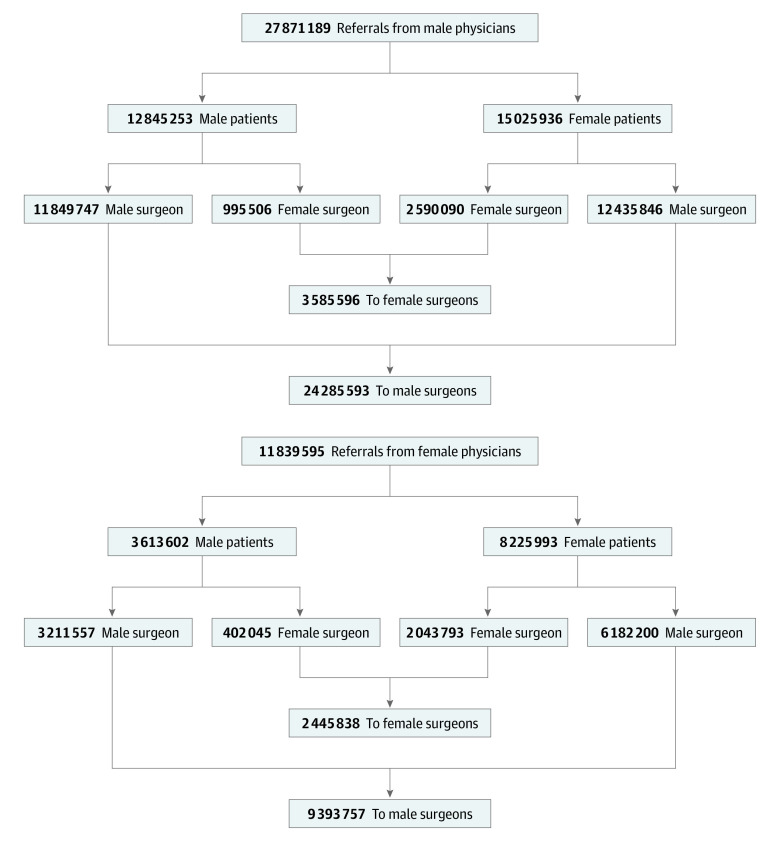
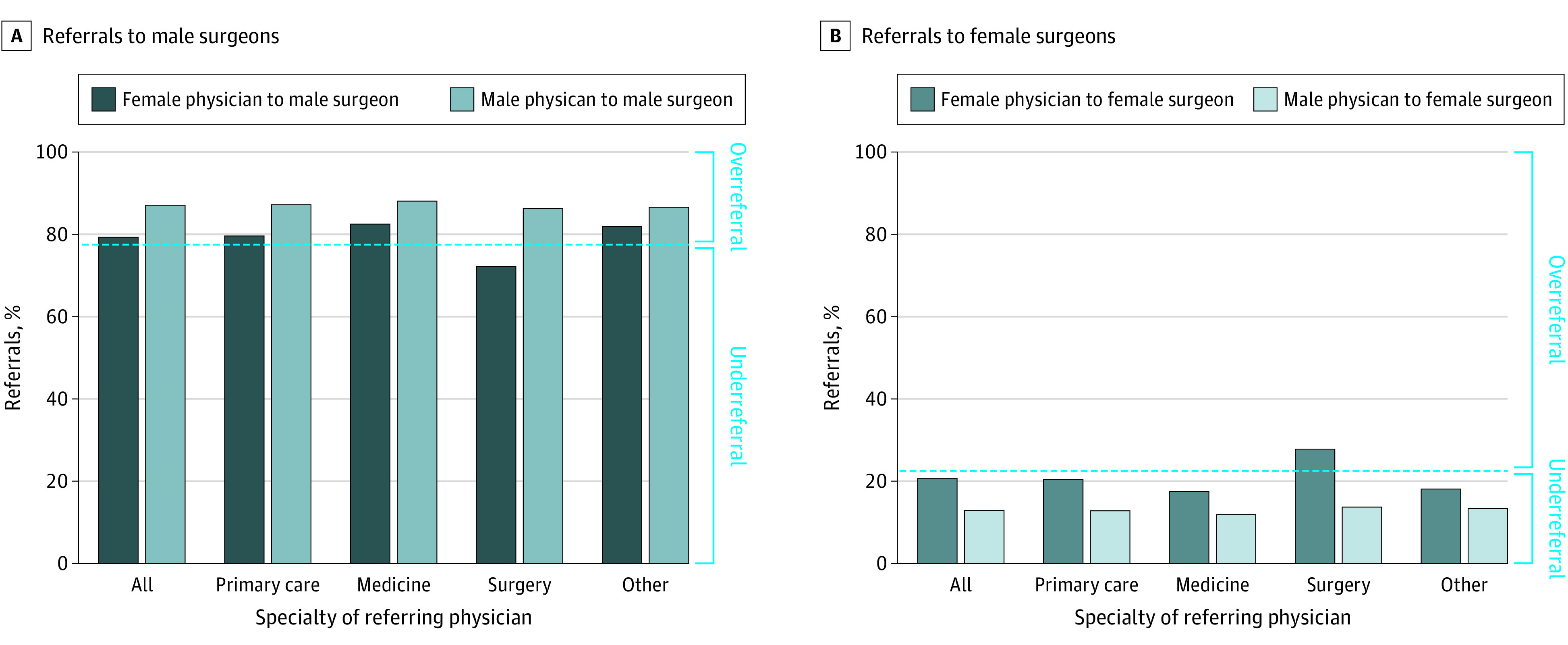
Results: A total of 39 710 784 referrals were made by 44 893 physicians (27 792 [61.9%] male) to 5660 surgeons (4389 [77.5%] male). Female patients made up a greater proportion of referrals to female surgeons than to male surgeons (76.8% vs 55.3%, P < .001). Male surgeons accounted for 77.5% of all surgeons but received 87.1% of referrals from male physicians and 79.3% of referrals from female physicians. Female surgeons less commonly received procedural referrals than male surgeons (25.4% vs 33.0%, P < .001). After adjusting for patient and referring physician characteristics, male physicians referred a greater proportion of patients to male surgeons than did female physicians; differences were greatest among referrals from other surgeons (rate ratio, 1.14; 95% CI, 1.13-1.16). Female physicians had a 1.6% (95% CI, 1.4%-1.9%) greater odds of same-sex referrals, whereas male physicians had a 32.0% (95% CI, 31.8%-32.2%) greater odds of same-sex referrals; differences did not attenuate over time.
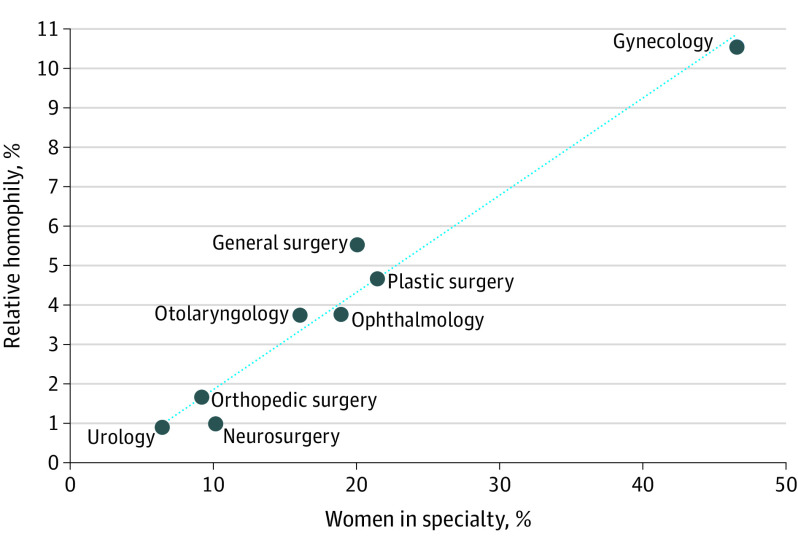
Conclusions and relevance: In this cross-sectional, population-based study, male physicians appeared to have referral preferences for male surgeons; this disparity is not narrowing over time or as more women enter surgery. Such preferences lead to lower volumes of and fewer operative referrals to female surgeons and are associated with sex-based inequities in medicine.
Conflict of interest statement
Figures
Comment in
-
Surgeon's Sex Affects the Number and Types of Referrals Received-We Know the System Is Broken…Now Let's Fix It.JAMA Surg. 2022 Feb 1;157(2):103-104. doi: 10.1001/jamasurg.2021.5765. JAMA Surg. 2022. PMID: 34757394 No abstract available.
-
Socioeconomic Factors, Urological Epidemiology and Practice Patterns.J Urol. 2022 Oct;208(4):921-922. doi: 10.1097/JU.0000000000002850. Epub 2022 Aug 1. J Urol. 2022. PMID: 35914314 No abstract available.
References
Publication types
MeSH terms
Grants and funding
LinkOut - more resources
Full Text Sources
Miscellaneous