


Emotional Dysregulation in Children and Adolescents With Psychiatric Disorders. A Narrative Review
- PMID: 34759846
- PMCID: PMC8573252
- DOI: 10.3389/fpsyt.2021.628252
Emotional Dysregulation in Children and Adolescents With Psychiatric Disorders. A Narrative Review
Abstract
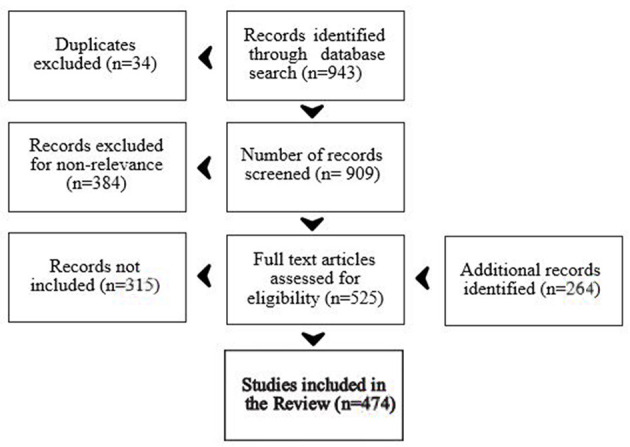
Background: Emotional dysregulation (ED) is a transdiagnostic construct defined as the inability to regulate the intensity and quality of emotions (such as, fear, anger, sadness), in order to generate an appropriate emotional response, to handle excitability, mood instability, and emotional overreactivity, and to come down to an emotional baseline. Because ED has not been defined as a clinical entity, and because ED plays a major role in child and adolescent psychopathology, we decided to summarize current knowledge on this topic based on a narrative review of the current literature. Methods: This narrative review is based on a literature search of peer-reviewed journals. We searched the databases ERIC, PsycARTICLES, PsycINFO and PSYNDEX on June 2, 2020 for peer reviewed articles published between 2000 and 2020 in English language for the preschool, school, and adolescent age (2-17 years) using the following search terms: "emotional dysregulation" OR "affect dysregulation," retrieving 943 articles. Results: The results of the literature search are presented in the following sections: the relationship between ED and psychiatric disorders (ADHD, Mood Disorders, Psychological Trauma, Posttraumatic Stress Disorder, Non-suicidal Self-Injury, Eating Disorders, Oppositional Defiant Disorder, Conduct Disorder, Disruptive Disruptive Mood Dysregulation Disorder, Personality Disorders, Substance Use Disorder, Developmental Disorders, Autism Spectrum Disorder, Psychosis and Schizophrenia, and Gaming Disorder), prevention, and treatment of ED. Conclusion: Basic conditions of ED are genetic disposition, the experience of trauma, especially sexual or physical abuse, emotional neglect in childhood or adolescence, and personal stress. ED is a complex construct and a comprehensive concept, aggravating a number of various mental disorders. Differential treatment is mandatory for individual and social functioning.
Keywords: adolescents; children; emotional dysregulation; mental disorder; psychiatric disorders; psychopathology; treatment.
Copyright © 2021 Paulus, Ohmann, Möhler, Plener and Popow.
Conflict of interest statement
The authors declare that the research was conducted in the absence of any commercial or financial relationships that could be construed as a potential conflict of interest.
References
-
- Gratz KL, Roemer L. Multidimensional assessment of emotion regulation and dysregulation: development, factor structure, and initial validation of the difficulties in emotion regulation scale. J Psychopathol Behav Assess. (2004) 26:41–54. 10.1023/B:JOBA.0000007455.08539.94 - DOI
-
- Gross JJ, Thompson RA. Emotion regulation. Conceptual foundations, In: Gross J, editor. Handbook of Emotion Regulation. New York, NY: Guilford Press; (2007).
Publication types
LinkOut - more resources
Full Text Sources
Medical
