


Emergence of B.1.524(G) SARS-CoV-2 in Malaysia during the third COVID-19 epidemic wave
- PMID: 34764315
- PMCID: PMC8586159
- DOI: 10.1038/s41598-021-01223-4
Emergence of B.1.524(G) SARS-CoV-2 in Malaysia during the third COVID-19 epidemic wave
Abstract
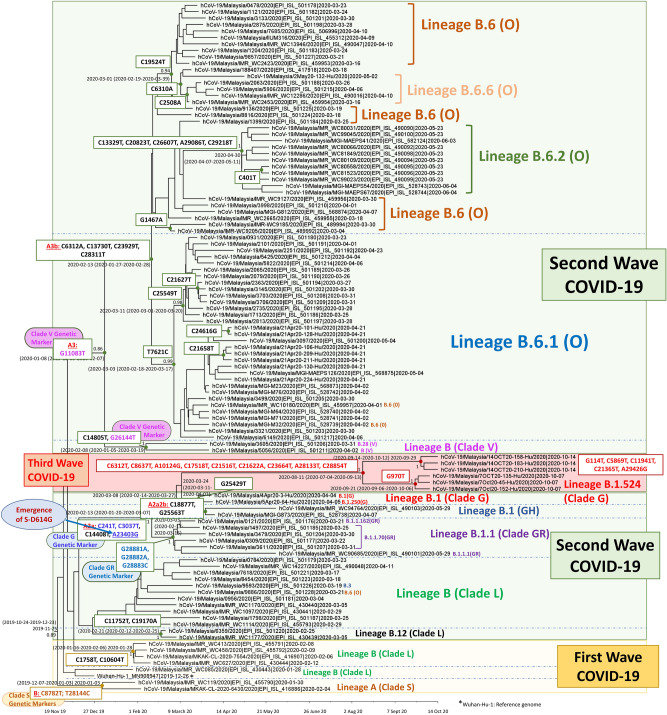
The COVID-19 pandemic first emerged in Malaysia in Jan 2020. As of 12th Sept 2021, 1,979,698 COVID-19 cases that occurred over three major epidemic waves were confirmed. The virus contributing to the three epidemic waves has not been well-studied. We sequenced the genome of 22 SARS-CoV-2 strains detected in Malaysia during the second and the ongoing third wave of the COVID-19 epidemic. Detailed phylogenetic and genetic variation analyses of the SARS-CoV-2 isolate genomes were performed using these newly determined sequences and all other available sequences. Results from the analyses suggested multiple independent introductions of SARS-CoV-2 into Malaysia. A new B.1.524(G) lineage with S-D614G mutation was detected in Sabah, East Malaysia and Selangor, Peninsular Malaysia on 7th October 2020 and 14th October 2020, respectively. This new B.1.524(G) group was not the direct descendant of any of the previously detected lineages. The new B.1.524(G) carried a set of genetic variations, including A701V (position variant frequency = 0.0007) in Spike protein and a novel G114T mutation at the 5'UTR. The biological importance of the specific mutations remained unknown. The sequential appearance of the mutations, however, suggests that the spread of the new B.1.524(G) lineages likely begun in Sabah and then spread to Selangor. The findings presented here support the importance of SARS-CoV-2 full genome sequencing as a tool to establish an epidemiological link between cases or clusters of COVID-19 worldwide.
© 2021. The Author(s).
Conflict of interest statement
The authors declare no competing interests.
Figures
References
-
- World Health Organization. (2020).
-
- World Health Organization. COVID-19 Weekly Epidemiology Update, Edition 56, published 7 September 2021, <https://www.who.int/publications/m/item/weekly-epidemiological-update-on...> (2021).
Publication types
MeSH terms
Grants and funding
LinkOut - more resources
Full Text Sources
Medical
Miscellaneous
