


Defining skin aging and its risk factors: a systematic review and meta-analysis
- PMID: 34764376
- PMCID: PMC8586245
- DOI: 10.1038/s41598-021-01573-z
Defining skin aging and its risk factors: a systematic review and meta-analysis
Abstract
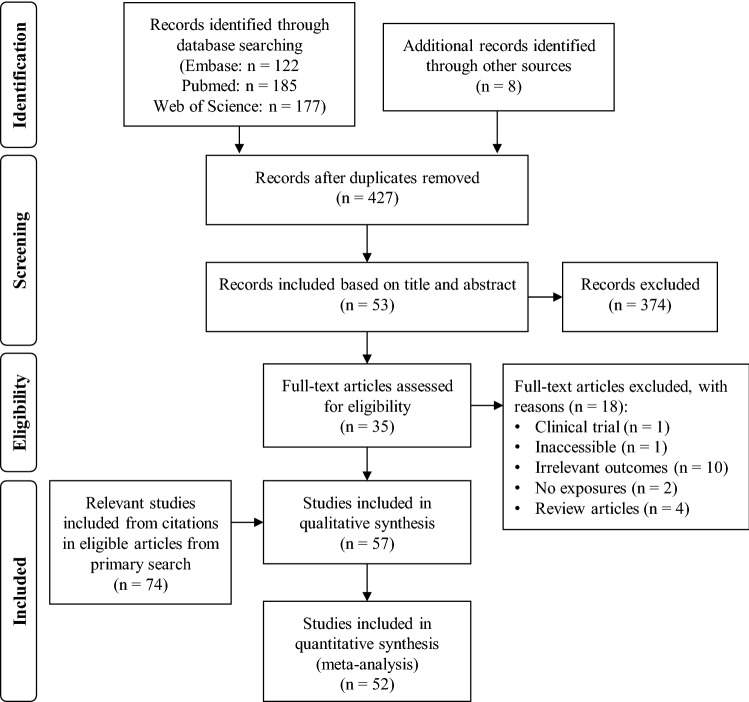
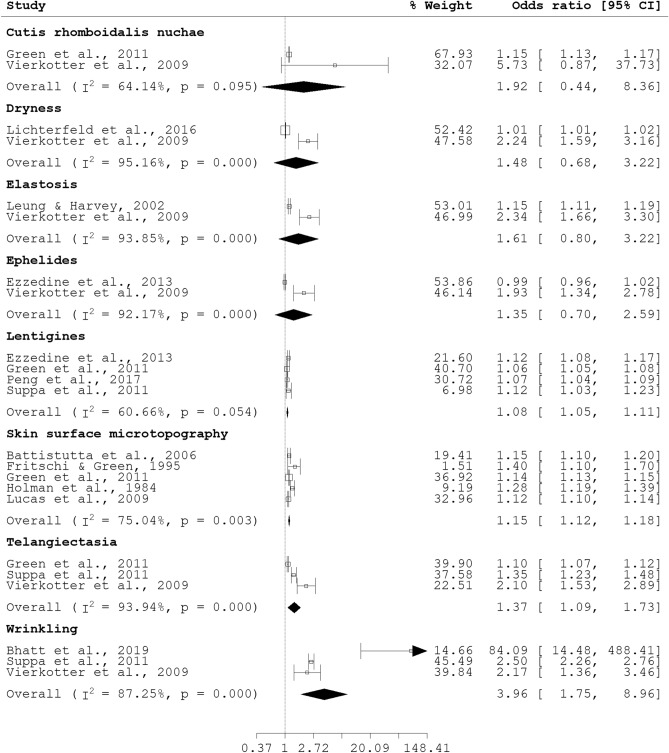
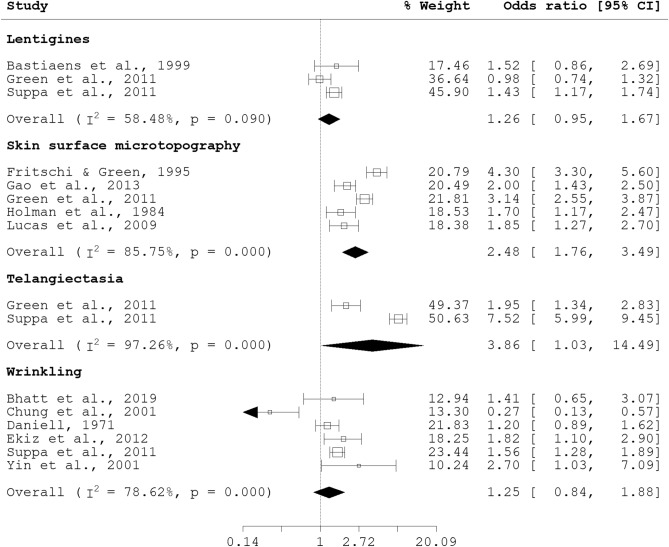
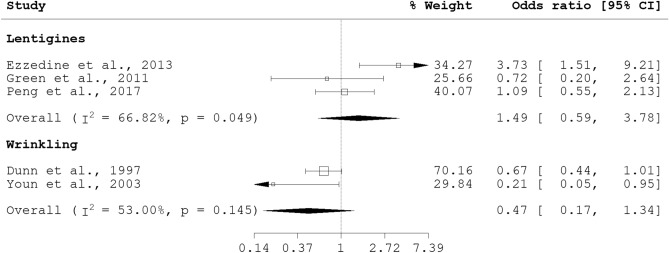
Skin aging has been defined to encompass both intrinsic and extrinsic aging, with extrinsic aging effected by environmental influences and overlaying the effects of chronological aging. The risk factors of skin aging have been studied previously, using methods of quantifying skin aging. However, these studies have yet to be reviewed. To better understand skin aging risk factors and collate the available data, we aimed to conduct a systematic review and meta-analysis. We conducted our systematic review in compliance with Preferred Reporting Item for Systematic Review and Meta-Analyses (PRISMA) guidelines. Embase, PubMed and Web of Science databases were searched in October 2020 using specific search strategies. Where odds ratios were reported, meta-analyses were conducted using the random effects model. Otherwise, significant factors were reported in this review. We identified seven notable risk factors for various skin aging phenotypes: age, gender, ethnicity, air pollution, nutrition, smoking, sun exposure. This review's results will guide future works, such as those aiming to examine the interaction between genetic and environmental influences.
© 2021. The Author(s).
Conflict of interest statement
Dr. CHEW Fook Tim (Singapore) received grants from the Singapore Ministry of Education Academic Research Fund, Singapore Immunology Network, National Medical Research Council (NMRC) (Singapore), and the Agency for Science Technology and Research (A*STAR) (Singapore); Grant Numbers: N-154-000-038-001; R-154-000-191-112; R-154-000-404-112; R-154-000-553-112; R-154-000-565-112; R-154-000-630-112; R-154-000-A08-592; R-154-000-A27-597; R-154-000-A91-592; R-154-000-A95-592; R154-000-B99-114; BMRC/01/1/21/18/077; BMRC/04/1/21/19/315; BMRC/APG2013/108; SIgN-06-006; SIgN-08-020; NMRC/1150/2008; H17/01/a0/0088; and APG2013/108. The funding agencies had no role in the study design, data collection and analysis, decision to publish, or preparation of the manuscript. The other authors declare no other competing interests.
Figures
References
-
- Ippen M, Ippen H. Approaches to a prophylaxis of skin aging. J. Soc. Cosmet. Chem. 1965;16:305–308.
Publication types
MeSH terms
Substances
Grants and funding
LinkOut - more resources
Full Text Sources
Medical
