


Metabo-Endotypes of Asthma Reveal Differences in Lung Function: Discovery and Validation in Two TOPMed Cohorts
- PMID: 34767496
- PMCID: PMC8886990
- DOI: 10.1164/rccm.202105-1268OC
Metabo-Endotypes of Asthma Reveal Differences in Lung Function: Discovery and Validation in Two TOPMed Cohorts
Abstract
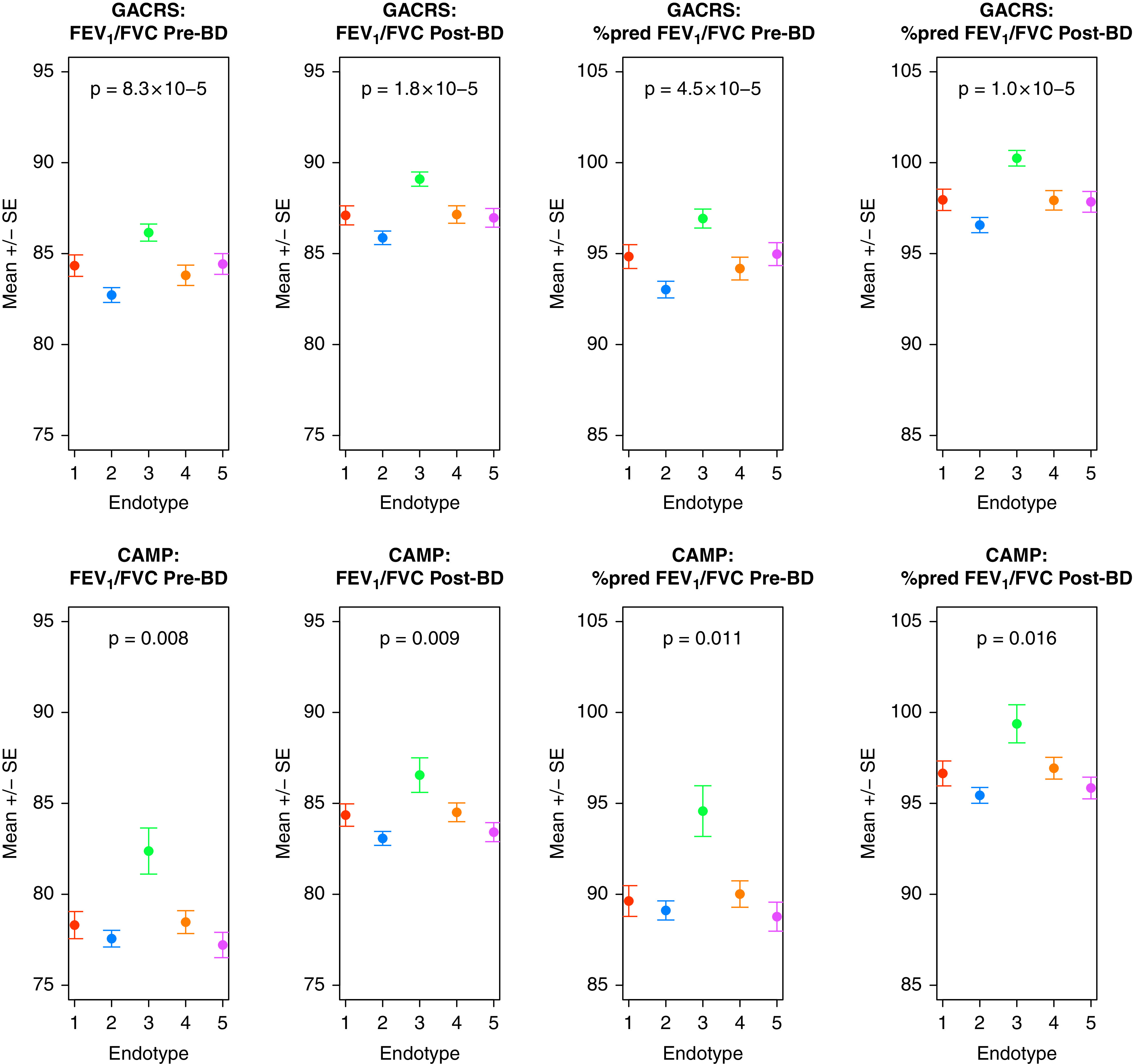
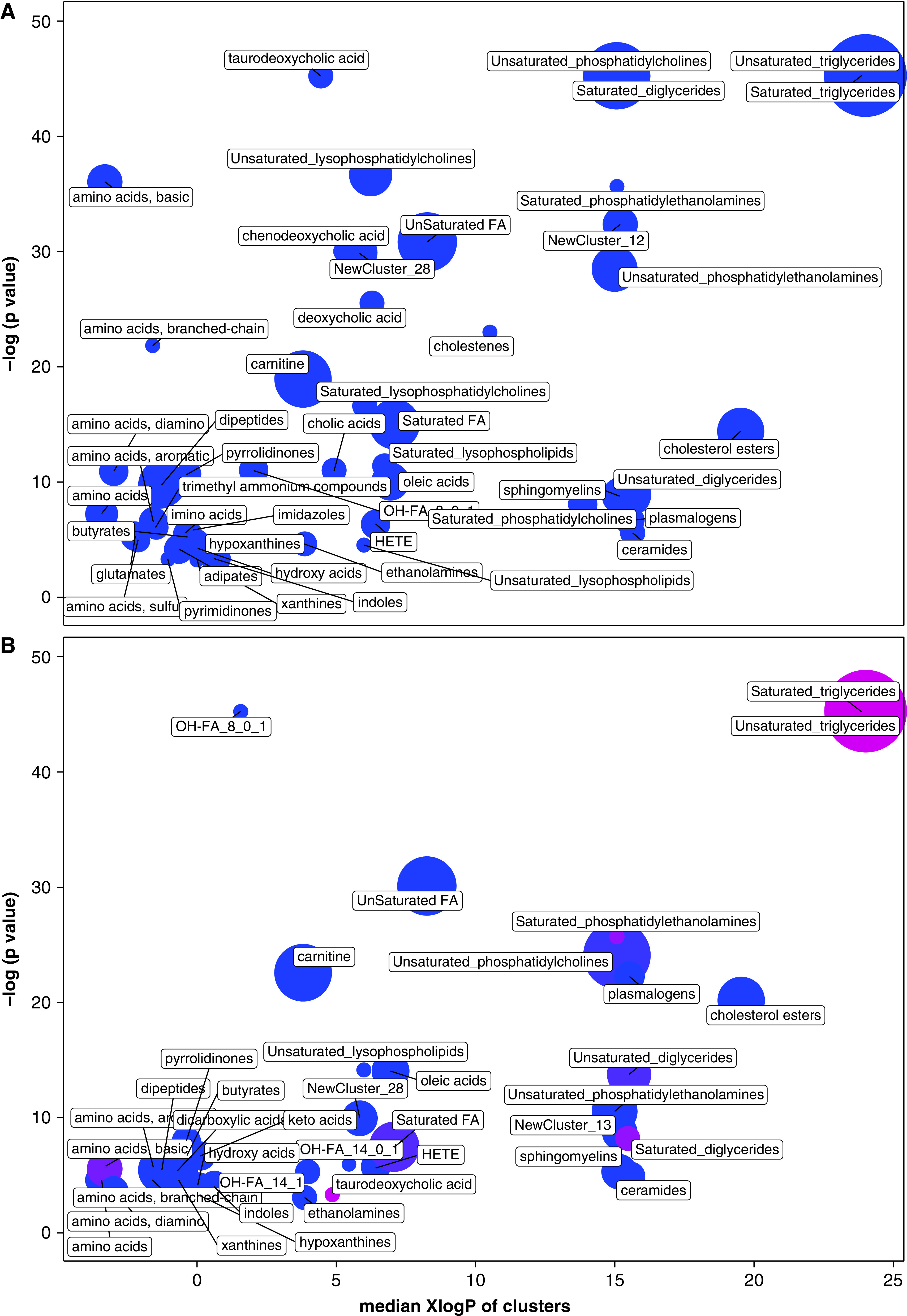
Rationale: Current guidelines do not sufficiently capture the heterogeneous nature of asthma; a more detailed molecular classification is needed. Metabolomics represents a novel and compelling approach to derive asthma endotypes (i.e., subtypes defined by functional and/or pathobiological mechanisms). Objectives: To validate metabolomic-driven endotypes of asthma and explore their underlying biology. Methods: In the Genetics of Asthma in Costa Rica Study (GACRS), untargeted metabolomic profiling, similarity network fusion, and spectral clustering was used to identify metabo-endotypes of asthma, and differences in asthma-relevant phenotypes across these metabo-endotypes were explored. The metabo-endotypes were recapitulated in the Childhood Asthma Management Program (CAMP), and clinical differences were determined. Metabolomic drivers of metabo-endotype membership were investigated by meta-analyzing findings from GACRS and CAMP. Measurements and Main Results: Five metabo-endotypes were identified in GACRS with significant differences in asthma-relevant phenotypes, including prebronchodilator (p-ANOVA = 8.3 × 10⁻⁵) and postbronchodilator (p-ANOVA = 1.8 × 10⁻⁵) FEV1/FVC. These differences were validated in the recapitulated metabo-endotypes in CAMP. Cholesterol esters, trigylcerides, and fatty acids were among the most important drivers of metabo-endotype membership. The findings suggest dysregulation of pulmonary surfactant homeostasis may play a role in asthma severity. Conclusions: Clinically meaningful endotypes may be derived and validated using metabolomic data. Interrogating the drivers of these metabo-endotypes has the potential to help understand their pathophysiology.
Keywords: asthma; endotyping; metabo-endotypes; metabolomics.
Figures
Comment in
-
Endotyping Asthma: Profiling the Metabolic Dimension?Am J Respir Crit Care Med. 2022 Feb 1;205(3):261-263. doi: 10.1164/rccm.202111-2605ED. Am J Respir Crit Care Med. 2022. PMID: 34914570 Free PMC article. No abstract available.
References
-
- Eder W, Ege MJ, von Mutius E. The asthma epidemic. N Engl J Med . 2006;355:2226–2235. - PubMed
-
- Boulet LP, FitzGerald JM, Reddel HK. The revised 2014 GINA strategy report: opportunities for change. Curr Opin Pulm Med . 2015;21:1–7. - PubMed
-
- Fiehn O. Metabolomics: the link between genotypes and phenotypes. Plant Mol Biol . 2002;48:155–171. - PubMed
Publication types
MeSH terms
Grants and funding
- R01HL123915/HB/NHLBI NIH HHS/United States
- K01 HL153941/HL/NHLBI NIH HHS/United States
- R01 HL155742/HL/NHLBI NIH HHS/United States
- R01 HL141826/HL/NHLBI NIH HHS/United States
- R01 HL139634/HL/NHLBI NIH HHS/United States
- U01 HL120393/HL/NHLBI NIH HHS/United States
- K01HL153941/HB/NHLBI NIH HHS/United States
- R01 HL147148/HL/NHLBI NIH HHS/United States
- U01 HL089856/HL/NHLBI NIH HHS/United States
- R01 HL137927/HL/NHLBI NIH HHS/United States
- R01HL141826/HB/NHLBI NIH HHS/United States
- K08 HL136928/HL/NHLBI NIH HHS/United States
- R01 HL123915/HL/NHLBI NIH HHS/United States
- R01 HL120393/HL/NHLBI NIH HHS/United States
- R01 HL135142/HL/NHLBI NIH HHS/United States
- R01HL155742/HB/NHLBI NIH HHS/United States
- R01HL135142/HB/NHLBI NIH HHS/United States
- HHSN268201800001C/HL/NHLBI NIH HHS/United States
- P01 HL132825/HL/NHLBI NIH HHS/United States
- K01 HL146980/HL/NHLBI NIH HHS/United States
