


Stroke risk associated with NSAIDs uses in women with dysmenorrhea: A population-based cohort study
- PMID: 34767568
- PMCID: PMC8589167
- DOI: 10.1371/journal.pone.0259047
Stroke risk associated with NSAIDs uses in women with dysmenorrhea: A population-based cohort study
Abstract
Objective: Dysmenorrhea is among the most common type of gynecological problem, affecting young women across the globe. This study assessed the comparative risk of stroke associated with the use of nonsteroidal anti-inflammatory drugs (NSAIDs) and non-NSAIDs in women with dysmenorrhea while taking into account the following factors such as age, history of pregnancy, NSAIDs uses and its duration of use, and selected comorbidities.
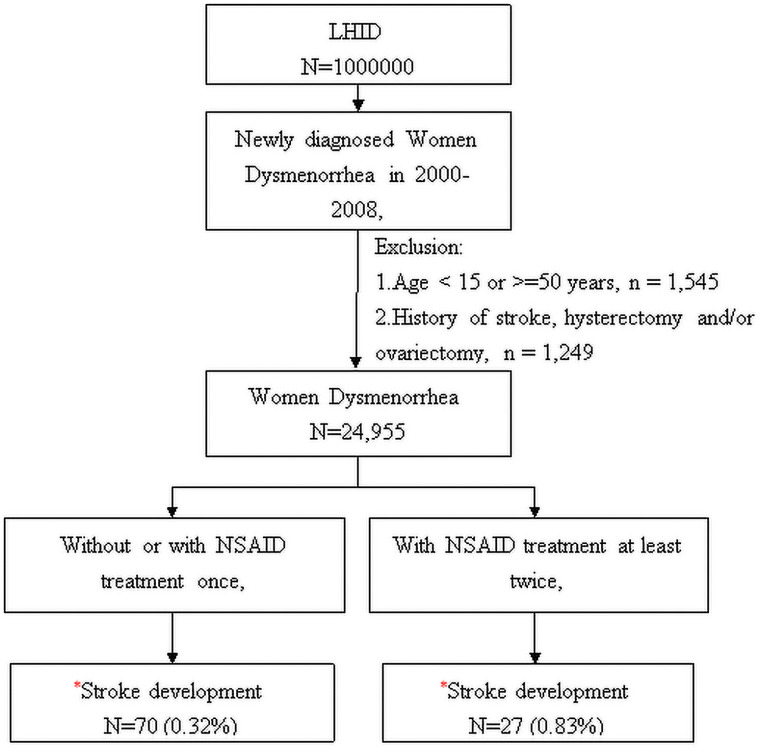
Methodology: We used a quantitative research approach based on a comparative case-control study design. The study data was selected from the Longitudinal Health Insurance Database (LHID) 2000, of the Taiwan National Health Research Institutes. Among the estimated 23.4 million insured Taiwanese, who were covered by the Taiwan health insurance system, in the 2000 registry of beneficiaries, one million individuals were randomly selected from the database. A total of 24,955 females suffering from dysmenorrhea were selected for the study. Out of those 3238 (13%) participated in the study group and 21,717 (87%) were randomly distributed into the controls group. Women in the age range, 15-49 years, who did not have any history of stroke, hysterectomy, and/or ovariectomy, were included in the study. A comparative proportional distribution analysis was used for data analysis.
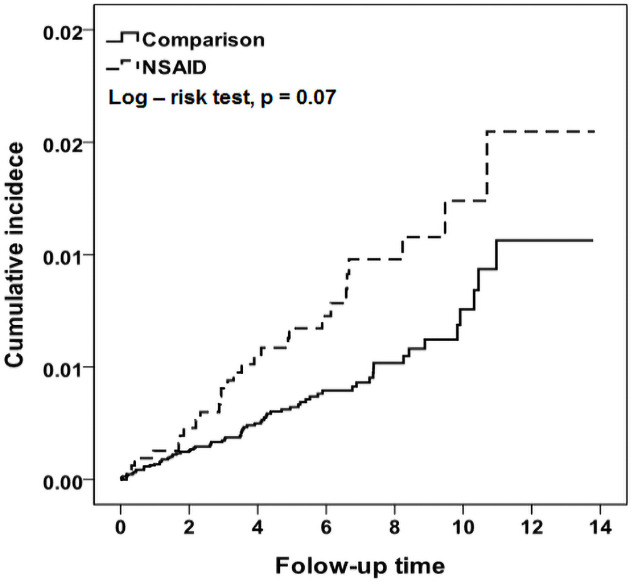
Results: Age and use of NSAIDs and its duration of usage were factors associated with an increased incidence of stroke. The stroke incidence rate was 12.77 per 10,000 person-years, and 1.83-fold higher in NSAIDs use cohort than in comparisons with adjusted hazard ratio (aHR) of 1.47 (95% CI = 0.93-2.32). Among women with dysmenorrhea use of NSAIDs, the stroke incidence increased to 2.29-fold (aHR 95% CI = 1.36-3.84) in those use for ≧24 days per month and to 0.51-fold (aHR 95% CI = 0.13-2.10) in those use for 6-12 days per month.
Conclusions: Women with dysmenorrhea who use NSAIDs have a higher risk of stroke. Especially young women, the risk of stroke is further increased, and the longer the medication, the higher the risk of stroke. Every woman with symptoms of dysmenorrhea deserves specialized outpatient treatment and care.
Conflict of interest statement
The authors have declared that no competing interests exist.
Figures
References
-
- Osayande AS, Mehulic S. Diagnosis and initial management of dysmenorrhea. Am Fam Physician. 2014; 89(5):341–346. - PubMed
-
- Smith RP. (2018). The clinical classification and causes of dysmenorrhea. In Smith RP, Dysmenorrhea and Menorrhagia-A Clinician’s Guide (pp.55–64). Cham: Springer.
Publication types
MeSH terms
Substances
LinkOut - more resources
Full Text Sources
Medical
