


Different pharmacoresistance of focal epileptic spasms, generalized epileptic spasms, and generalized epileptic spasms combined with focal seizures
- PMID: 34773678
- PMCID: PMC8886099
- DOI: 10.1002/epi4.12560
Different pharmacoresistance of focal epileptic spasms, generalized epileptic spasms, and generalized epileptic spasms combined with focal seizures
Abstract
Objective: Among standard treatments for infantile spasms, adrenocorticotropic hormone (ACTH) is reported as the best treatment, but ACTH is ineffective in one-half of the patients. To establish precision medicine, we examined pharmacoresistance of focal epileptic spasms (ES), generalized ES, and generalized ES combined with focal seizures, diagnosed based on the revised seizure classification of ILAE in 2017.
Methods: We conducted a retrospective nationwide study in Japan on the long-term seizure outcome of ES. Long-term seizure outcome was evaluated by seizure-free rate, seizure-free period, and Kaplan-Meier curve. Seizure-free was defined as seizure control for longer than 2 months.
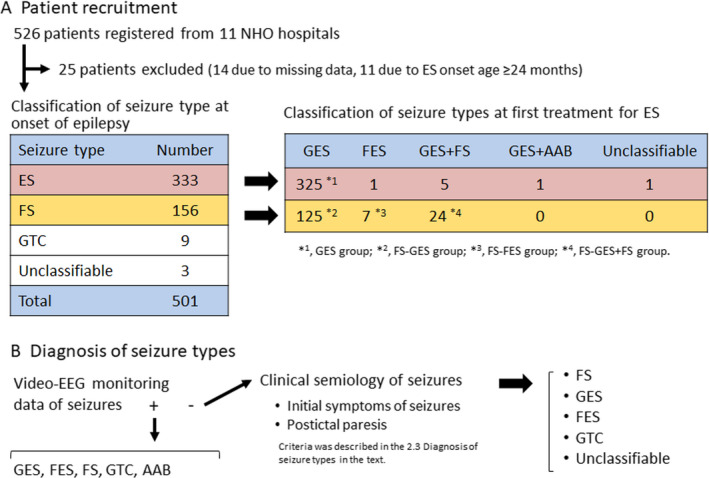
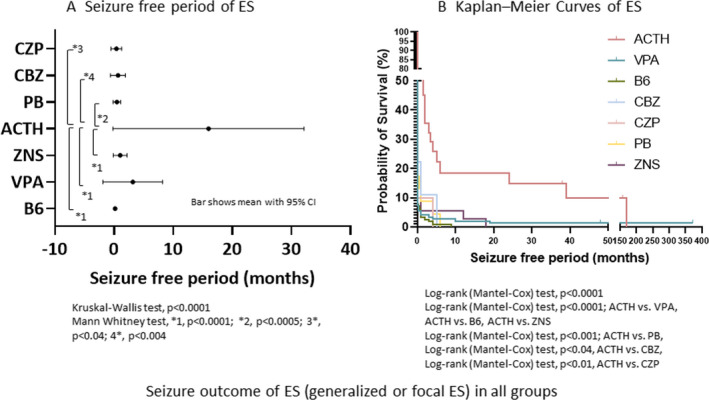
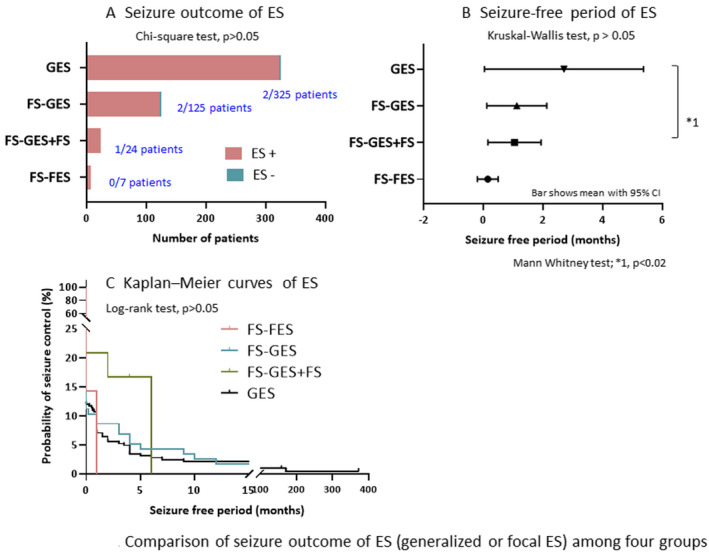
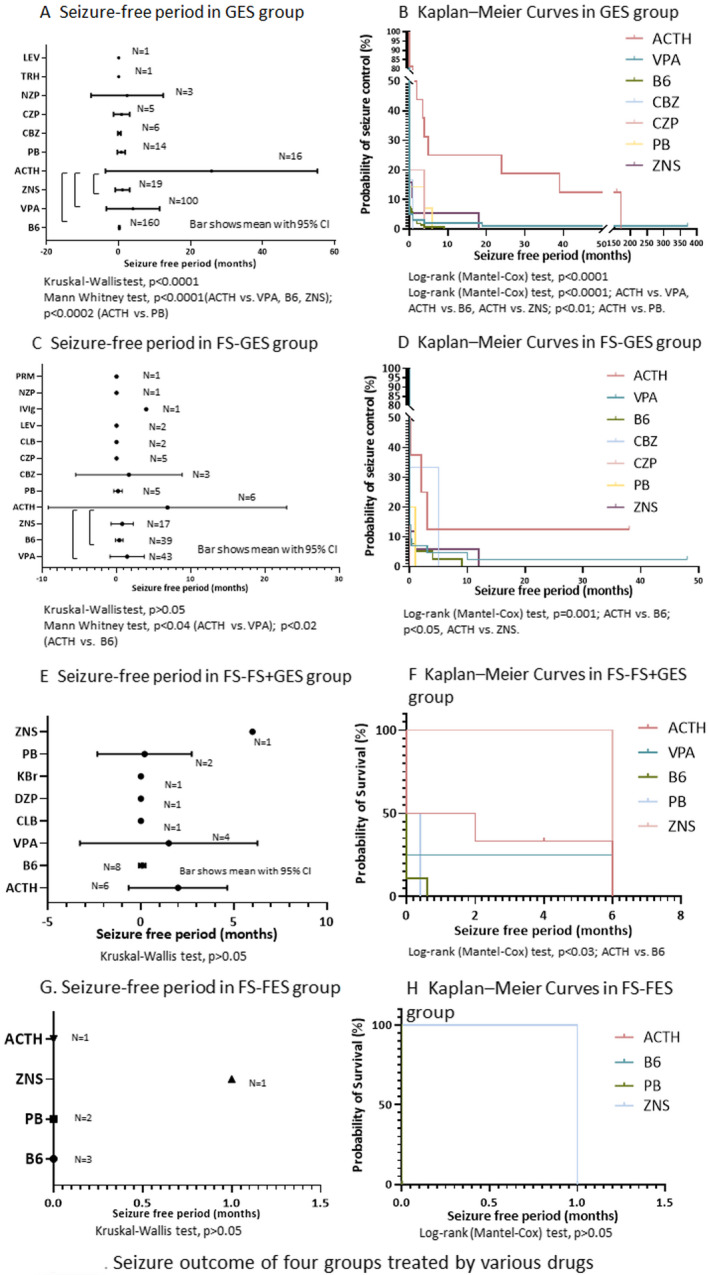
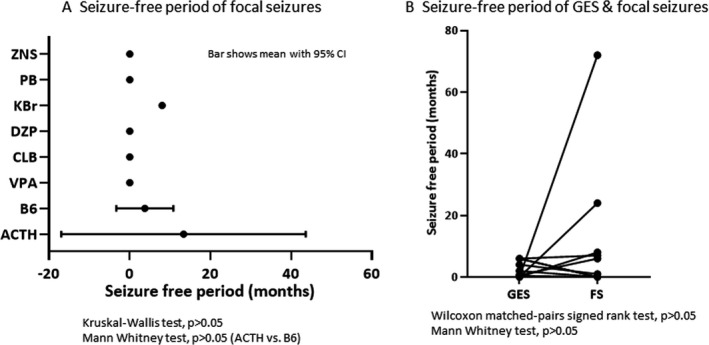
Results: From the medical history of 501 patients, 325 patients had generalized ES only (GES group) at the start of the first treatment, 125 patients had generalized ES after focal seizure onset (FS-GES group), seven patients had focal ES after focal seizure onset (FS-FES group), and 24 patients had generalized ES combined with focal seizures after focal seizure onset (FS-GES + FS group). Seizure-free period of ES (generalized ES and focal ES) [mean (95% confidence interval)] was 2.7 (0.0-5.4) months in GES group, 1.1 (0.1-2.2) months in FS-GES group, 1.0 (0.2-1.9) months in FS-GES + FS group, and 0.1 (-0.2-0.5) months in FS-FES group. Seizure-free rate, seizure-free period, and Kaplan-Meier curve of generalized ES were almost the same in GES group and FS-GES group, with characteristics of superior response to ACTH. Mean seizure-free period of generalized ES combined with focal seizures was significantly shorter in FS-GES + FS group than in GES group. Mean seizure-free period of focal ES in FS-FES group was extremely short with exceedingly early relapse.
Significance: Pharmacoresistance was different in generalized ES, focal ES, and generalized ES combined with focal seizures. ES with focal features or with focal seizures may have focal lesions, thus consider surgical options earlier in the course.
Keywords: combined generalized epileptic spasms; focal epileptic spasms; generalized epileptic spasms; infantile spasms; seizure outcome.
© 2021 The Authors. Epilepsia Open published by Wiley Periodicals LLC on behalf of International League Against Epilepsy.
Conflict of interest statement
Author YT received academic donation from Eisai. The remaining authors have no conflict of interest. We confirm that we have read the Journal's position on issues involved in ethical publication and affirm that this report is consistent with those guidelines.
Figures
References
-
- Lux AL, Osborne JP. A proposal for case definitions and outcome measures in studies of infantile spasms and West syndrome: consensus statement of the West Delphi Group. Epilepsia. 2004;45:1416–28. - PubMed
-
- Fisher RS, Cross JH, D’Souza S, French JA, Haut SR, Higurashi N, et al. Instruction manual for the ILAE 2017 operational classification of seizure types. Epilepsia. 2017;58(4):531–42. - PubMed
-
- Riikonen R. Infantile spasms: outcome in clinical studies. Pediatr Neurol. 2020;108:54–64. - PubMed
-
- O'Callaghan FJ, Edwards SW, Alber FD, Hancock E, Johnson AL, Kennedy CR, et al. Safety and effectiveness of hormonal treatment versus hormonal treatment with vigabatrin for infantile spasms (ICISS): a randomized, multicenter, open‐label trial. Lancet Neurol. 2017;16(1):33–42. - PubMed
Publication types
MeSH terms
LinkOut - more resources
Full Text Sources
Miscellaneous
