


[Depression, stress and anxiety in students of human medicine in Ayacucho (Peru) in the context of the COVID-19 pandemic]
- PMID: 34776545
- PMCID: PMC8576172
- DOI: 10.1016/j.rcp.2021.10.005
[Depression, stress and anxiety in students of human medicine in Ayacucho (Peru) in the context of the COVID-19 pandemic]
Abstract
Objective: To evaluate rates of anxiety, depression and stress, as well as associated factors and changes in habits, among students of human medicine from the Universidad Nacional San Cristóbal de Huamanga [San Cristóbal of Huamanga University] (UNSCH), located in Ayacucho (Peru), in the context of the COVID-19 pandemic.
Methods: A cross-sectional study was conducted through a virtual survey. The Depression Anxiety Stress Scale-21 (DASS-21) was used. To evaluate associated factors, prevalence ratios (PR) were estimated using Poisson regression with robust variance.
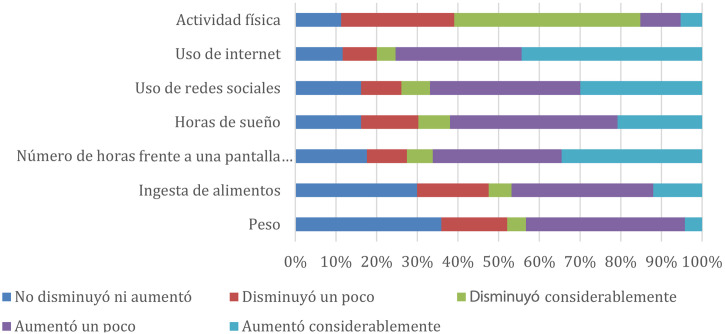
Results: A total of 284 surveys were analysed (48.2% women; median age 22 years). Rates of (at least moderate) depression, anxiety and stress were 24.3%, 28.5% and 13.0%, respectively. Adjusted analyses found that having completed fewer years of study, being Catholic and having a chronic disease were associated with a higher rate of anxiety, while being of a younger age was associated with a higher rate of stress. The students reported mostly decreased physical activity, as well as increased Internet and social media use, hours of sleep, hours spent in front of a screen, food intake, and weight, during the COVID-19 pandemic.
Conclusions: In the context of the pandemic, despite the changes in habits described, rates of depression, anxiety and stress were lower than in previous studies in students in the health sciences. The higher rate of anxiety was associated with being in an earlier academic year, Catholicism and chronic diseases, while the higher rate of stress was associated with being of a younger age.
Objetivo: Evaluar la frecuencia de ansiedad, depresión y estrés, así como sus factores asociados y los cambios de hábitos, en estudiantes de Medicina humana de la Universidad Nacional San Cristóbal de Huamanga (UNSCH), ubicada en Ayacucho (Perú), en el contexto de la pandemia por COVID-19.
Métodos: Estudio transversal realizado mediante una encuesta virtual. Se usó la Depression Anxiety Stress Scale-21 (DASS-21). Para evaluar los factores asociados, se estimaron razones de prevalencias (RP) mediante regresiones de Poisson con varianza robusta.
Resultados: Se analizaron 284 encuestas (el 48,2% mujeres; mediana de edad, 22 años). Las frecuencias de depresión, ansiedad y estrés (al menos moderados) fueron del 24,3, el 28,5 y el 13,0% respectivamente. En los análisis ajustados, se encontró que cursar menos años de estudio, ser católico y tener alguna enfermedad crónica se asociaron con mayor frecuencia de ansiedad, en tanto que menos edad se asoció con mayor frecuencia de estrés. Los estudiantes reportaron mayormente disminución de actividad física durante la pandemia por COVID-19 y aumento del uso de internet y redes sociales, las horas de sueño, las horas frente a una pantalla, la ingesta de alimentos y el peso.
Conclusiones: En el contexto de la pandemia, a pesar de los cambios de hábitos descritos, las frecuencias de depresión, ansiedad y estrés fueron menores que en estudios previos en estudiantes de ciencias de la salud. La mayor frecuencia de ansiedad de asoció con un año educativo más temprano, el catolicismo y las enfermedades crónicas, en tanto que la mayor frecuencia de estrés se asoció con una edad menor.
Keywords: Anxiety; Depression; Medical students; SARS-CoV-2 infection; Stress.
© 2021 Asociación Colombiana de Psiquiatría. Published by Elsevier España, S.L.U. All rights reserved.
Figures
References
Publication types
LinkOut - more resources
Full Text Sources
Research Materials
Miscellaneous
