


Characterization of a mcr-1 and CRISPR-Cas System Co-harboring Plasmid in a Carbapenemase-Producing High-Risk ST11 Klebsiella pneumoniae Strain
- PMID: 34777318
- PMCID: PMC8579119
- DOI: 10.3389/fmicb.2021.762947
Characterization of a mcr-1 and CRISPR-Cas System Co-harboring Plasmid in a Carbapenemase-Producing High-Risk ST11 Klebsiella pneumoniae Strain
Abstract
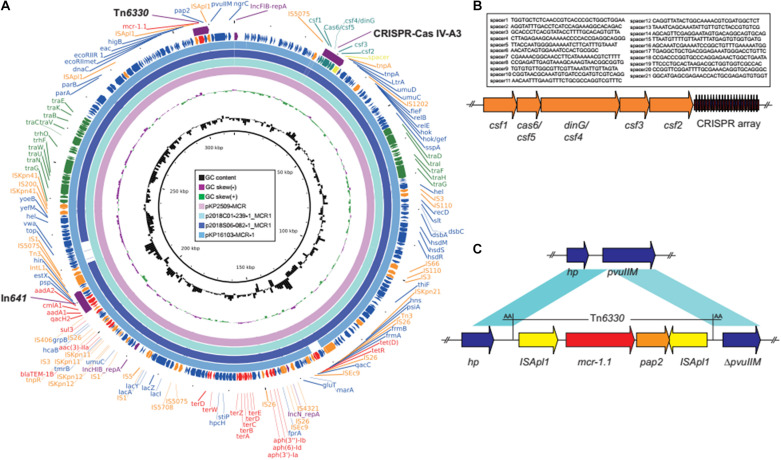
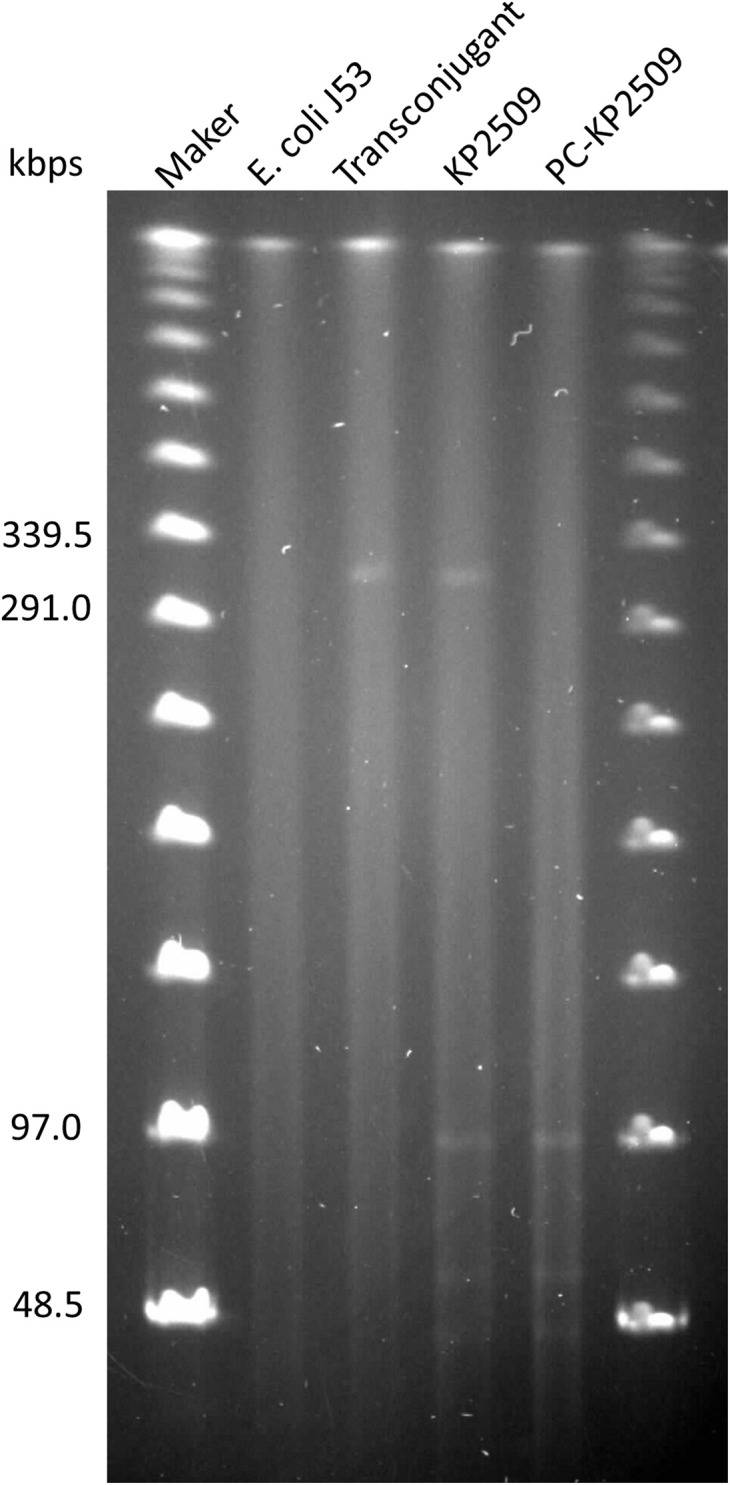
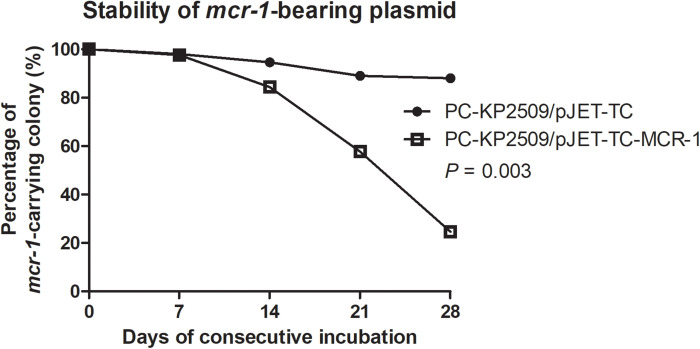
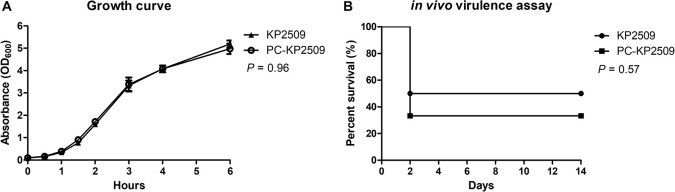
We set out to study the prevalence of the mcr-1 gene in carbapenemase-producing Klebsiella pneumoniae (CPKP) strains, and to determine whether its presence is associated with a fitness cost. A total of 234 clinical CPKP isolates were collected from a tertiary medical center in Taiwan from January 2018 to January 2019. The mcr-1 and carbapenemase genes were detected by polymerase chain reaction (PCR) followed by Sanger sequencing. The mcr-1-positive carbapenemase-producing strain was characterized by whole genome sequencing, a plasmid stability test and a conjugation assay. In vitro growth rate and an in vivo virulence test were compared between the parental mcr-1-positive strain and its mcr-1 plasmid-cured strain. We identified only one mcr-1 positive strain (KP2509), co-harboring bla KPC- 2 and bla OXA- 48, among 234 (1/234, 0.43%) CPKP strains. KP2509 and its Escherichia coli mcr-1 transconjugant showed moderate colistin resistance (MIC = 8 mg/L). The mcr-1 is located on a large conjugative plasmid (317 kb), pKP2509-MCR, with three replicons, IncHI, IncFIB, and IncN. Interestingly, a complete Type IV-A3 CRISPR-Cas system was identified in pKP2509-MCR. Plasmid pKP2509-MCR was highly stable in KP2509 after 270 generation of passage, and the pKP2509-MCR cured strain PC-KP2509 showed similar growth rate and in vivo virulence in comparison to KP2509. The prevalence of mcr-1 in CPKP strains remains low in our center. Notably, we identified a large plasmid with multiple replicons containing both the mcr-1 and the Type IV-3A CRISPR-Cas genes. The further spread of this highly stable plasmid raises concern that it may promote the increase of mcr-1 prevalence in CPKP.
Keywords: carbapenemase; colistin; fitness cost; high-risk clone; mcr-1.
Copyright © 2021 Cheng, Chou, Huang, Yang, Juan, Kreiswirth, Lin and Chen.
Conflict of interest statement
The authors declare that the research was conducted in the absence of any commercial or financial relationships that could be construed as a potential conflict of interest.
Figures
References
-
- Aires C. A. M., da Conceicao-Neto O. C., Tavares E Oliveira T. R., Dias C. F., Montezzi L. F., Picão R. C., et al. (2017). Emergence of the plasmid-mediated mcr-1 gene in clinical KPC-2-producing Klebsiella pneumoniae sequence type 392 in Brazil. Antimicrob. Agents Chemother. 61 e00317–17. 10.1128/AAC.00317-17 - DOI - PMC - PubMed
Grants and funding
LinkOut - more resources
Full Text Sources
