Review
. 2021 Nov 5:2021:5539161.
doi: 10.1155/2021/5539161. eCollection 2021.

A Decade of Mighty Lipophagy: What We Know and What Facts We Need to Know?

Affiliations
Review

A Decade of Mighty Lipophagy: What We Know and What Facts We Need to Know?

Muhammad Babar Khawar et al. Oxid Med Cell Longev. .

Abstract

Lipids are integral cellular components that act as substrates for energy provision, signaling molecules, and essential constituents of biological membranes along with a variety of other biological functions. Despite their significance, lipid accumulation may result in lipotoxicity, impair autophagy, and lysosomal function that may lead to certain diseases and metabolic syndromes like obesity and even cell death. Therefore, these lipids are continuously recycled and redistributed by the process of selective autophagy specifically termed as lipophagy. This selective form of autophagy employs lysosomes for the maintenance of cellular lipid homeostasis. In this review, we have reviewed the current literature about how lipid droplets (LDs) are recruited towards lysosomes, cross-talk between a variety of autophagy receptors present on LD surface and lysosomes, and lipid hydrolysis by lysosomal enzymes. In addition to it, we have tried to answer most of the possible questions related to lipophagy regulation at different levels. Moreover, in the last part of this review, we have discussed some of the pathological states due to the accumulation of these LDs and their possible treatments under the light of currently available findings.


Conflict of interest statement

All the authors declared there is no conflict of interest or ethical concern in this article.

Figures
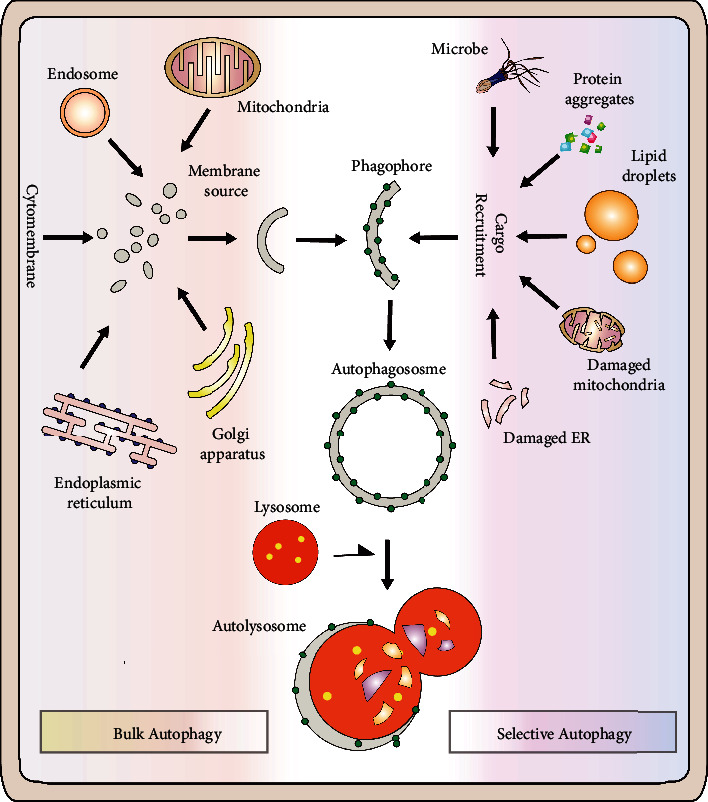
Figure 1
Figure 1
Bulk autophagy vs. selective autophagy: autophagy is a natural intracellular catabolic activity that helps cell in the removal of unwanted substances and recycling of cellular components while selective autophagy selectively target several specific cargos including various organelles, cellular substances, and protein aggregates.
Figure 2
Figure 2
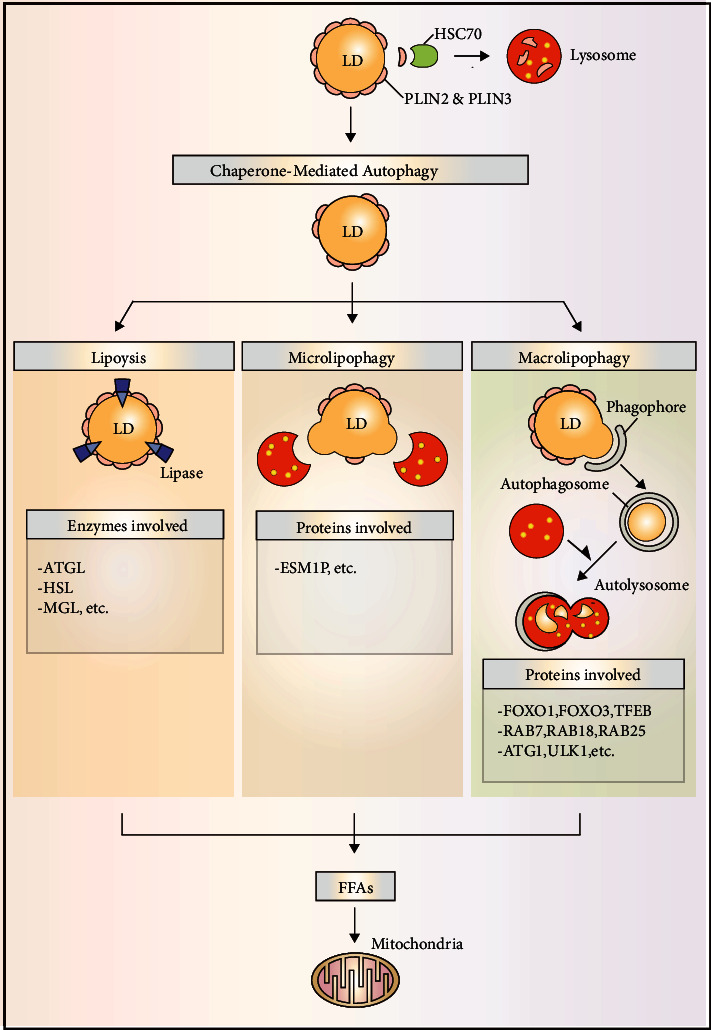
Major pathways in LD degradation: CMA facilitates LD degradation by promoting PLIN protein degradation allowing access for lipases. Moreover, both microlipophagy and macrolipophagy also degrade LDs to generate free FAs that are utilized in mitochondria for their complete oxidation.
Figure 3
Figure 3
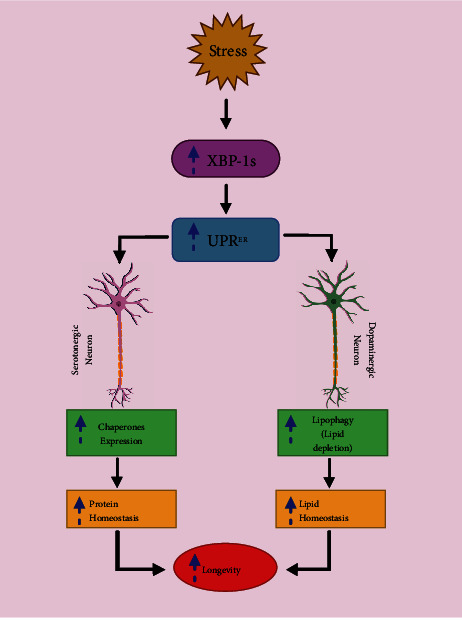
XBP-1s enhances longevity by promoting lipid and protein homeostasis via two independent pathways mediated by UPRER. XBP-1 induction promotes protein homeostasis via chaperones and lipid homeostasis via restructuring ER. This restructuring enhances lipophagic depletion of LDs.
Figure 4
Figure 4
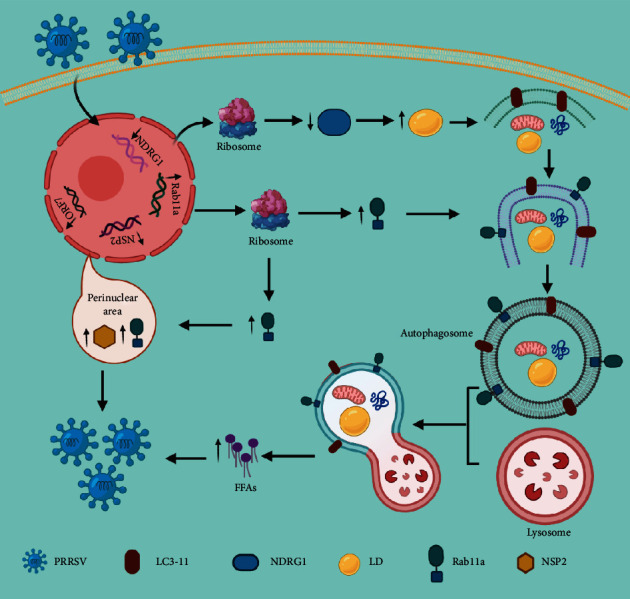
PRRSV infection promotes downregulation of NDRG1 and upregulation of Rab11a to promote replication: viral infection reduces the expression of NDRG1 and enhances expression of Rab11a, both in turn promote lipophagy by inducing autophagy and enhancing autophagosomes maturation respectively. Lipophagy promote viral replication by providing FFAs via LD degradation.

References

    1. Lamb C. A., Yoshimori T., Tooze S. A. The autophagosome: origins unknown, biogenesis complex. Nature Reviews Molecular Cell Biology . 2013;14(12):759–774. doi: 10.1038/nrm3696. - DOI - PubMed
    1. Mizushima N., Komatsu M. Autophagy: renovation of cells and tissues. Cell . 2011;147(4):728–741. doi: 10.1016/j.cell.2011.10.026. - DOI - PubMed
    1. Mizushima N., Yoshimori T., Ohsumi Y. The role of Atg proteins in autophagosome formation. Annual Review of Cell and Developmental Biology . 2011;27(1):107–132. doi: 10.1146/annurev-cellbio-092910-154005. - DOI - PubMed
    1. Mizushima N., Levine B. Autophagy in mammalian development and differentiation. Nature Cell Biology . 2010;12(9):823–830. doi: 10.1038/ncb0910-823. - DOI - PMC - PubMed
    1. Schneider J. L., Cuervo A. M. Autophagy and human disease: emerging themes. Current Opinion in Genetics & Development . 2014;26:16–23. doi: 10.1016/j.gde.2014.04.003. - DOI - PMC - PubMed