


A systematic review on AI/ML approaches against COVID-19 outbreak
- PMID: 34777970
- PMCID: PMC8256231
- DOI: 10.1007/s40747-021-00424-8
A systematic review on AI/ML approaches against COVID-19 outbreak
Abstract
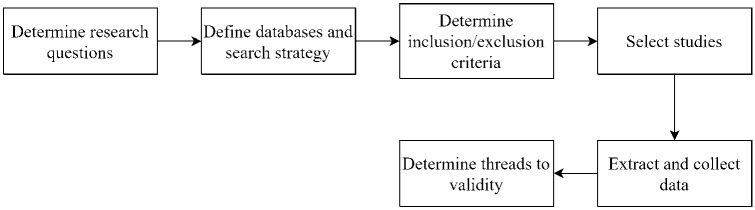
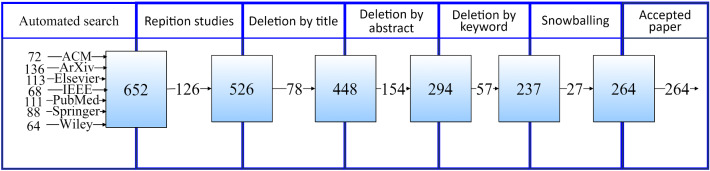
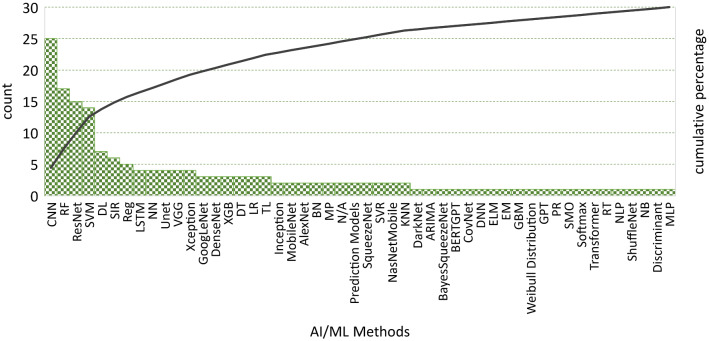
A pandemic disease, COVID-19, has caused trouble worldwide by infecting millions of people. The studies that apply artificial intelligence (AI) and machine learning (ML) methods for various purposes against the COVID-19 outbreak have increased because of their significant advantages. Although AI/ML applications provide satisfactory solutions to COVID-19 disease, these solutions can have a wide diversity. This increase in the number of AI/ML studies and diversity in solutions can confuse deciding which AI/ML technique is suitable for which COVID-19 purposes. Because there is no comprehensive review study, this study systematically analyzes and summarizes related studies. A research methodology has been proposed to conduct the systematic literature review for framing the research questions, searching criteria and relevant data extraction. Finally, 264 studies were taken into account after following inclusion and exclusion criteria. This research can be regarded as a key element for epidemic and transmission prediction, diagnosis and detection, and drug/vaccine development. Six research questions are explored with 50 AI/ML approaches in COVID-19, 8 AI/ML methods for patient outcome prediction, 14 AI/ML techniques in disease predictions, along with five AI/ML methods for risk assessment of COVID-19. It also covers AI/ML method in drug development, vaccines for COVID-19, models in COVID-19, datasets and their usage and dataset applications with AI/ML.
Keywords: Artificial intelligence; COVID-19; Machine learning; Pandemic; Research analysis; Systematic review.
© The Author(s) 2021.
Conflict of interest statement
Conflict of interestThe authors declare that they have no conflict of interest.
Figures
References
-
- Wuhan Municipal Health Commission (2019) Report of clustering pneumonia of unknown aetiology in Wuhan City. http://wjw.wuhan.gov.cn/front/web/showDetail/201. Accessed 20 Jan 2020
-
- Tiwari SM, Gaurav D, Abraham A. COVID-19 outbreak in India: an early stage analysis. Int J Sci Rep. 2020;6(8):332–339. doi: 10.18203/issn.2454-2156.IntJSciRep20203117. - DOI
-
- Jahanbin K, Rahmanian V, et al. Using twitter and web news mining to predict COVID-19 outbreak. Asian Pac J Trop Med. 2020;13(8):378. doi: 10.4103/1995-7645.279651. - DOI
-
- Ferguson NM, Laydon D, Nedjati-Gilani G, Imai N, Ainslie K, Baguelin M, Bhatia S, Boonyasiri A, Cucunubá Z, Cuomo-Dannenburg G et al (2020) Impact of non-pharmaceutical interventions (NPIs) to reduce COVID-19 mortality and healthcare demand. Imperial College COVID-19 Response Team
-
- COVID-19 Data Repository by the Center for Systems Science and Engineering (CSSE) at Johns Hopkins University (2020) https://github.com/CSSEGISandData/COVID-19/blob/master/README.md. Accessed 29 July 2020
LinkOut - more resources
Full Text Sources