. 2021 Oct 29:9:748368.
doi: 10.3389/fped.2021.748368. eCollection 2021.

Recognizing a MIS-Chievous Cause of Acute Viral Gastroenteritis

Affiliations

Recognizing a MIS-Chievous Cause of Acute Viral Gastroenteritis

Rohit Josyabhatla et al. Front Pediatr. .

Abstract

Historically, children evaluated for vomiting and diarrhea secondary to viral enteritis have symptoms lasting 2-4 days and respond to supportive care, including oral rehydration and anti-emetics if required. Recently, within a 14-day timespan, we encountered three children with severe diarrhea who rapidly became dehydrated and went into hypotensive shock. Although SARS-CoV-2 molecular tests were negative by nasopharyngeal swab, all were later found to have MIS-C. This small case series underscores features reported in previous larger studies and emphasizes the rapid clinical evolution of this condition. We highlight the importance of early recognition of cardinal laboratory findings characteristic of MIS-C (i.e., lymphopenia, markedly elevated acute phase reactants, and hypoalbuminemia). We also show serologic evidence that the pathophysiological mechanism of SARS-CoV-2 related diarrhea may differ from other causes of dehydrating vomiting and diarrhea, with no serologic evidence of villus cell injury.

Keywords: I-FABP2; MIS-C multisystem inflammatory syndrome in children; claudin-3; diarrhea; zonulin.


Conflict of interest statement

The authors declare that the research was conducted in the absence of any commercial or financial relationships that could be construed as a potential conflict of interest.

Figures
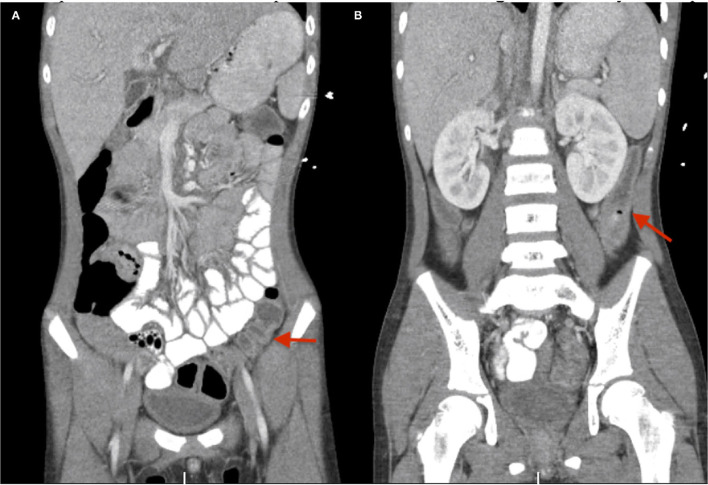
Figure 1
Figure 1
(A,B) CT abdomen pelvis with contrast for case #1. Red arrows depict the descending colon edema.
Figure 2
Figure 2
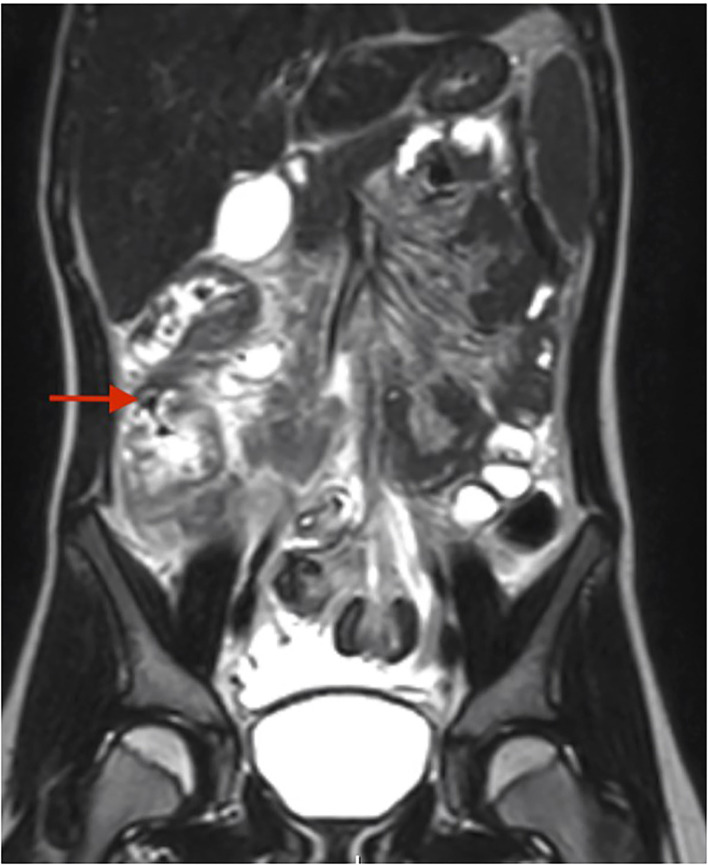
MR enterography for case #2. Red arrow depicts the mural edema and circumferential thickening of the cecum and ascending colon.
Figure 3
Figure 3
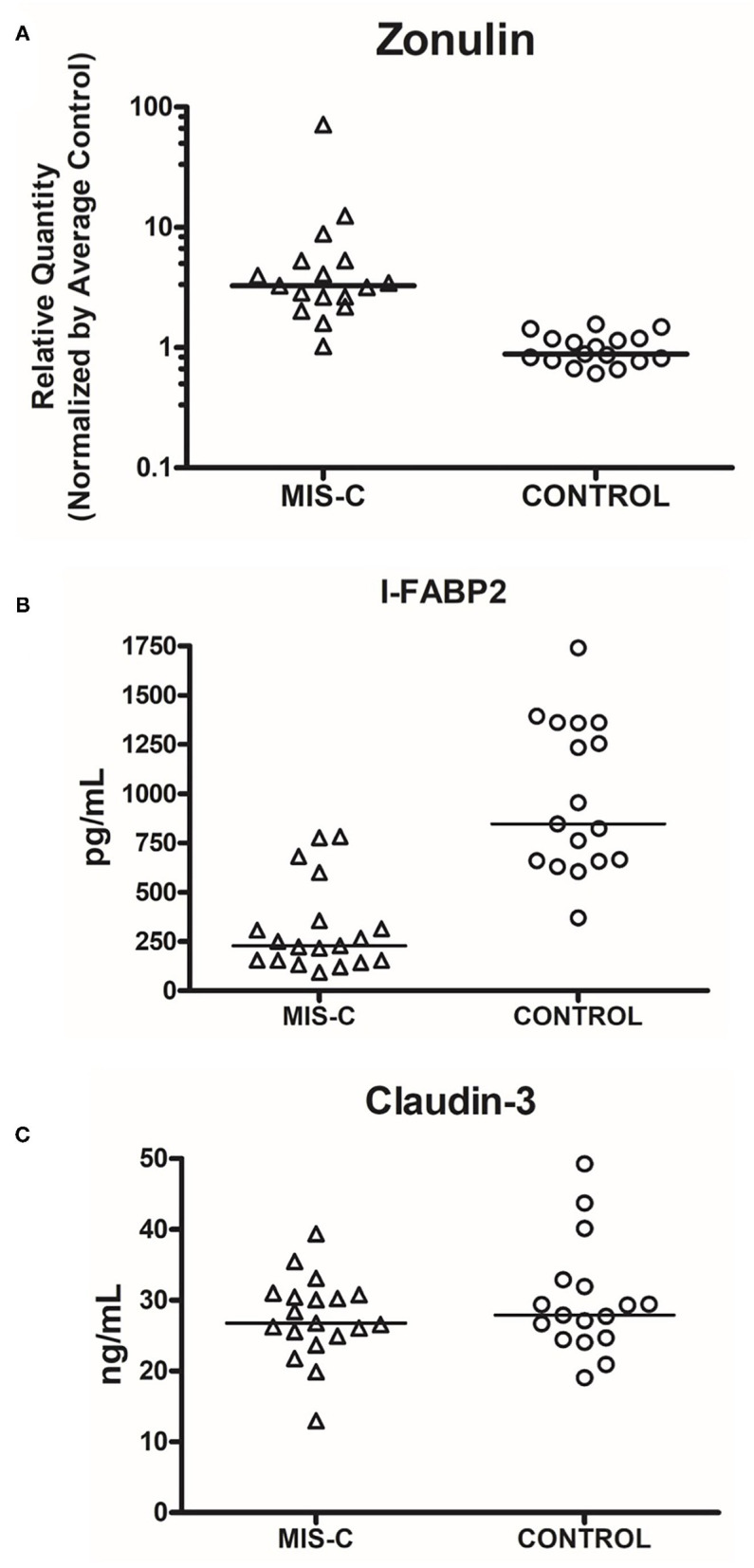
Comparison of serum levels of markers of gut injury in cases vs. controls. (A) Zonulin (P < 0.0001, Cases vs. Controls, Mann–Whitney Test). (B) I-FABP2 (P < 0.0001, Cases vs. Controls, Mann–Whitney Test); (C) Claudin-3 (P = 0.6573, Cases vs. Controls, Mann–Whitney Test). The line represents median. Each dot represents each sample that was measured.
Figure 4
Figure 4
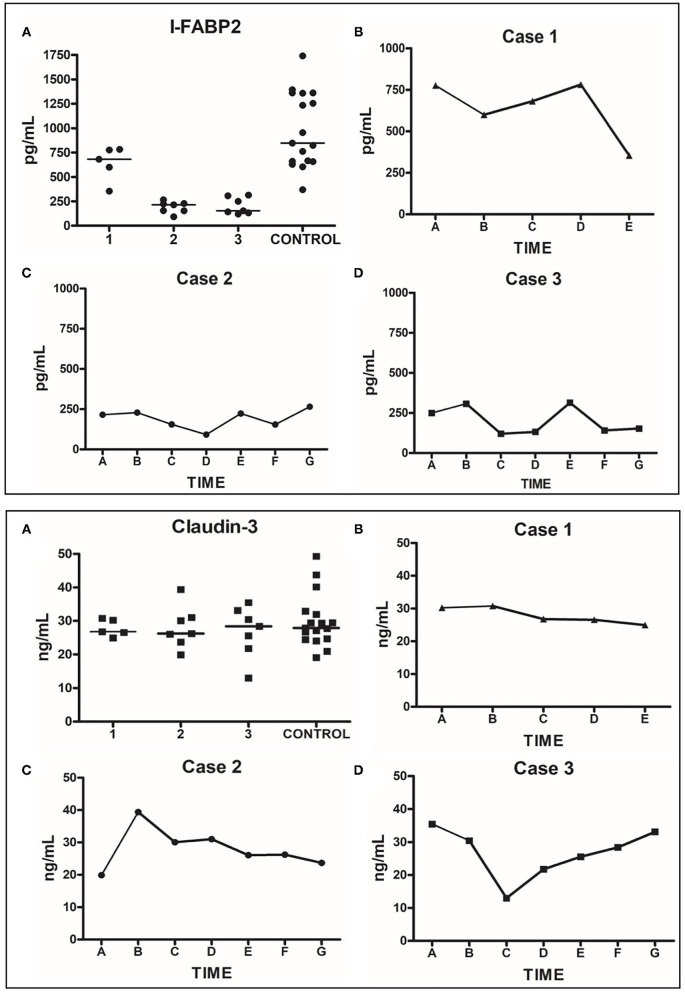
Human plasma I-FABP2 and Claudin-3 analysis. Top Panel: I-FABP2. (A) Grouped values for each patient during their hospitalization compared to grouped values of controls. (B) Daily sequential values for Case 1; time point A represents day 7 of hospitalization (day 3 of anakinra), when patient was clinically stable with resolution of diarrhea; the subsequent points are from daily samples obtained over the next 5 days until the day of discharge. (C) Daily sequential values for Case 2; time point A represents day 2 of hospitalization (day prior to onset of diarrhea, day after the appendectomy); the subsequent points are from daily samples obtained over the next 7 days when the diarrhea developed— requiring treatment with anakinra and steroids leading to resolution of symptoms; the last sample was from the day of discharge. (D) Daily sequential values for Case 3; time point A represents the day 2 of hospitalization when the patient was diagnosed with MIS-C and received the first dose of anakinra and steroids. The subsequent points are from daily samples obtained over the next week of his hospitalization, with the last sample obtained on the day of discharge. Bottom Panel: Claudin-3. (A–D) described the same as Top Panel (A–D), respectively.

References

    1. Anand S, Mandal S, Patil P, Tomar SK. Pathogen-induced secretory diarrhea and its prevention. Eur J Clin Microbiol Infect Dis. (2016) 35:1721–39. 10.1007/s10096-016-2726-5 - DOI - PubMed
    1. Esona MD, Gautam R. Rotavirus. Clin Lab Med. (2015) 35:363–91. 10.1016/j.cll.2015.02.012 - DOI - PubMed
    1. Ahmed M, Advani S, Moreira A, Zoretic S, Martinez J, Chorath K, et al. . Multisystem inflammatory syndrome in children: a systematic review. EClinicalMedicine. (2020) 26:100527. 10.1016/j.eclinm.2020.100527 - DOI - PMC - PubMed
    1. Feldstein LR, Tenforde MW, Friedman KG, Newhams M, Rose EB, Dapul H, et al. . Characteristics and outcomes of US children and adolescents with multisystem inflammatory syndrome in children (MIS-C) compared with severe acute COVID-19. JAMA. (2021) 325:1074–87. 10.1001/jama.2021.2091 - DOI - PMC - PubMed
    1. The CDC Health Alert Network . Multisystem Inflammatory Syndrome in Children (MIS-C) Associated With Coronavirus Disease 2019 (COVID-19). Centers for Disease Control and Prevention Emergency Preparedness and Response; (2020).