


Use of Fractional Exhaled Nitric Oxide to Guide the Treatment of Asthma: An Official American Thoracic Society Clinical Practice Guideline
- PMID: 34779751
- PMCID: PMC8759314
- DOI: 10.1164/rccm.202109-2093ST
Use of Fractional Exhaled Nitric Oxide to Guide the Treatment of Asthma: An Official American Thoracic Society Clinical Practice Guideline
Abstract
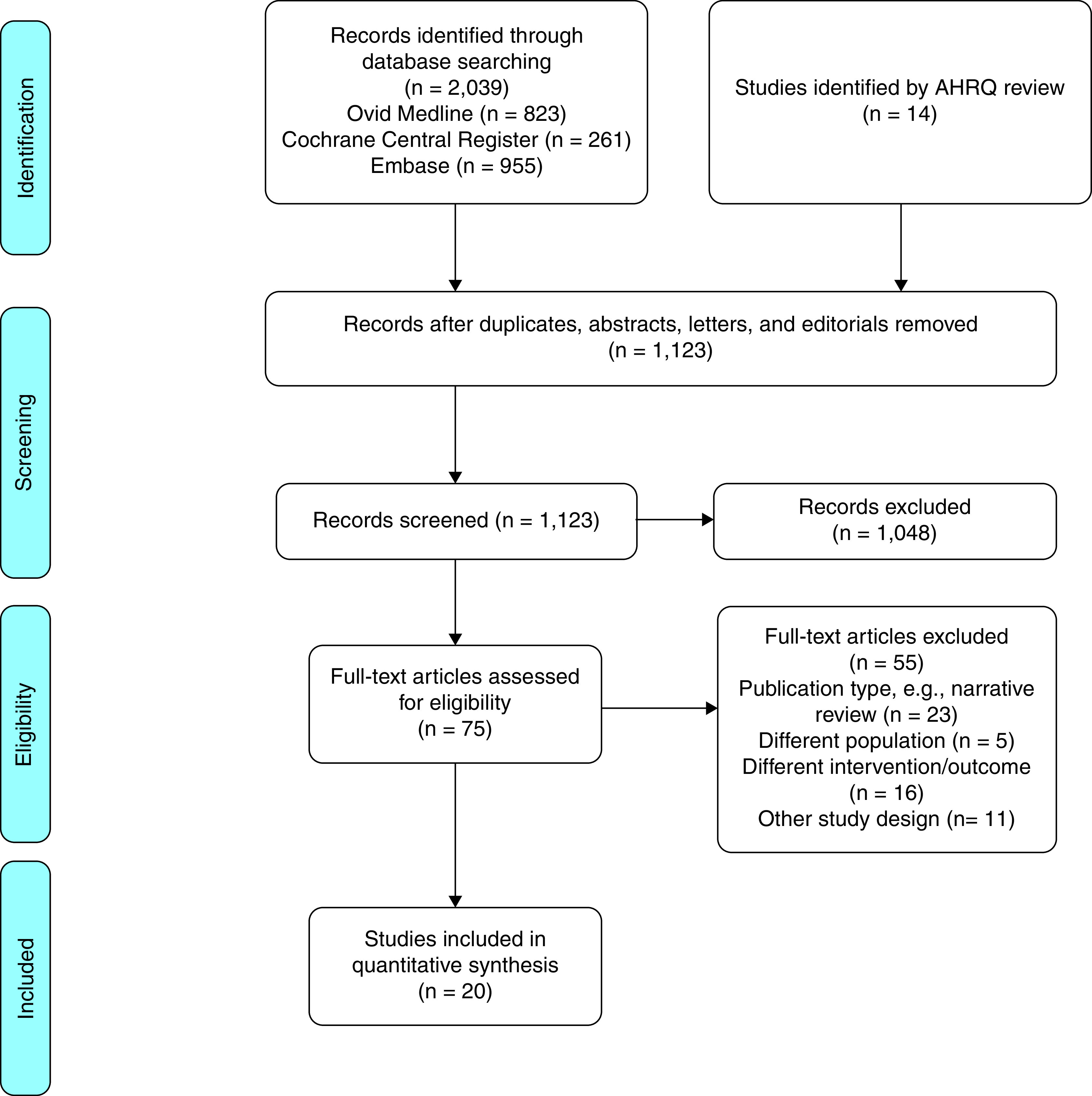
Background: The fractional exhaled nitric oxide (FENO) test is a point-of-care test that is used in the assessment of asthma. Objective: To provide evidence-based clinical guidance on whether FENO testing is indicated to optimize asthma treatment in patients with asthma in whom treatment is being considered. Methods: An international, multidisciplinary panel of experts was convened to form a consensus document regarding a single question relevant to the use of FENO. The question was selected from three potential questions based on the greatest perceived impact on clinical practice and the unmet need for evidence-based answers related to this question. The panel performed systematic reviews of published randomized controlled trials between 2004 and 2019 and followed the Grading of Recommendations, Assessment, Development, and Evaluation (GRADE) evidence-to-decision framework to develop recommendations. All panel members evaluated and approved the recommendations. Main Results: After considering the overall low quality of the evidence, the panel made a conditional recommendation for FENO-based care. In patients with asthma in whom treatment is being considered, we suggest that FENO is beneficial and should be used in addition to usual care. This judgment is based on a balance of effects that probably favors the intervention; the moderate costs and availability of resources, which probably favors the intervention; and the perceived acceptability and feasibility of the intervention in daily practice. Conclusions: Clinicians should consider this recommendation to measure FENO in patients with asthma in whom treatment is being considered based on current best available evidence.
Keywords: airway disease; asthma; inhaled steroids; nitric oxide; type 2 inflammation.
Figures
Comment in
-
Summary for Clinicians: Clinical Practice Guideline for the Use of Fractional Exhaled Nitric Oxide to Guide the Treatment of Asthma.Ann Am Thorac Soc. 2022 Oct;19(10):1627-1630. doi: 10.1513/AnnalsATS.202204-289CME. Ann Am Thorac Soc. 2022. PMID: 35507440 No abstract available.
References
-
- Global strategy for asthma management and prevention Fontana, WI: Global Initiative for Asthma; 2019. [accessed 2020 Apr 1]. Available from: https://ginasthma.org/
-
- National Asthma Education and Prevention Program Expert panel report 3 (EPR-3): guidelines for the diagnosis and management of asthma: summary report 2007 J Allergy Clin Immunol 2007120S94–S138.. [Published erratum appears in J Allergy Clin Immunol 121:1330]. - PubMed
-
- Beasley R, Braithwaite I, Semprini A, Kearns C, Weatherall M, Pavord ID. Optimal asthma control: time for a new target. Am J Respir Crit Care Med . 2020;201:1480–1487. - PubMed
-
- King-Biggs MB. Asthma. Ann Intern Med . 2019;171:ITC49–ITC64. - PubMed
