


Cancer in adolescents and young adults in Japan: epidemiology and cancer strategy
- PMID: 34779960
- PMCID: PMC8732807
- DOI: 10.1007/s10147-021-02064-x
Cancer in adolescents and young adults in Japan: epidemiology and cancer strategy
Abstract
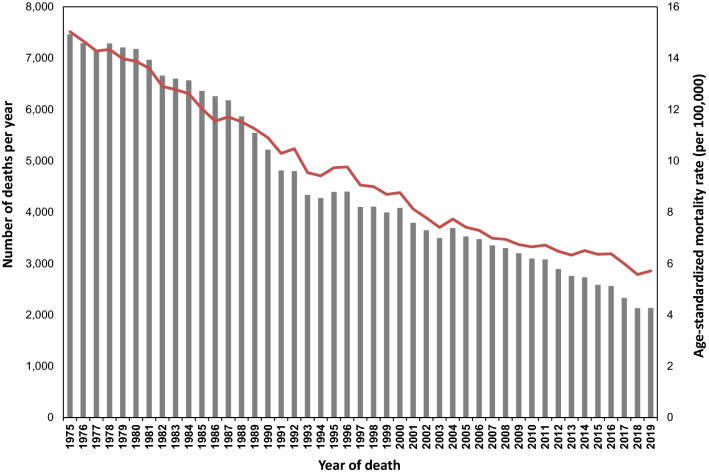
According to national cancer registry data in Japan, approximately 20,000 adolescents and young adults (AYAs, age 15-39 years) are newly diagnosed with cancer each year. Improvements in treatment and care for AYAs with cancer are included in the Phase Three Basic Plan to Promote Cancer Control Programs in Japan. This article reviews current cancer incidence and survival for AYAs with cancer in Japan using population-based cancer registry data. Mortality data through 2019 from the Vital Statistics of Japan are also described. Encouragingly, the 5-year survival probability for AYA cancers has continued to improve, in parallel with childhood cancers, and the mortality rate has decreased. There has been increasing attention to these vulnerable patients and improved partnerships and collaboration between adult and pediatric oncology; however, obstacles to the care of this population still exist at multiple levels. These obstacles relate to specific areas: research efforts and enrollment in clinical trials on AYA malignancies, AYA-specific psychosocial support such as education, financial support, and oncofertility care, and cancer care systems. It is important for Japanese oncologists, health care providers, and health policy makers to recognize that the AYA population remains vulnerable and still have unmet needs.
Keywords: Adolescent and young adult (AYA); Cancer; Cancer care system; Cancer strategy; Epidemiology.
© 2021. The Author(s).
Conflict of interest statement
All the authors except the following two declare no conflict of interest. MM reports being in a leadership position/advisory role for Mitsubishi Tanabe Pharma, outside this work. KK received the JMWH Bayer grant, outside this work.
Figures


References
-
- Cancer and Disease Control Divesion, Ministry of Health, Labour and Welfare. Cancer Incidence of Japan 2018. https://www.e-stat.go.jp/stat-search/files?page=1&toukei=00450173&tstat=.... Accessed August 3 2021
Publication types
MeSH terms
Grants and funding
LinkOut - more resources
Full Text Sources
Medical
