. 2021 Nov 15;11(1):22223.
doi: 10.1038/s41598-021-01618-3.

CyFi-MAP: an interactive pathway-based resource for cystic fibrosis

Affiliations

CyFi-MAP: an interactive pathway-based resource for cystic fibrosis

Catarina Pereira et al. Sci Rep. .

Abstract

Cystic fibrosis (CF) is a life-threatening autosomal recessive disease caused by more than 2100 mutations in the CF transmembrane conductance regulator (CFTR) gene, generating variability in disease severity among individuals with CF sharing the same CFTR genotype. Systems biology can assist in the collection and visualization of CF data to extract additional biological significance and find novel therapeutic targets. Here, we present the CyFi-MAP-a disease map repository of CFTR molecular mechanisms and pathways involved in CF. Specifically, we represented the wild-type (wt-CFTR) and the F508del associated processes (F508del-CFTR) in separate submaps, with pathways related to protein biosynthesis, endoplasmic reticulum retention, export, activation/inactivation of channel function, and recycling/degradation after endocytosis. CyFi-MAP is an open-access resource with specific, curated and continuously updated information on CFTR-related pathways available online at https://cysticfibrosismap.github.io/ . This tool was developed as a reference CF pathway data repository to be continuously updated and used worldwide in CF research.


Conflict of interest statement

The authors declare no competing interests.

Figures
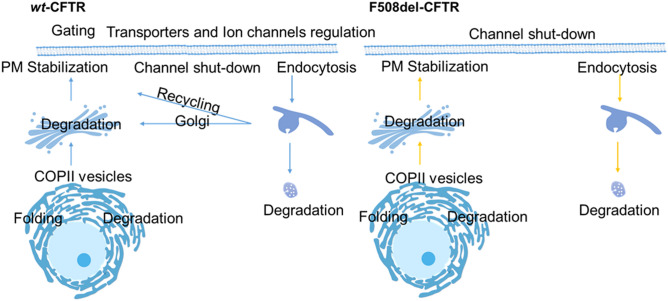
Figure 1
Figure 1
Modules available in the CyFi-MAP. wt-CFTR (left) and F508del-CFTR (right) modules include the key processes available included in the CyFi-MAP and provide a way to focus on a specific part of CFTR life cycle. Rescued F508del-CFTR (rF508del-CFTR) pathways are highlighted in yellow, indicating the processes elicited after chemical or temperature rescue of the mutant protein (see text for details).
Figure 2
Figure 2
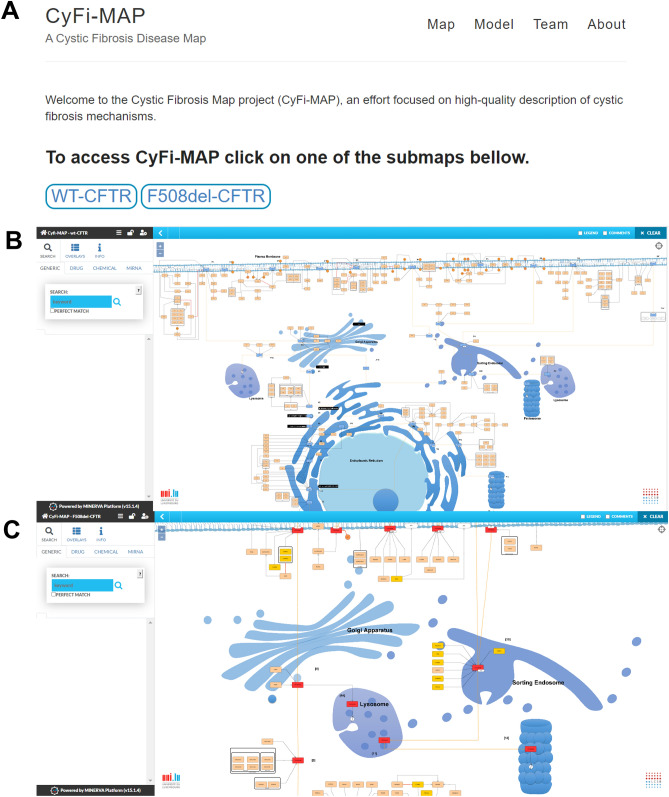
CyFi-MAP Github and MINERVA platform. In the image (A) is possible to see the GitHub page with the objective to contextualize this work and provide access to the interactive MINERVA platform. In image (B) and (C) are represented both submaps, wt-CFTR and F508del-CFTR respectively, where it is possible to navigate and explore the pathways and interactions included in CyFi-MAP, providing generic information about the proteins and components.
Figure 3
Figure 3
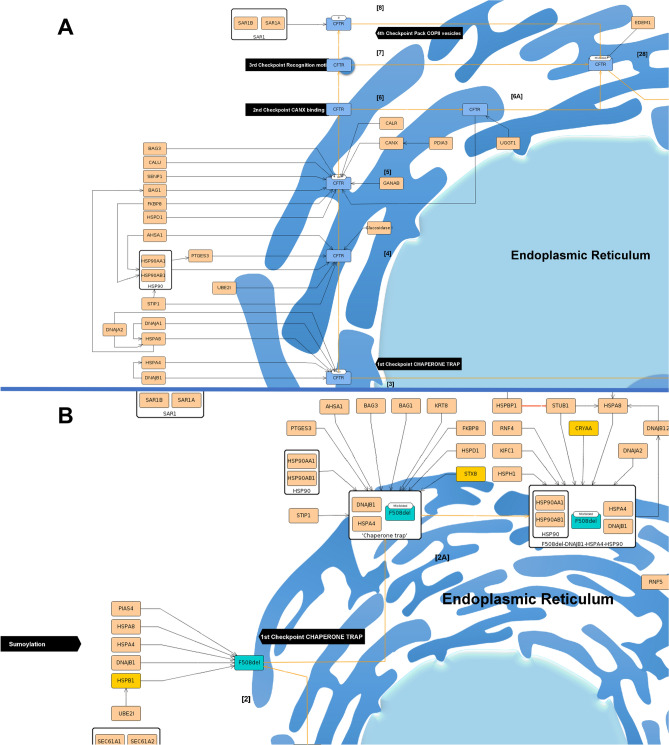
Representation of folding at ER. Wt-CFTR (A) and F508del-CFTR (B) are subjected to the sequential ERQC checkpoints, indicated in black. On the wt-CFTR is possible to see the four checkpoints of the CFTR protein (in blue). In the case of F508del-CFTR is possible to see a bifurcation in the pathway, where it can be targeted to degradation or rescued, where it appears red at the cytosol. It is also indicated the beginning of the sumoylation degradation pathway. The proteins are represented in beige with the orange lines indicating the movement of the protein and the black lines indicating stimulation. The white boxes containing several proteins indicate a complex. Unique interactors to F508del-CFTR are represented in yellow.
Figure 4
Figure 4
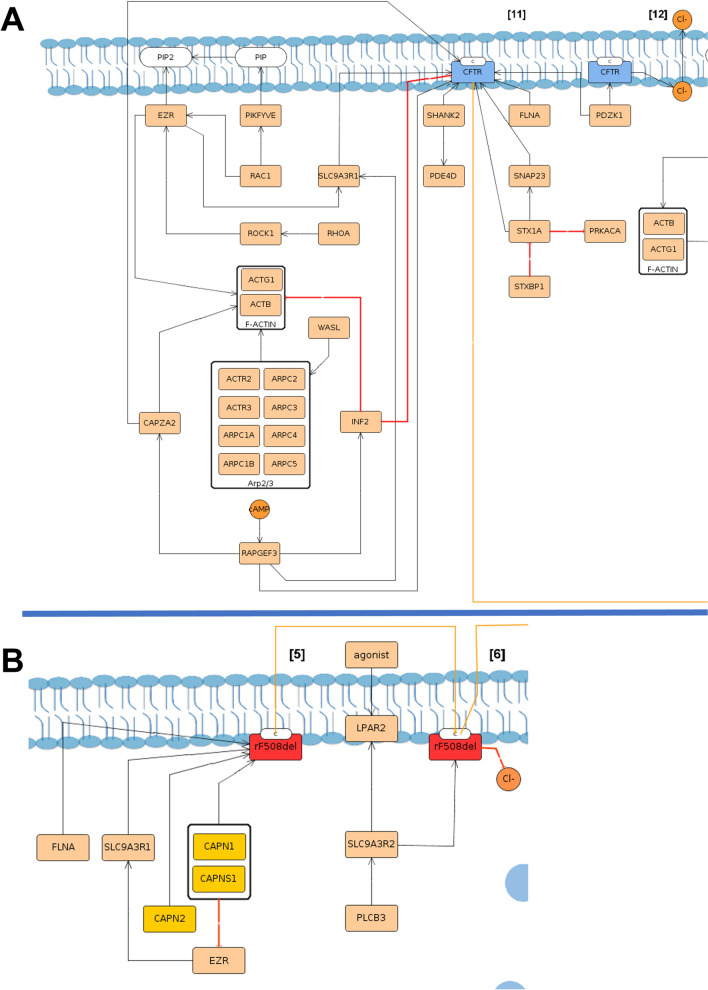
PM stabilization in wt-CFTR (A) and F508del-CFTR (B) submaps. Wt-CFTR represented in blue is delivered to the apical PM in the C form, as indicated at the protein, and several proteins responsible for the anchoring to the PM bind. The lines show different types of interactions, where orange lines indicate traffic, being possible to see in chloride (Cl) transport across the membrane in orange. The black lines indicate binding/stimulation and the red one’s inhibition. F-actin and Arp2/3 are represented as complexes, with several proteins with a grey line separating them from the rest. In blue are represented 1-phosphatidyl1D-myo-inositol-4-phosphate (PIP) which by the action of Phosphoinositide Kinase, FYVE-Type Zinc Finger Containing (PIKFYVE) is converted to 1-phosphatidyl-1D-myo-inositol-4,5-bisphosphate (PIP2) with a blue line depicting synthesis. Although rF508del-CFTR reaches the PM, the binding to new proteins highlighted in yellow diminishes its stabilization and anchoring therefore accelerating its endocytosis and consequent degradation.
Figure 5
Figure 5
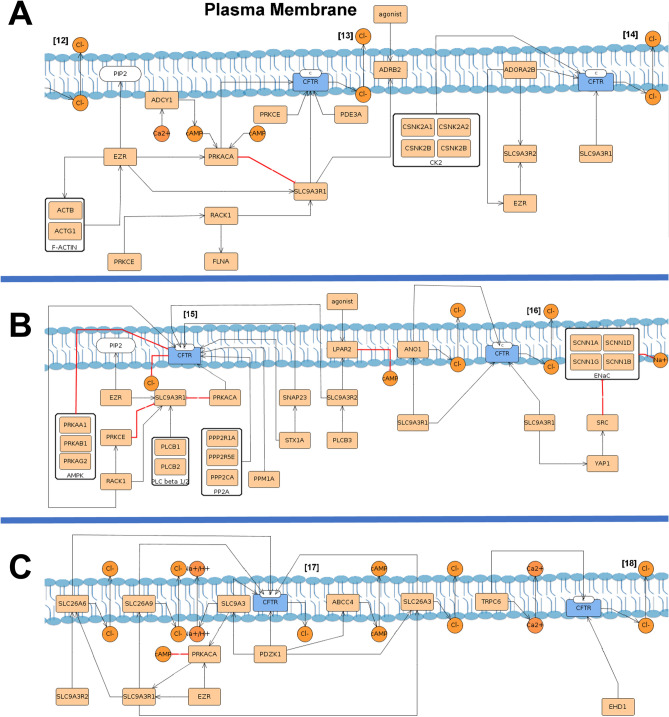
PM pathways in wt-CFTR submap. (A) Gating where is possible to see adenosine 3,5-cyclic monophosphate (cAMP) role in Protein Kinase CAMP-Activated Catalytic Subunit Alpha (PRKACA) phosphorylation that leads to CFTR activation and transport of chloride across the membrane. Other proteins are involved such as Adrenoceptor Beta 2 (ADRB2), Protein kinase CK2 (formerly known as casein kinase II), Adenosine A2b Receptor (ADORA2B) and Protein Kinase C Epsilon (PRKCE). (B) Shut-down with the action of Lysophosphatidic Acid Receptor 2 (LPAR2), serine/threonine protein kinase complex (AMPK), Phospholipase C beta ½ (PLC beta ½) and Protein phosphatase 2 (PP2A) where the chloride transport is inhibited. (C) Transporters and Ion channel regulation, in which the proteins that regulate and are regulated by CFTR at the PM are represented with the interactions detected.
Figure 6
Figure 6
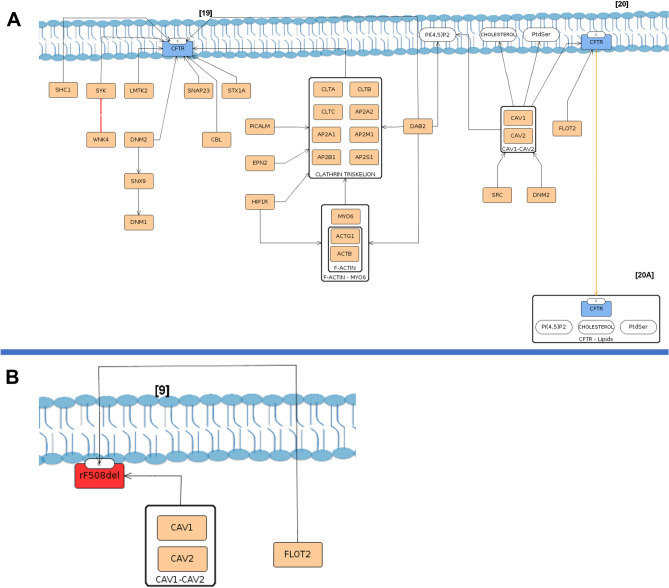
wt-CFTR (A) and rF508del-CFTR (B) endocytosis mechanisms of internalization from the PM. In the image A two types of internalization of wt-CFTR are present, through clathrin coated vesicles [19] and through caveolae vesicles [20]. As is represented, in the first, several proteins are involved, since the clathrin triskelion complex to cytoskeletal F-actin-MYO6 complex and other proteins assisting the process. In rF508del-CFTR, only the complex Caveolin 1 (CAV1)/ Caveolin 2 (CAV2) was found in this protein endocytosis [9], with assistance of Flotillin 2 (FLOT2).
Figure 7
Figure 7
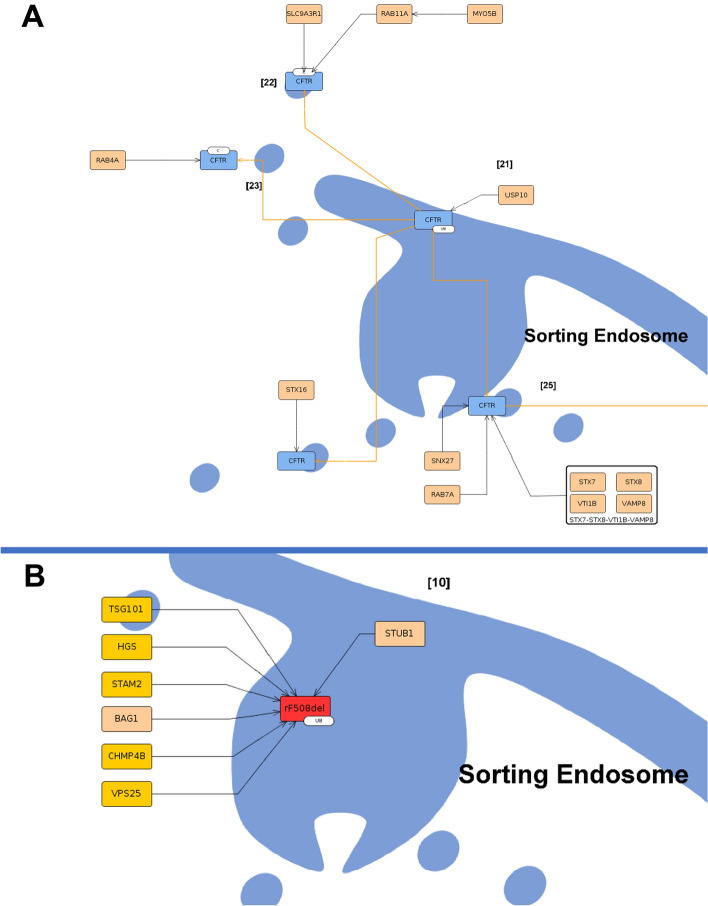
Sorting endosome in wt-CFTR (A) and F508del-CFTR (B) submaps. In the image (A), is possible to see wt-CFTR arriving at the sorting endosome [21] and the possible pathways to follow, either recycling [22], [23] and [24], or degradation [25] in orange lines. Bellow in image (B), rF508del-CFTR in red arrives at the endosome [10] in a complex with ubiquitin (represented with Ub) where several proteins target it to degradation directly, representing the low/absence of recycling of this protein. The proteins highlighted in yellow are unique to F508del-CFTR.
Figure 8
Figure 8
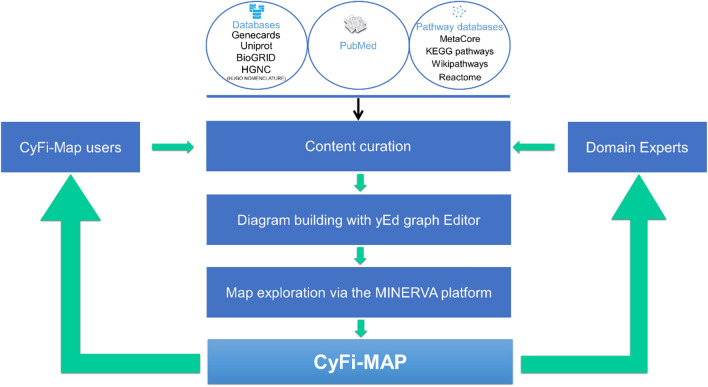
Workflow of CyFi-MAP construction. Starting by the research and curation of data contained in general and CFTR-specific databases and peer-reviewed research papers, CyFi-MAP was constructed based on domain experts’ suggestions and users’ comments. The organization of the curated data required the selection of a general format to be used throughout the platform, which determined the map assembly and content visualization. After the map was built, domain experts were once again consulted, in order to review and provide feedback on the accuracy of the representation of the disease mechanisms, as well as the usability of the platform.
Figure 9
Figure 9
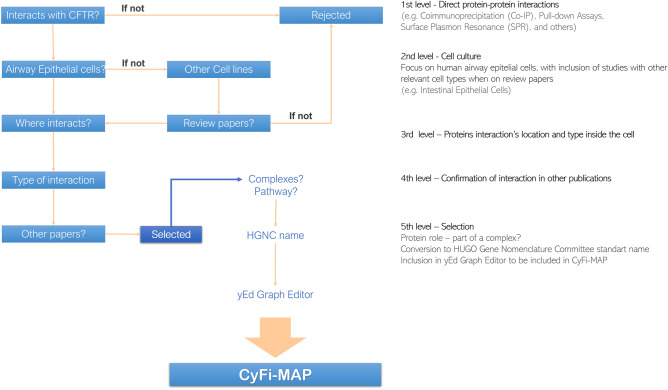
CyFi-MAP curation process. The curation process developed presents 5 levels. 1st level filter the data to studies with proteins that interact directly with CFTR, meaning that only experimental techniques which confirmed a direct interaction were considered such as e.g. Immunoprecipitation, Surface Plasmon Resonance (SRP), and others. The 2nd level is related to the type of cell culture used in these experiments, focusing on human airway epithelial cells, although other cell types were included when described on review publications. In both levels, if the studie do not agree with the criteria is rejected. The 3rd level consist on finding the location of the interaction inside the cell (e.g. ER, Golgi, cytosol, PM) followed by the type of interaction (binding or inhibition). The 4th level confers confidence to the interaction, consisting on the search for publications that support the information. The 5th level confirms information related to the protein after being selected (e.g. does it belong to a complex? Which pathway does it belong to?). The protein is manually added to the yEd Graph Editor used to built CyFi-MAP with the name accordingly to the HGNC nomenclature.

References

    1. Micheel CM, Nass SJ, Omenn GS, Policy HS. Evolution of translational omics lessons learned and the path forward. Evolution. 2012 doi: 10.17226/13297. - DOI - PubMed
    1. Saqi, M. et al. Medicine: The future of medical genomics, healthcare, and wellness. In Methods in Molecular Biology (2016). 10.1007/978-1-4939-3283-2_3 - PubMed
    1. Auffray C, Chen Z, Hood L. Systems medicine: The future of medical genomics and healthcare. Genome Med. 2009 doi: 10.1186/gm2. - DOI - PMC - PubMed
    1. Ogata H, et al. KEGG: Kyoto encyclopedia of genes and genomes. Nucleic Acids Res. 1999 doi: 10.1093/nar/27.1.29. - DOI - PMC - PubMed
    1. Pico AR, et al. WikiPathways: Pathway editing for the people. PLoS Biol. 2008 doi: 10.1371/journal.pbio.0060184. - DOI - PMC - PubMed

Publication types

Substances