


Isoliquiritigenin attenuates acute renal injury through suppressing oxidative stress, fibrosis and JAK2/STAT3 pathway in streptozotocin-induced diabetic rats
- PMID: 34784849
- PMCID: PMC8810184
- DOI: 10.1080/21655979.2021.2006978
Isoliquiritigenin attenuates acute renal injury through suppressing oxidative stress, fibrosis and JAK2/STAT3 pathway in streptozotocin-induced diabetic rats
Abstract
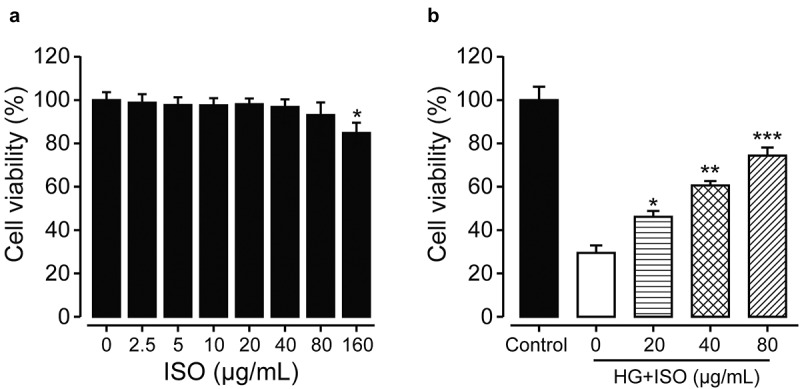
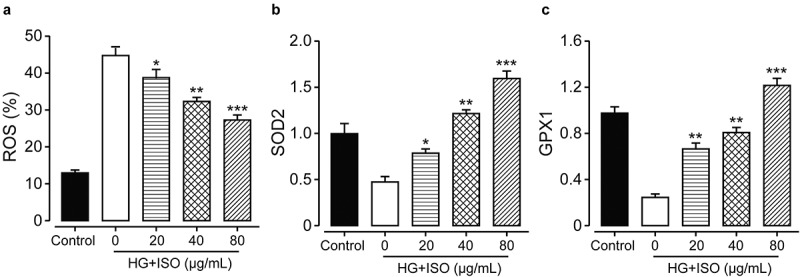
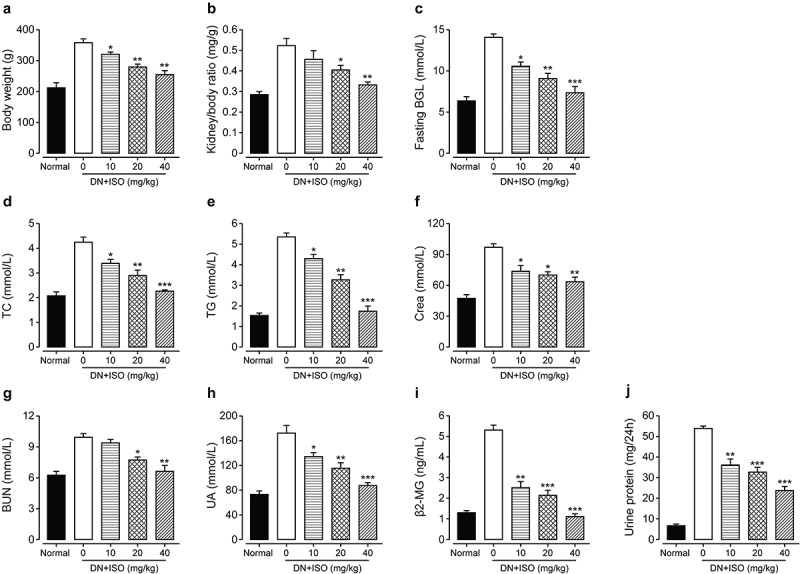
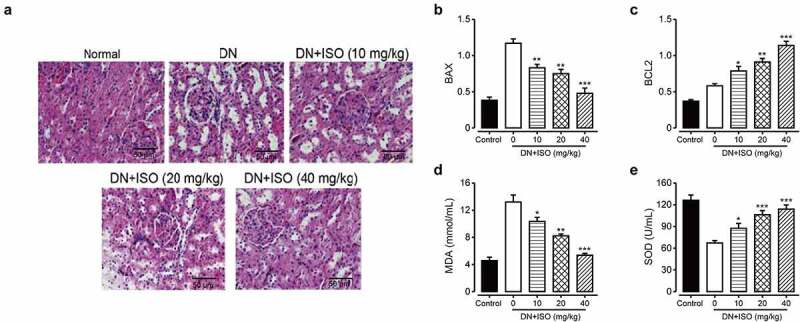
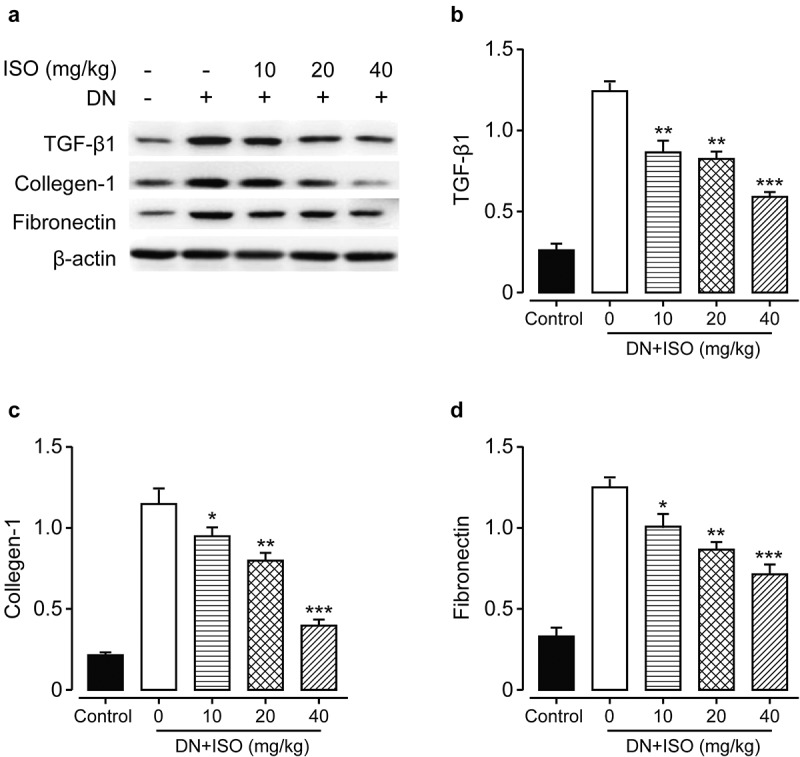
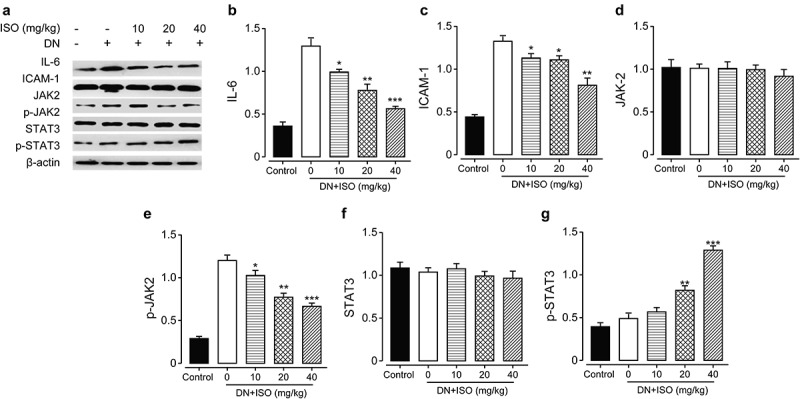
The aim of the current study was to evaluate the protective effects and mechanisms of isoliquiritigenin (ISO) on acute renal injury. CCK-8 assays were applied to assess the effects of ISO at different doses (20, 40, and 80 μg/mL) on oxidative damage in human renal HK-2 cells incubated with high glucose. After the diabetic nephropathy (DN) rat model was established, the model animals were randomly assigned to saline-treated control, three model groups received the 10, 20 and 40 mg/kg ISO, respectively, using the healthy Sprague-Dawley (SD) rats as normal control. The blood biochemical indexes, renal functions, oxidative stress, morphological changes, fibrosis- and JAK2/STAT3-related factors in DN model rats were all assessed. The cellular viability of the renal HK-2 cells with oxidative damages were all markedly ameliorated via the incubation of ISO between 10 and 80 μg/mL compared with negative control. In addition, the significantly down-regulated ROS content and up-regulated expression levels of GSH, SOD2, and GPX1 were all observed in ISO-treated groups. Long-term administration of ISO at different doses in DN rats effectively improved general diabetic characteristics and renal morphology. Furthermore, long-term administration of ISO could ameliorate excessive oxidation stress, down-regulate the expression levels of renal fibrosis- and inflammation-related factors, as well as inhibit the JAK2/STAT3 signaling pathway. In conclusion, ISO at all three dosages could efficiently improve the renal injury induced by STZ via ameliorating renal fibrosis, oxidative stress, and inhibiting JAK2/STAT3 signaling pathways in the DN rats.
Keywords: Isoliquiritigenin; TGF-β/Smad signaling pathway; diabetic nephropathy; fibrosis; oxidative damage.
Conflict of interest statement
No potential conflict of interest was reported by the author(s).
Figures
References
-
- Dronavalli S, Duka I, Bakris GL.. The pathogenesis of diabetic nephropathy. Nat Clin Pract Endocrinol Metab. 2008;4(8):444–452. - PubMed
-
- Lehmann R, Schleicher ED.. Molecular mechanism of diabetic nephropathy. Clin Chim Acta. 2000;297(1–2):135–144. - PubMed
-
- Jung K, Pergande M, Schimke E, et al. Urinary enzymes and low-molecular-mass proteins as indicators of diabetic nephropathy. Clin Chem. 2019;34:3. - PubMed
-
- Gross JL, de Azevedo MJ, Silveiro SP, et al. Diabetic nephropathy: diagnosis, prevention, and treatment. Diabetes Care. 2005;28(1):164–176. - PubMed
Publication types
MeSH terms
Substances
LinkOut - more resources
Full Text Sources
Miscellaneous
