. 2021 Dec 14;54(12):2859-2876.e7.
doi: 10.1016/j.immuni.2021.10.017. Epub 2021 Nov 16.

Vaccination in a humanized mouse model elicits highly protective PfCSP-targeting anti-malarial antibodies

Affiliations

Vaccination in a humanized mouse model elicits highly protective PfCSP-targeting anti-malarial antibodies

Sven Kratochvil et al. Immunity. .

Abstract

Repeat antigens, such as the Plasmodium falciparum circumsporozoite protein (PfCSP), use both sequence degeneracy and structural diversity to evade the immune response. A few PfCSP-directed antibodies have been identified that are effective at preventing malaria infection, including CIS43, but how these repeat-targeting antibodies might be improved has been unclear. Here, we engineered a humanized mouse model in which B cells expressed inferred human germline CIS43 (iGL-CIS43) B cell receptors and used both vaccination and bioinformatic analysis to obtain variant CIS43 antibodies with improved protective capacity. One such antibody, iGL-CIS43.D3, was significantly more potent than the current best-in-class PfCSP-directed antibody. We found that vaccination with a junctional epitope peptide was more effective than full-length PfCSP at recruiting iGL-CIS43 B cells to germinal centers. Structure-function analysis revealed multiple somatic hypermutations that combinatorically improved protection. This mouse model can thus be used to understand vaccine immunogens and to develop highly potent anti-malarial antibodies.

Keywords: PfCSP; adoptively transferred B cells; antibody CIS43; circumsporozoite; epitope-focused immunization; in situ vaccination; junctional epitope; malaria; passive protective.


Conflict of interest statement

Declaration of interests S.K., P.T., R.R., M.R., P.D.K., R.A.S. and F.D.B. have submitted a US Provisional Patent Application describing improved CIS43 antibodies (filed November 5, 2021). B.J.F., R.A.S., A.H.I., and N.K.K. hold patents on CIS43 (International Application No. PCT/US2018/017826; US Patent Application No. 16/485,354; issued June 1, 2021). L.T.W., R.A.S., and J.R.F. have submitted a US Provisional Patent Application describing mAb L9 (62/842,590; filed May 3, 2019). The remaining authors declare no competing interests.

Figures
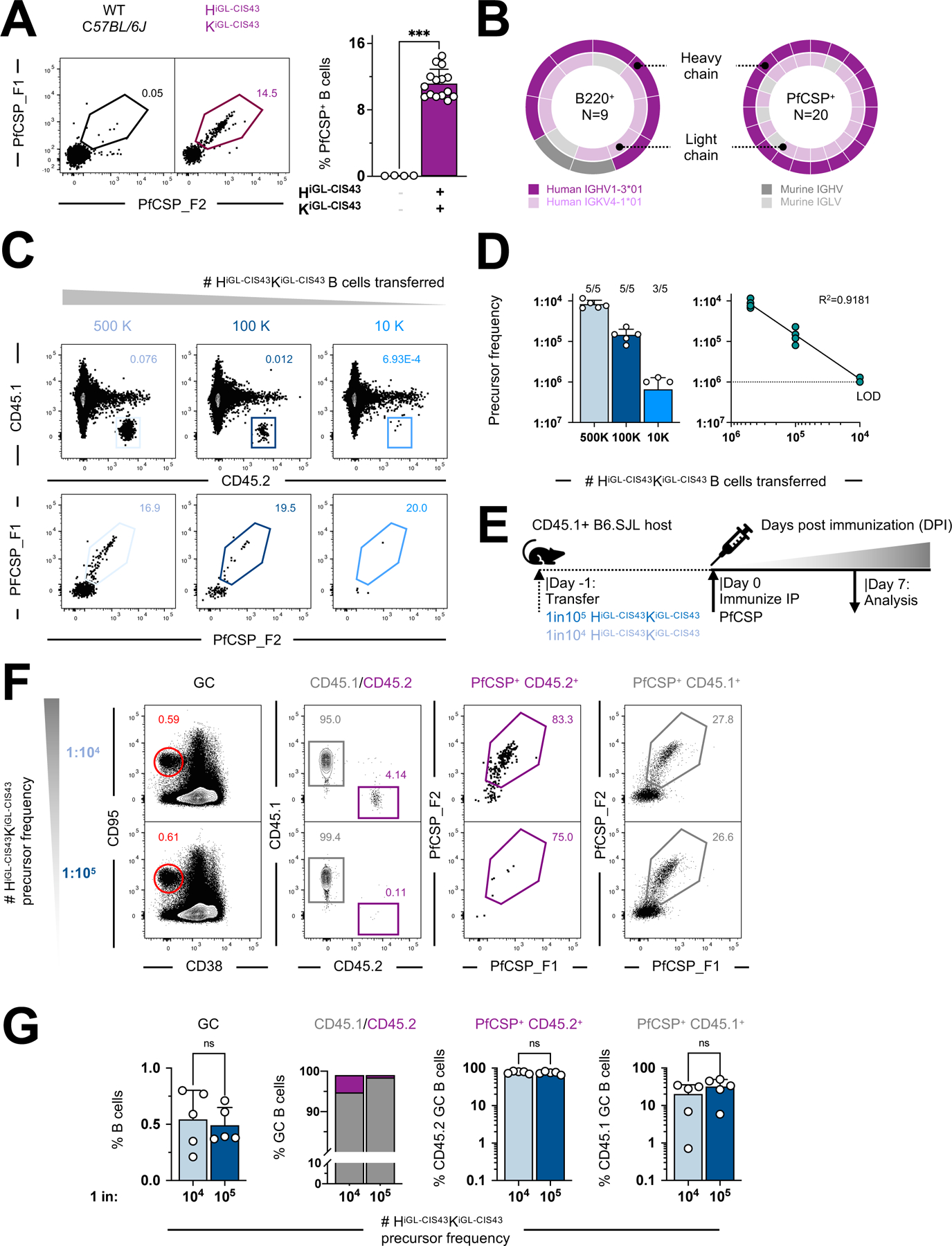
Figure 1:
Figure 1:. Activation of HiGL-CIS43κiGL-CIS43 B cells by PfCSP-immunization is dampened by host competitor B cells.
A. (Left) PfCSP-binding of peripheral B cells in naïve iGL-CIS43 HC and LC KI mouse models (HiGL-CIS43κiGL-CIS43). Events were pre-gated on lymphocytes/singlets/CD4-CD8-F4/80-Gr1-/B220+ B cells and C57BL/6J mice used as negative controls. (Right) Quantification of PfCSP-binding blood peripheral B cells from HiGL-CIS43κiGL-CIS43 KI model vs. C57BL/6J mice. B. Human iGL-CIS43 HC (purple), human iGL-CIS43 LC (light purple) and murine LC (grey) sequences amplified from single-cell sorted (a) antigen-agnostic (left) or PfCSP-specific (right) naive B cells. The center number is sequence pairs amplified. C. Titration of cell transfer model to generate precise HiGL-CIS43κiGL-CIS43 precursor frequencies at time of immunization (Day 0). See also Figure S3C-S3E for metrics of total B cells counted and recovered HiGL-CIS43κiGL-CIS43 B cells. D. Precursor frequencies corresponding to number of B cells transferred (left), indicated on x-axis, and analysis of linearity of CD45.2 HiGL-CIS43κiGL-CIS43 B cells recovered 24 h post transfer (right). E. HiGL-CIS43κiGL-CIS43 B cell transfer/immunization system used for (F-H). F. Representative flow cytometry graphs at 7 DPI. G. Quantification of B cell subsets (in order of left to right: total GCs, ratios of GC CD45.1+/CD45.2+ B cells, PfCSP-reactive CD45.2+ B cells and PfCSP-reactive CD45.1+ competitor B cells) responsive to PfCSP-immunization at 7 DPI. P values were calculated by Mann-Whitney test (panels A and H). ***P < 0.001; ns, statistically non-significant differences. See also Figure S1.
Figure 2:
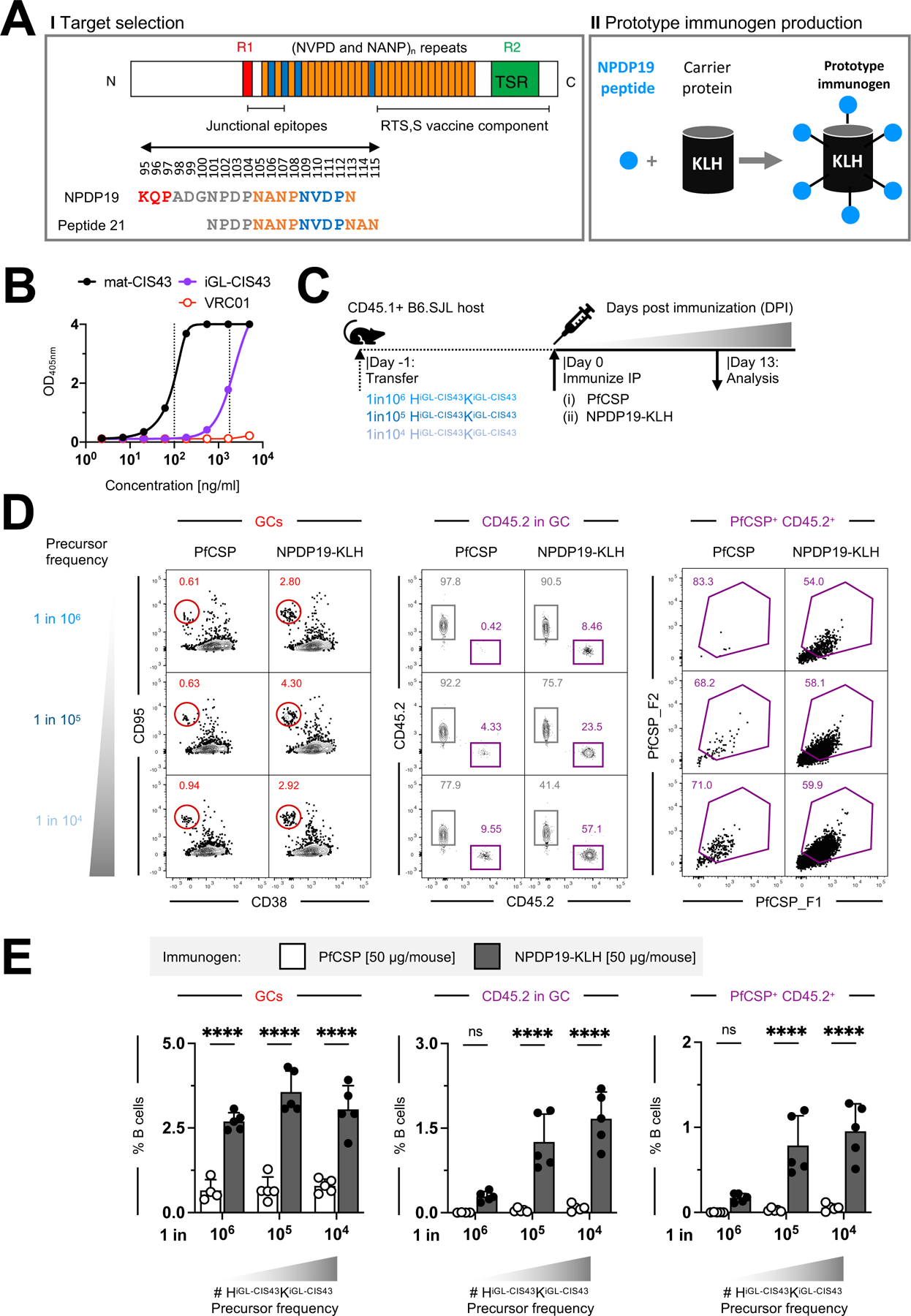
Figure 2:. Immunization with NPDP19-KLH leads to specific and strong activation of HiGL-CIS43κiGL-CIS43 B cells.
A. (I) Schematic of PfCSP (NF54), with region 1 (R1) in red, NANP repeats in orange, NPDP/NVDP repeats in blue and region 2 (R2) thrombospondin repeats (TSR) in green. Junctional epitope NPDP19 included in our (II) KLH-based prototype malaria vaccine candidate and malaria peptide21 published (Kisalu et al., 2018) are indicated. Numbering (95–115) corresponds to PfCSP numbering. Schematic adapted from (Cockburn and Seder, 2018a; Kisalu et al., 2018). B. ELISA to assess if NPDP19-peptide can be recognized by both iGL-CIS43 (purple) and mature CIS43 (black) antibodies in the context of KLH. The red line indicates HIV-1 bNAb VRC01, used as a negative control. C. HiGL-CIS43κiGL-CIS43 B cell transfer system used for (D). D. Representative flow cytometry graphs for recipient mice adoptively transferred to achieve precursor frequencies of 1:104, 1:105 and 1:106, immunized with PfCSP [50 µg/mouse]/Alhydrogel (n=5 per cell dilution) or NPDP19-KLH [50 µg/mouse]/Alhydrogel (n=5 per cell dilution). (Left to right) Graphs indicate total GC-responses, HiGL-CIS43κiGL-CIS43 CD45.2 B cell responses, and PfCSP-binding of CD45.2 B cells. Percentages based on parent populations. E. Quantification of (D). Data normalized to B220+ B cells. P values calculated by 2-way ANOVA for multiple comparisons (panel E). *P < 0.05; **P<0.01***; P<0.001; ****P<0.0001; ns, statistically non-significant differences. See also Figure S2.
Figure 3:
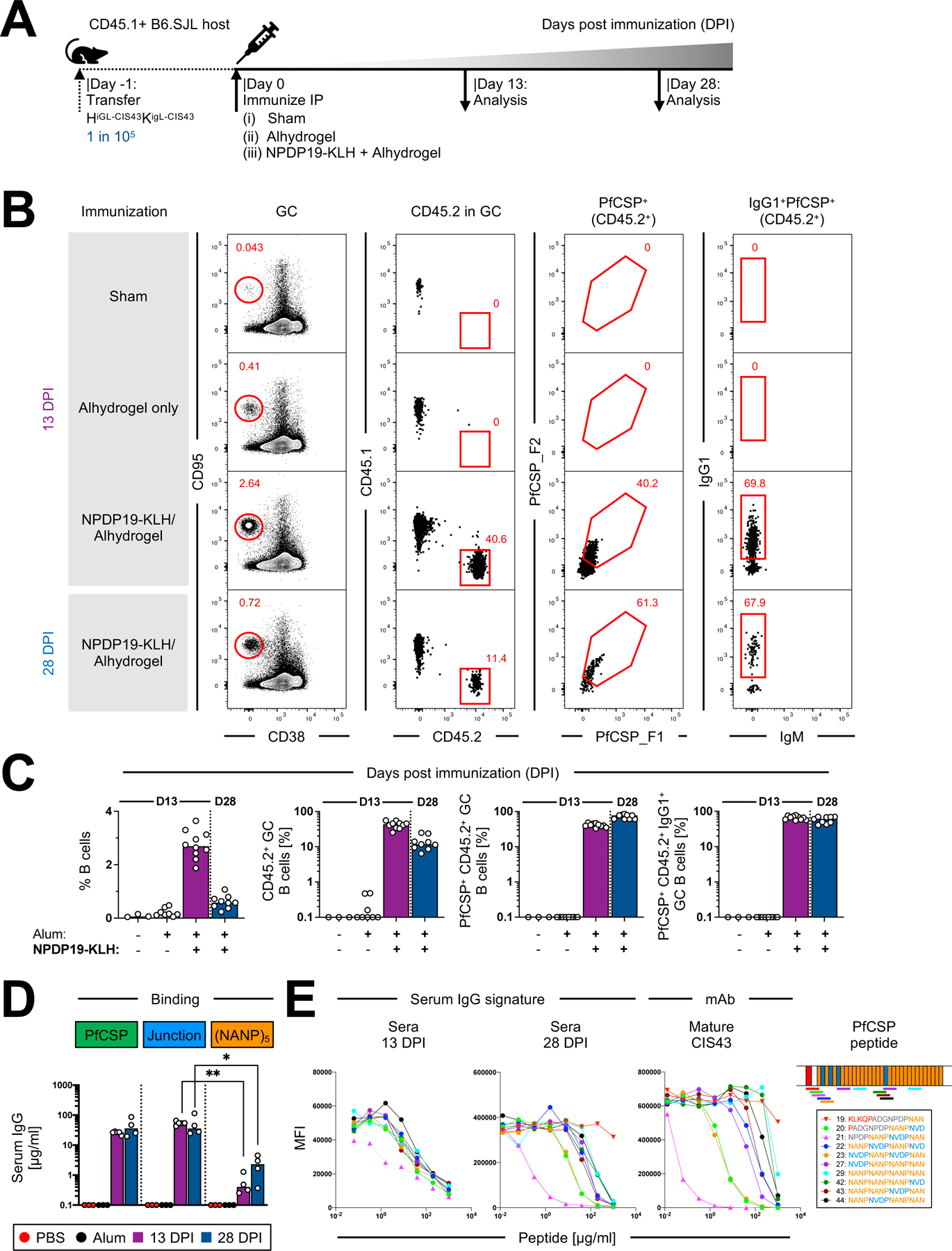
Figure 3:. B cell kinetics of HiGL-CIS43κiGL-CIS43 B cells following immunization with NPDP19-KLH.
A. HiGL-CIS43κiGL-CIS43 B cell transfer system used for (B-D). B. Gating strategy to identify PfCSP-specific HiGL-CIS43κiGL-CIS43 B cells. Representative flow cytometry plots shown for two time points, 13 and 28 DPI. For 13 DPI representative graphs for the two control groups (Sham-recipient mice were injected ip with 200 µl PBS; Alhydrogel only controls were injected ip with 200 µl of 1:1 PBS-Alhydrogel formulation) are shown. C. Quantification of response by B cell subsets from (B). (+/−) on x-axis indicate whether Alhydrogel (Alum) and/or NPDP19-KLH were used for immunizations. D. IgG-binding profiles determined in ELISA to PfCSP and to malaria peptides NPDP19 and (NANP)5 at 13 and 28 DPI. mAb 2A10 with mouse variable and mouse IgG1 constant region was used as a standard to determine concentrations of antigen-specific IgG. E. Left, binding to rPfCSP in the presence of varying concentrations of peptides of mature mAb CIS43 and polyclonal mouse sera from 13 and 28 days post NPDP19-KLH immunization (middle). Right, specified amino acid sequences numbered 19–29 are shown. Sequences are color-coded, representing overlapping peptides spanning the repeat region of PfCSP. P values were calculated by Kruskal-Wallis test with Dunn’s correction.*P<0.05; **P<0.01. See also Figure S3.
Figure 4:
Figure 4:. A single priming immunization with NPDP19-KLH induces antibodies with key CIS43-like mutations N52K and K59R (IGHV) and H89Q and T94S (IGKV).
Antigen-specific splenic CD95+CD38low CD45.2+ HiGL-CIS43κiGL-CIS43 B cells were sorted at day 13 and 28 post immunization (DPI) for single-cell BCR sequence analysis (see Figure S4E). A. Clonal lineage trees generated from bioinformatically assembled heavy-light chain sequence pairs. Branch length is representative of sequence distance. B. Total nucleotide (nt) and amino acid (aa) mutations acquired in iGL-CIS43 HCs at 13 and 28 DPI. The red line indicates the median number of mutations. C. Total nt and aa mutations acquired in the iGL-CIS43 LC at 13 and 28 DPI. Red line indicates median number of mutations. D. Accumulation of CIS43-like aa mutations shown for human HCs (left) and LCs (right) isolated at 13 and 28 DPI. Red (Briney et al., 2019) and black (Soto et al., 2019) stair step indicate calculated antigen-agnostic mutations. The numbers inside each square indicate the number of sequences that have the total aa mutations shown on the x-axis and the CIS43-like aa mutations shown on the y-axis. E. Hotspot analysis shows frequency of observed HC mutations per residue at 13 (purple) and 28 (blue) DPI. HCDRs are highlighted in gray. Letters in red (only present in mature CIS43 HC) indicate key aa residues for the recognition of the junctional epitope. AA positions 52 and 58 were analyzed in (F). Kabat numbering was followed. F. Distribution of select iGL-CIS43 B cell HC aa mutations in positions 52 and 58 over time. G. Hotspot analysis shows frequency of observed LC mutations per residue at 13 (purple) and 28 (blue) DPI. LCDRs are highlighted in gray. Letters in red (only present in mature CIS43 LC) indicate key amino acid residues for the recognition of the junctional malaria epitope. AA positions 89 and 94 were analyzed in (H). Kabat numbering was followed. H. Distribution of select iGL-CIS43 B cell LC aa mutations in positions 89 and 94 over time. P values were calculated by unpaired Mann-Whitney test (panels B and C). ****P<0.0001. See also Figure S3.
Figure 5:
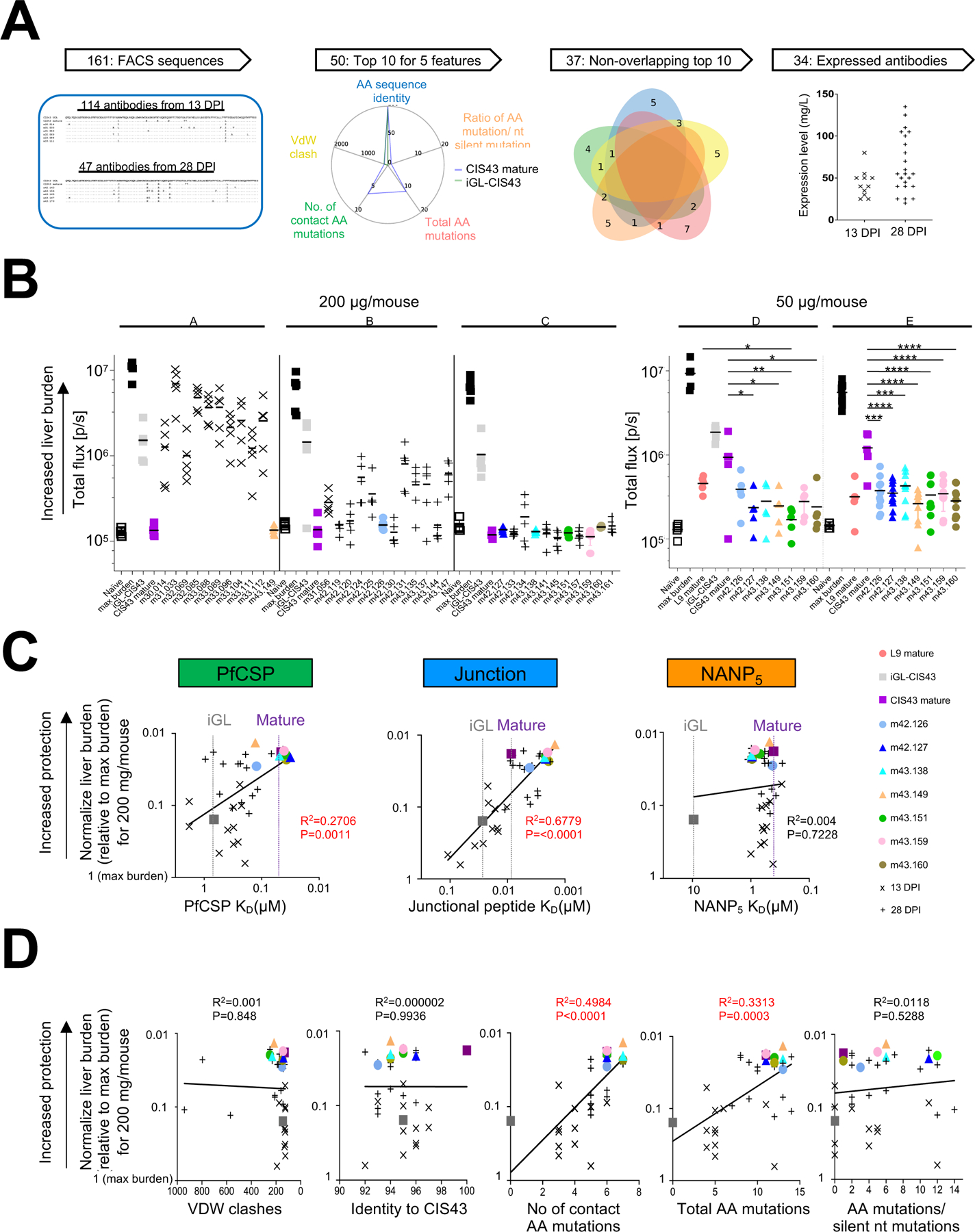
Figure 5:. Informatics-based analyses identifies affinity- and sequences-based correlates of improved protection.
A. Sequence-based sieving of genetic features of 161 iGL-CIS43 B cells with heavy and light sequences (see Table S1), identified the top 10 sequences for 5 features, comprising 37 antibody sequences of which 34 expressed. B. Mice were passively infused with either 200 µg antibody (left, experiments A, B and C) or 50 µg antibody (right, experiment D and E) before being challenged with transgenic P. berghei SPZ expressing PfCSP and a green fluorescent protein/luciferase fusion protein. Bioluminescent quantification of liver burden is shown 42 h post challenge, with each group of 11 antibodies assessed with controls: naïve (non-infected), max burden (no passively infected antibody), and both iGL and mature forms of CIS43. In experiments D and E, the L9 antibody was added as a control. C. BLI affinity for 34 expressed antibodies was measured against PfCSP, junctional peptide and NANP5-repeat antigens (X-axis) and correlated to normalized liver burden (Y-axis), as assessed at 200 µg/ml. D. Correlations between five genetic features chosen for sequence sieving and normalize protection, as assessed at 200 µg/ml. See also Tables S1, S2, S4, S3 and Figure S4.
Figure 6:
Figure 6:. Thermodynamic and structural basis of improved CIS43 antibodies from iGL-CIS43 mice.
A. Isothermal calorimetry titrations of PfCSPm Isothermal titration calorimetry of PfCSPm with various iGL-CIS43-dervied antibodies at pH 7.4 and 25 °C. The affinities and stoichiometry are shown for both KD1 and KD2. B. Crystal structures of junctional peptide (peptide 21) in complex with the most potent iGL-CIS43 derived antibodies from m42 and m43, highlighting similarity in SHM (left) and variation in bound epitope – especially in relation to isoleucine or leucine at HC position 98 (right). Numbering on peptide 21 corresponds to the PfCSP numbering. C. Sequences of iGL-CIS43-derived antibodies statistically superior to mature CIS43 are shown with that of mature and iGL-CIS43 along with the heavy (top) and light (bottom) V-gene mutational profiles. See also Tables S5 and S6 and Figure S5.
Figure 7:
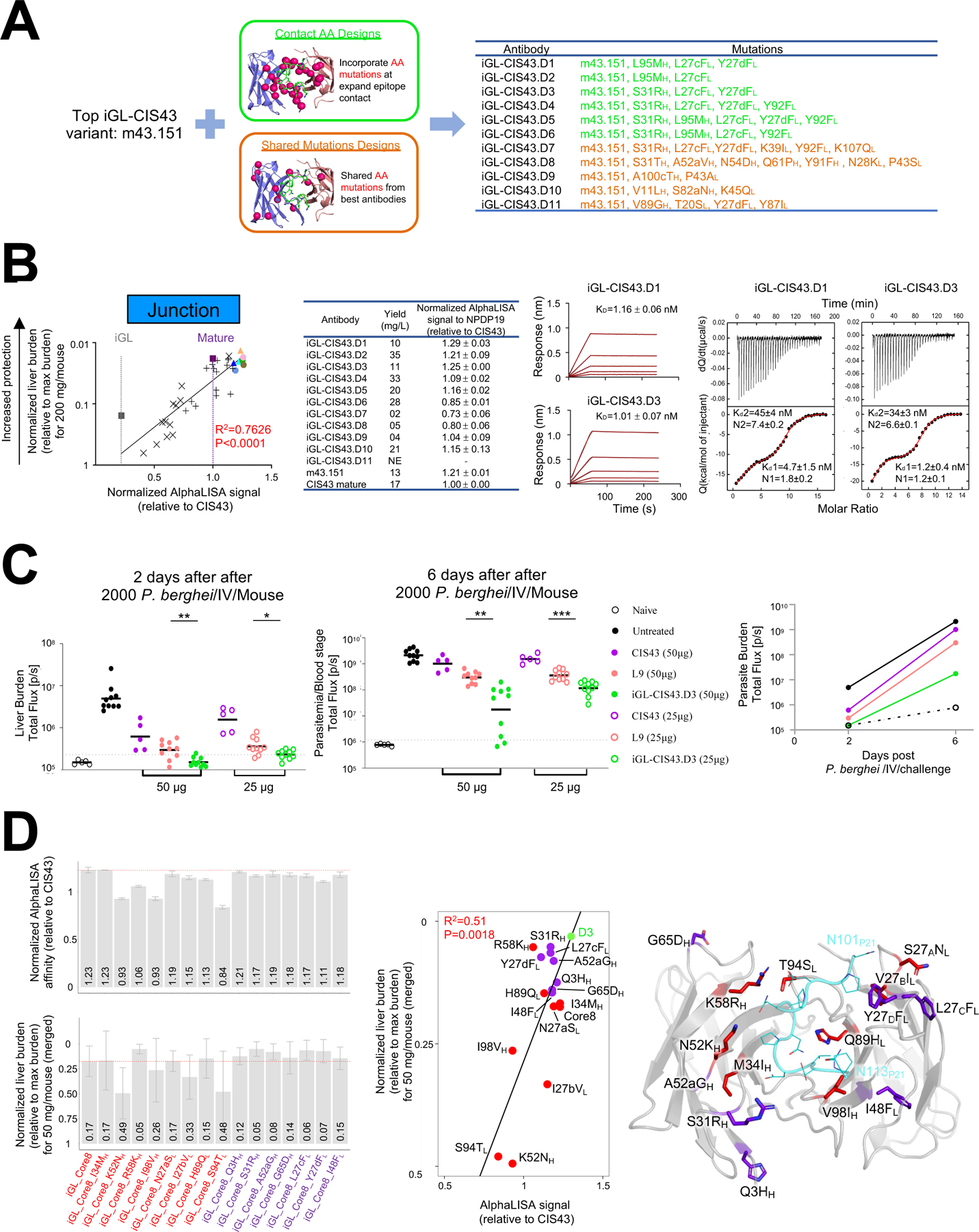
Figure 7:. Design based on iGL-CIS43 mice information yields best in class antibody iGL-CIS43.D3
A. m43.151 variants designed using (i) expanded amino acid contact mutations (green color) and (ii) mutations on top antibodies (orange color). B. AlphaLISA-measured apparent affinity to NPDP19 correlates strongly with protection (R=0.873) for 34 genetically identified antibodies analyzed in Fig. 5 (leftmost panel; antibodies are color coded as in Fig 5C). BLI and ITC affinities for iGL-CIS43.D1 and iGL-CIS43.D3 are shown for NPDP19 and PfCSPm, respectively (right panels). C. Mice were passively infused with either 50 µg (filed circle) or 25 µg (empty circle) antibody before being challenged with transgenic P. berghei SPZ expressing PfCSPm and a green fluorescent protein/luciferase fusion protein. Bioluminescent quantification was done for each mouse on day 2 and day 6. D. Structure-function analysis. Initial core 8 mutation were transplanted onto iGL-CIS43 backbone sequence (iGL_Core8) and structure-function analysis was performed, which included the reversion of single mutations and addition of mutations from iGL-CIS43.D3 onto iGL_Core8 construct. AlphaLISA-measured apparent affinities to NPDP19 were determined (D3 has AlphaLISA value 5.53×10⁶), and liver protection was measured (D3 has normalized liver burden 0.03) (left panels). These measurements correlated (middle panel), and the location of each alteration is depicted on the iGL-CIS43.D3 structure (right panel). See also Tables S5 and Figure S6.

Comment in

References

    1. Abbott RK, Lee JH, Menis S, Skog P, Rossi M, Ota T, Kulp DW, Bhullar D, Kalyuzhniy O, Havenar-Daughton C, et al. (2018). Precursor Frequency and Affinity Determine B Cell Competitive Fitness in Germinal Centers, Tested with Germline-Targeting HIV Vaccine Immunogens. Immunity 48, 133–146.e6. - PMC - PubMed
    1. Atcheson E, Hill AVS, and Reyes-Sandoval A (2021). A VLP for validation of the Plasmodium falciparum circumsporozoite protein junctional epitope for vaccine development. Npj Vaccines 6. - PMC - PubMed
    1. Best RB, Zhu X, Shim J, Lopes PEM, Mittal J, Feig M, and MacKerell AD (2012). Optimization of the Additive CHARMM All-Atom Protein Force Field Targeting Improved Sampling of the Backbone ϕ, ψ and Side-Chain χ 1 and χ 2 Dihedral Angles. J. Chem. Theory Comput 8, 3257–3273. - PMC - PubMed
    1. von Boehmer L, Liu C, Ackerman S, Gitlin AD, Wang Q, Gazumyan A, and Nussenzweig MC (2016). Sequencing and cloning of antigen-specific antibodies from mouse memory B cells. Nat. Protoc 11, 1908–1923. - PubMed
    1. Briney B, Inderbitzin A, Joyce C, and Burton DR (2019). Commonality despite exceptional diversity in the baseline human antibody repertoire. Nature 566, 393–397. - PMC - PubMed

Publication types

MeSH terms