


Integrative Clinical and Genomic Characterization of MTAP-deficient Metastatic Urothelial Cancer
- PMID: 34789422
- PMCID: PMC9106763
- DOI: 10.1016/j.euo.2021.10.006
Integrative Clinical and Genomic Characterization of MTAP-deficient Metastatic Urothelial Cancer
Abstract
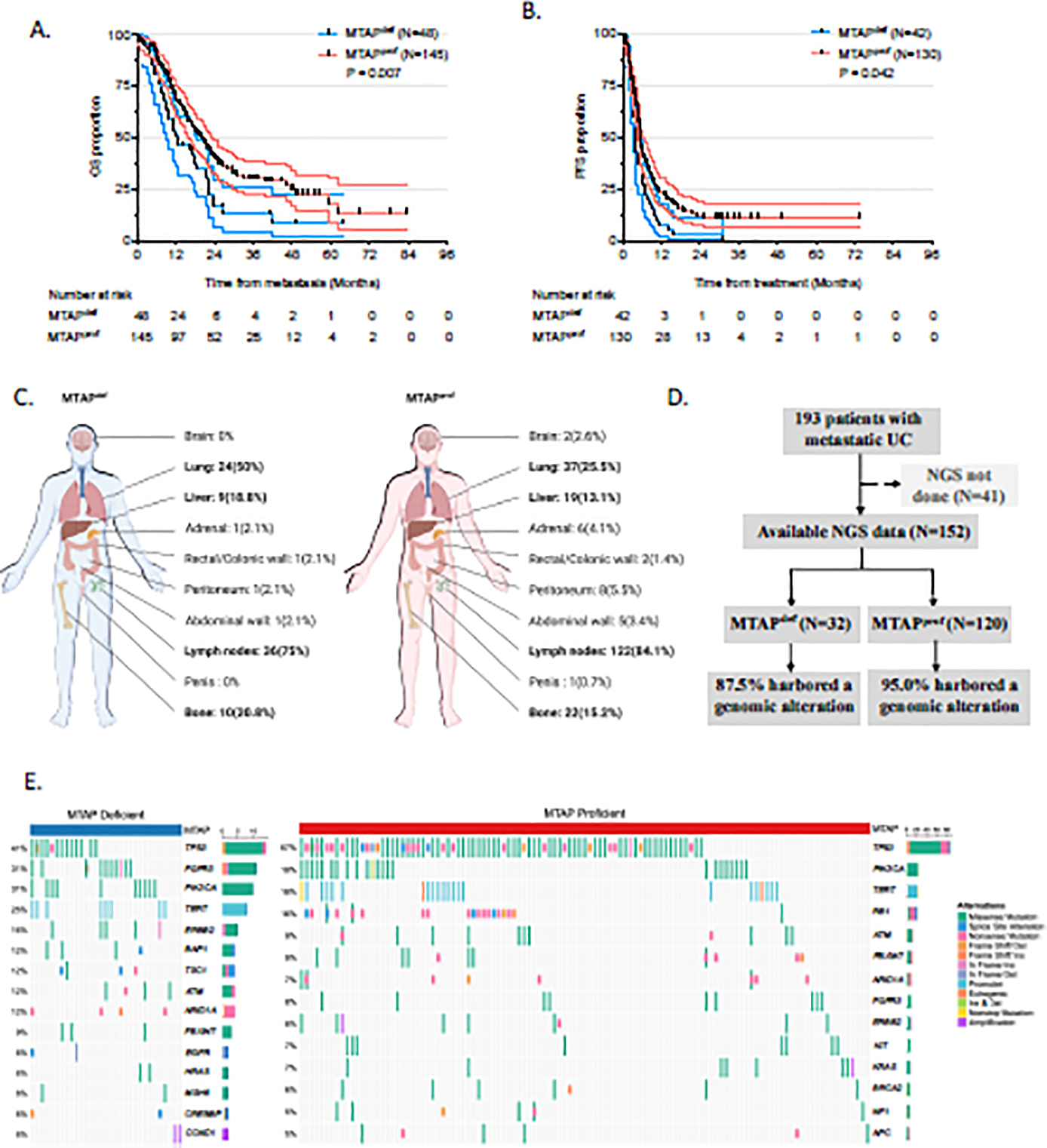
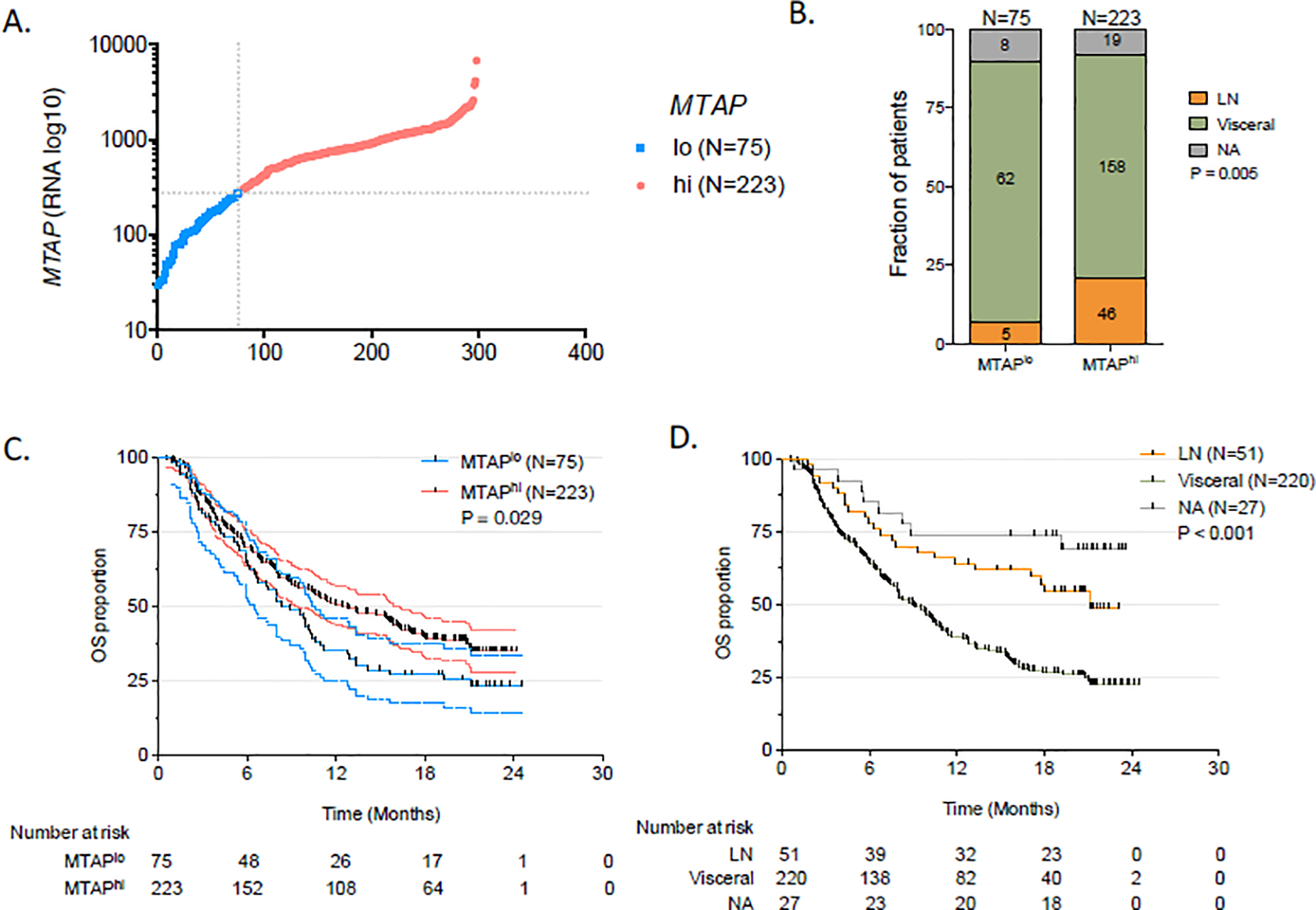
Deficiency of MTAP (MTAPdef) mainly occurs because of homozygous loss of chromosome 9p21, which is the most common copy-number loss in metastatic urothelial cancer (mUC). We characterized the clinical and genomic features of MTAPdef mUC in 193 patients treated at MD Anderson Cancer Center (MDACC) and 298 patients from the phase 2 IMvigor210 trial, which investigated atezolizumab in cisplatin-ineligible and platinum-refractory disease. In the MDACC cohort, visceral metastases were significantly more common for MTAPdef (n = 48) than for MTAP-proficient (MTAPprof; n = 145) patients (75% vs 55.2%; p = 0.02). MTAPdef was associated with poor prognosis (median overall survival [mOS] 12.3 vs 20.2 mo; p = 0.007) with an adjusted hazard ratio of 1.93 (95% confidence interval 1.35-2.98). Similarly, IMvigor210 patients with MTAPlo (n = 29) had a higher incidence of visceral metastases than those with MTAPhi tumors (n = 269; 86.2% vs 72.5%; p = 0.021) and worse prognosis (mOS 8.0 vs 11.3 mo; p = 0.042). Hyperplasia-associated genes were more frequently mutated in MTAPdef tumors (FGFR3: 31% vs 8%; PI3KCA: 31% vs 19%), while alterations in dysplasia-associated genes were less common in MTAPdef tumors (TP53: 41% vs 67%; RB1: 0% vs 16%). Our findings support a distinct biology in MTAPdef mUC that is associated with early visceral disease and worse prognosis. PATIENT SUMMARY: We investigated the outcomes for patients with the most common gene loss (MTAP gene) in metastatic cancer of the urinary tract. We found that this loss correlates with worse prognosis and a higher risk of metastasis in internal organs. There seems to be distinct tumor biology for urinary tract cancer with MTAP gene loss and this could be a potential target for treatment.
Keywords: Chemotherapy; FGFR; Immunotherapy; MTAP; PIK3CA; Urothelial carcinoma.
Copyright © 2021 European Association of Urology. Published by Elsevier B.V. All rights reserved.
Figures
References
-
- Kamatani N, Carson DA. Dependence of adenine production upon polyamine synthesis in cultured human lymphoblasts. Biochim Biophys Acta 1981;675:344–50. - PubMed
-
- Williamson JB, Solano L, Yuki A, et al. Analytical validation of the Oncomine Pan-Cancer Cell-Free Assay in a CLIA- and CAP-regulated laboratory for detection of solid tumor-derived variants in blood plasma. J Clin Oncol 2019;37(15 Suppl):e14614.
-
- Sanli O, Dobruch J, Knowles MA, et al. Bladder cancer. Nat Rev Dis Primers 2017;3:17022. - PubMed
-
- Rebouissou S, Hérault A, Letouzé E, et al. CDKN2A homozygous deletion is associated with muscle invasion in FGFR3-mutated urothelial bladder carcinoma. J Pathol 2012;227:315–24. - PubMed
Publication types
MeSH terms
Substances
Grants and funding
LinkOut - more resources
Full Text Sources
Research Materials
Miscellaneous
