


Recent Advances in Understanding the Inflammatory Response in Malaria: A Review of the Dual Role of Cytokines
- PMID: 34790829
- PMCID: PMC8592744
- DOI: 10.1155/2021/7785180
Recent Advances in Understanding the Inflammatory Response in Malaria: A Review of the Dual Role of Cytokines
Abstract
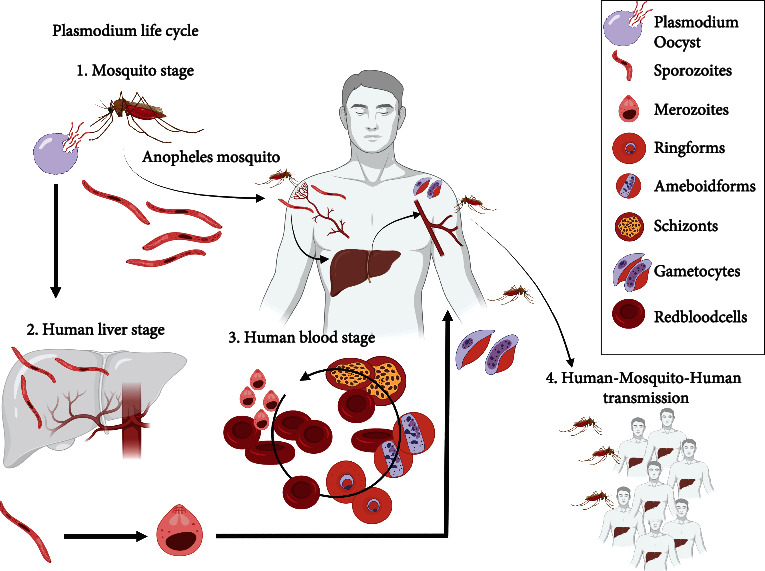
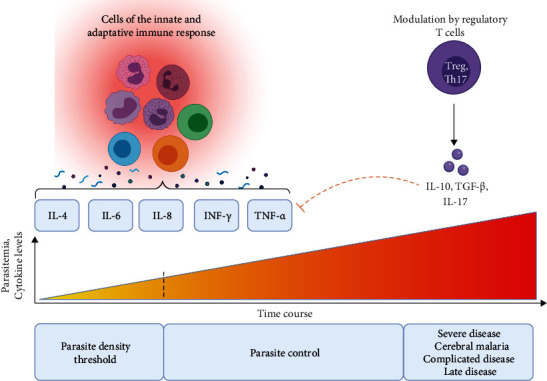
Malaria is a serious and, in some unfortunate cases, fatal disease caused by a parasite of the Plasmodium genus. It predominantly occurs in tropical areas where it is transmitted through the bite of an infected Anopheles mosquito. The pathogenesis of malaria is complex and incompletely elucidated. During blood-stage infection, in response to the presence of the parasite, the host's immune system produces proinflammatory cytokines including IL-6, IL-8, IFN-γ, and TNF, cytokines which play a pivotal role in controlling the growth of the parasite and its elimination. Regulatory cytokines such as transforming growth factor- (TGF-) β and IL-10 maintain the balance between the proinflammatory and anti-inflammatory responses. However, in many cases, cytokines have a double role. On the one hand, they contribute to parasitic clearance, and on the other, they are responsible for pathological changes encountered in malaria. Cytokine-modulating strategies may represent a promising modern approach in disease management. In this review, we discuss the host immune response in malaria, analyzing the latest studies on the roles of pro- and anti-inflammatory cytokines.
Copyright © 2021 Gabriela Loredana Popa and Mircea Ioan Popa.
Conflict of interest statement
The authors declare no conflicts of interest.
Figures
References
-
- CDC-parasites-malaria [Internet] 2021. https://www.cdc.gov/parasites/malaria/index.html .
-
- World malaria report. 2020. https://www.who.int/publications/i/item/9789240015791 .
Publication types
MeSH terms
Substances
LinkOut - more resources
Full Text Sources
Medical
