


Interleukin 2-Based Fusion Proteins for the Treatment of Cancer
- PMID: 34790830
- PMCID: PMC8592747
- DOI: 10.1155/2021/7855808
Interleukin 2-Based Fusion Proteins for the Treatment of Cancer
Abstract
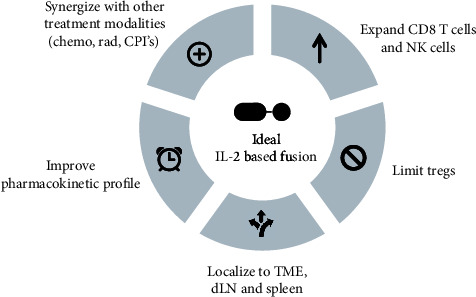
Interleukin 2 (IL-2) plays a fundamental role in both immune activation and tolerance and has revolutionized the field of cancer immunotherapy since its discovery. The ability of IL-2 to mediate tumor regression in preclinical and clinical settings led to FDA approval for its use in the treatment of metastatic renal cell carcinoma and metastatic melanoma in the 1990s. Although modest success is observed in the clinic, cancer patients receiving IL-2 therapy experience a wide array of side effects ranging from flu-like symptoms to life-threatening conditions such as vascular leak syndrome. Over the past three decades, efforts have focused on circumventing IL-2-related toxicities by engineering methods to localize IL-2 to the tumor or secondary lymphoid tissue, preferentially activate CD8+ T cells and NK cells, and alter pharmacokinetic properties to increase bioavailability. This review summarizes the various IL-2-based strategies that have emerged, with a focus on chimeric fusion methods.
Copyright © 2021 Alana MacDonald et al.
Conflict of interest statement
Dr. Wu is a co-founder of and has an equity ownership interest in Papivax LLC. Also, Dr. Wu owns Papivax Biotech Inc. stock options and is a member of Papivax Biotech Inc.'s Scientific Advisory Board.
Figures
References
Publication types
MeSH terms
Substances
LinkOut - more resources
Full Text Sources
Other Literature Sources
Medical
Research Materials
Miscellaneous
