


Reconstruction of the Rat Sciatic Nerve by Using Biodegradable and Non-Biodegradable Conduits
- PMID: 34796004
- PMCID: PMC8596261
- DOI: 10.17691/stm2020.12.5.05
Reconstruction of the Rat Sciatic Nerve by Using Biodegradable and Non-Biodegradable Conduits
Abstract
The aim of the study was to compare two types of conduits made of either non-resorbable Reperen or resorbable Tissucol for their effects on the regeneration of the rat sciatic nerve under conditions of stump diastasis.
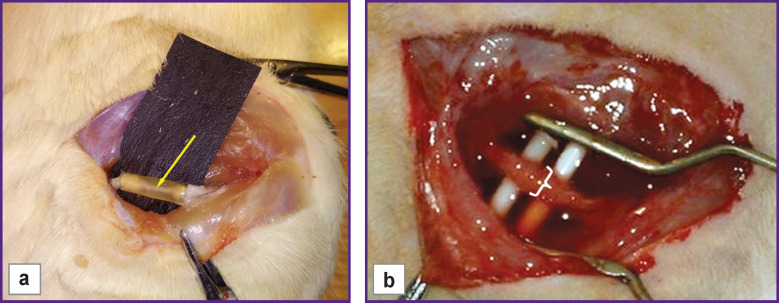
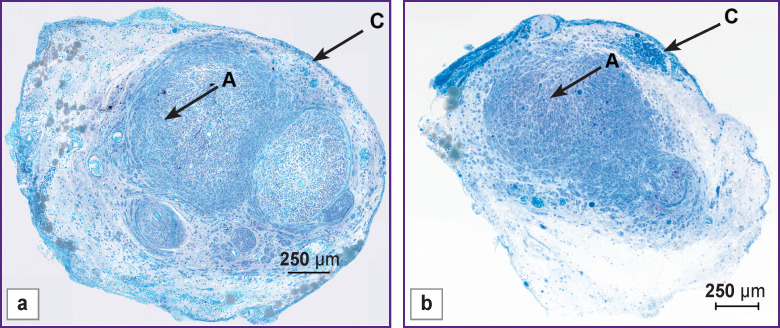
Materials and methods: The experiments were carried out using outbred white male rats of the reproductive age (n=14). The animals were divided into three groups: group 1, intact (n=5), used for studying the morphology of the sciatic nerve; group 2 (n=4) - nerve plastic surgery was performed using a conduit made of non-resorbable Reperen; group 3 (n=5) - surgery was performed using a conduit made of resorbable Tissucol. The animals were anesthetized with isoflurane. After a complete transection of the sciatic nerve in the middle third of the thigh, its stumps were inserted into a conduit of an internal diameter of 2 mm and a length of 10 mm, filled with saline. Diastasis of 5 mm in length was created by spreading the nerve ends and securing the epineurium to the tube edges with 8/0 polypropylene sutures. A total count of myelinated nerve fibers was performed in the area of repair (tubulation) and the distal part of the nerve; the formation of connective tissue sheaths was assessed 14 weeks after the operation.
Results: According to the morphological assessment, both types of conduits (resorbable and non-resorbable) caused the similar number of fibers to restore in the distal part of the repaired nerve; clinical characteristics of the animals in both groups were close to each other and to the norm.
Conclusion: The results allow us to consider the conduit made of non-resorbable Reperen as a device promising for neuroplasty along with the resorbable conduit made of Tissucol.
Keywords: Reperen; Tissucol Kit; conduit for nerve repair; nerve regeneration; peripheral nerve.
Conflict of interest statement
Conflict of interest. The authors declare that they have no conflicts of interest to report.
Figures


References
-
- Merkulov M.V. Optimizatsiya vosstanovleniya innervatsii tkaney pri povrezhdeniyakh perifericheskikh nervov konechnostey. Moscow: 2014. Avtoref. dis. … dokt. med. nauk [Optimization of recovery of innervation of tissues during limb peripheral nerve injuries. DSc Thesis].
-
- Aberg M., Ljungberg C., Edin E., Millqvist H., Nordh E., Theorin A., Terenghi G., Wiberg M. Clinical evaluation of a resorbable wrap-around implant as an alternative to nerve repair a prospective, assessor-blinded, randomised clinical study of sensory motor and functional recovery after peripheral nerve repair. J Plast Reconstr Aesthet Surg. 2009;62(11):1503–1509. doi: 10.1016/j.bjps.2008.06.041. - DOI - PubMed
-
- Naff N.J., Ecklund J.M. History of peripheral nerve surgery techniques. Neurosurg Clin N Am. 2001;12(1):197–209. - PubMed
MeSH terms
LinkOut - more resources
Full Text Sources
Medical