Evaluation of Rheological and Sensory Characteristics of Plant-Based Meat Analog with Comparison to Beef and Pork
- PMID: 34796325
- PMCID: PMC8564321
- DOI: 10.5851/kosfa.2021.e50
Evaluation of Rheological and Sensory Characteristics of Plant-Based Meat Analog with Comparison to Beef and Pork
Abstract
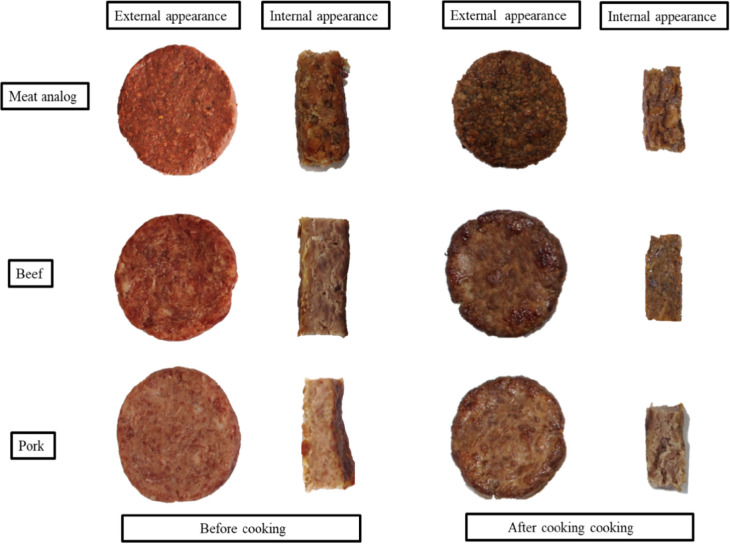
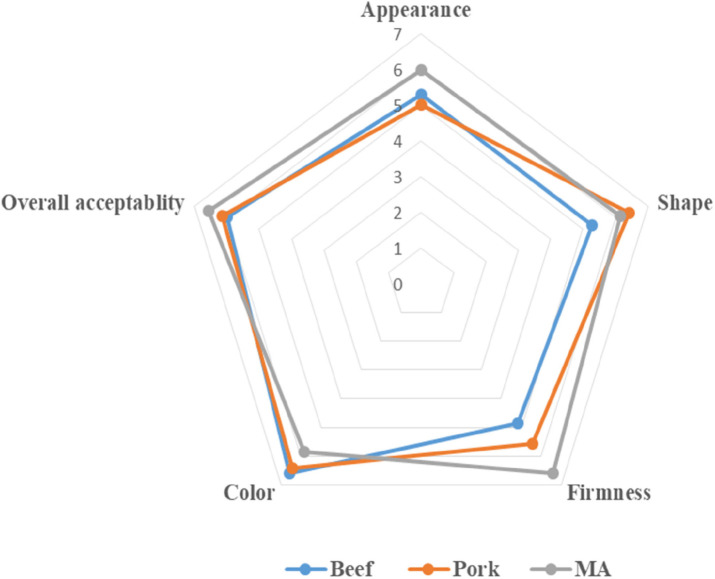
This study explored the physicochemical, textural, and sensorial properties of a meat analog (MA) as compared to beef and pork meats. Results illustrate that MA patties had lower moisture, fat, and protein content, as well as higher ash and crude fiber than beef and pork. Likewise, MA patties had a higher pH, lightness (L*), and redness (a*) than either beef or pork. Pork meat exhibited the highest released water (RW) and cooking loss (CL) values, followed closely by MA with beef displaying the lowest values. Regardless of patty type, the post-cooking diameter patties were reduced significantly (p<0.05). However, the Warner-Bratzler shear force (WBSF), hardness, chewiness, and gumminess of beef were significantly higher than that of either pork or MA. The visible appearance of MA patties had more porous and loose structures before and after cooking. Consequently, based on sensory parameters, MA patties demonstrated the higher values for appearance and firmness, followed by beef and pork respectively, although the difference was not statistically significant. Therefore, the current study demonstrated that some physicochemical, textural, and sensory characteristics of beef and pork exhibited the most similarity to MA.
Keywords: beef; meat analog; plant-based ingredients; pork; textured vegetable protein.
© Korean Society for Food Science of Animal Resources.
Conflict of interest statement
The authors declare no potential conflicts of interest.
Figures
References
-
- Ahirwar R, Jayathilakan K, Reddy KJ, Pandey MC, Batra HV. Development of mushroom and wheat gluten based meat analogue by using response surface methodology. Int J Adv Res. 2015;3:923–930.
-
- Aiking H. Future protein supply. Trends Food Sci Technol. 2011;22:112–120. doi: 10.1016/j.tifs.2010.04.005. - DOI
-
- Akesowan A. Quality characteristics of light pork burgers fortified with soy protein isolate. Food Sci Biotechnol. 2010;19:1143–1149. doi: 10.1007/s10068-010-0163-2. - DOI
-
- Alamu EO, Busie MD. Effect of textured soy protein (tsp) inclusion on the sensory characteristics and acceptability of local dishes in Nigeria. Cogent Food Agric. 2019;5:1671749. doi: 10.1080/23311932.2019.1671749. - DOI
-
- AMSA . Research guidelines for cookery. American Meat Science Association; Chicago, IL, USA: 1995. p. 8. p.
LinkOut - more resources
Full Text Sources
Other Literature Sources
Research Materials
Miscellaneous