


Analysis of the mandibular canal course using unsupervised machine learning algorithm
- PMID: 34797856
- PMCID: PMC8604350
- DOI: 10.1371/journal.pone.0260194
Analysis of the mandibular canal course using unsupervised machine learning algorithm
Abstract
Objectives: Anatomical structure classification is necessary task in medical field, but the inevitable variability of interpretation among experts makes reliable classification difficult. This study aims to introduce cluster analysis, unsupervised machine learning method, for classification of three-dimensional (3D) mandibular canal (MC) courses, and to visualize standard MC courses derived from cluster analysis in the Korean population.
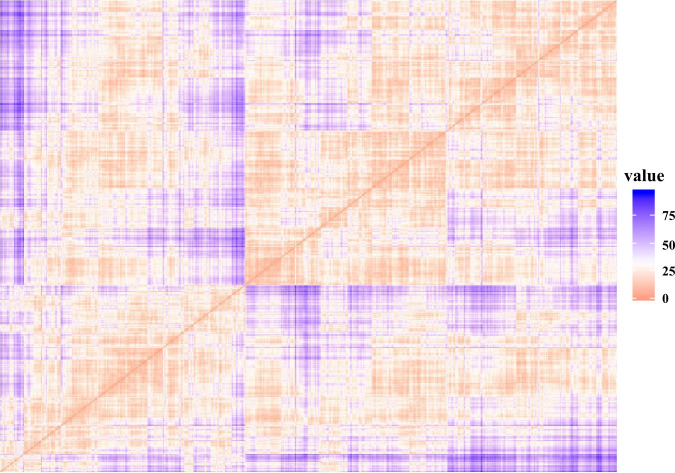
Materials and methods: A total of 429 cone-beam computed tomography images were used. Four sites in the mandible were selected for the measurement of the MC course and four parameters, two vertical and two horizontal parameters were measured per site. Cluster analysis was carried out as follows: parameter measurement, parameter normalization, cluster tendency evaluation, optimal number of clusters determination, and k-means cluster analysis. The 3D MC courses were classified into three types with statistically significant mean differences by cluster analysis.
Results: Cluster 1 showed a smooth line running towards the lingual side in the axial view and a steep slope in the sagittal view. Cluster 2 ran in an almost straight line closest to the lingual and inferior border of mandible. Cluster 3 showed the pathway with a bent buccally in the axial view and an increasing slope in the sagittal view in the posterior area. Cluster 2 showed the highest distribution (42.1%), and males were more widely distributed (57.1%) than the females (42.9%). Cluster 3 comprised similar ratio of male and female cases and accounted for 31.9% of the total distribution. Cluster 1 had the least distribution (26.0%) Distributions of the right and left sides did not show a statistically significant difference.
Conclusion: The MC courses were automatically classified as three types through cluster analysis. Cluster analysis enables the unbiased classification of the anatomical structures by reducing observer variability and can present representative standard information for each classified group.
Conflict of interest statement
The authors have declared that no competing interests exist.
Figures




References
-
- Morse DR. Endodontic-related inferior alveolar nerve and mental foramen paresthesia. Compend Contin Educ Dent. 1997;18: 963–968, 970–963, 976–968 passim; quiz 998 - PubMed
-
- Pogrel MA. Permanent nerve damage from inferior alveolar nerve blocks: a current update. J Calif Dent Assoc. 2012;40: 795–797 - PubMed
Publication types
MeSH terms
LinkOut - more resources
Full Text Sources
Miscellaneous
