


Disability and self-care living strategies among adults living with HIV during the COVID-19 pandemic
- PMID: 34798881
- PMCID: PMC8604195
- DOI: 10.1186/s12981-021-00413-4
Disability and self-care living strategies among adults living with HIV during the COVID-19 pandemic
Abstract
Background: Events associated with the COVID-19 pandemic, such as physical distancing, closure of community services, postponement of health appointments, and loss of employment can lead to social isolation, financial uncertainty, and interruption of antiretroviral adherence, resulting in additional health-related challenges (disability) experienced among adults living with chronic illness such as HIV. 'Living strategies' is a concept derived from the perspectives of people living with HIV, defined as behaviors, attitudes and beliefs adopted by people living with HIV to help deal with disability associated with HIV and multi-morbidity. Our aim was to describe disability among adults living with HIV and self-care living strategies used during the COVID-19 pandemic.
Methods: Adults living with HIV in Toronto, Ontario, Canada, including some with pre-pandemic HIV Disability Questionnaire (HDQ) data, completed a cross-sectional web-based survey between June-August 2020. The survey included the HDQ and questions about self-care living strategy use during the pandemic. We compared disability (HDQ) scores prior to versus during the pandemic using paired t-tests. We reported the proportion of participants who engaged in various living strategies at least 'a few times a week' or 'everyday' during the pandemic.
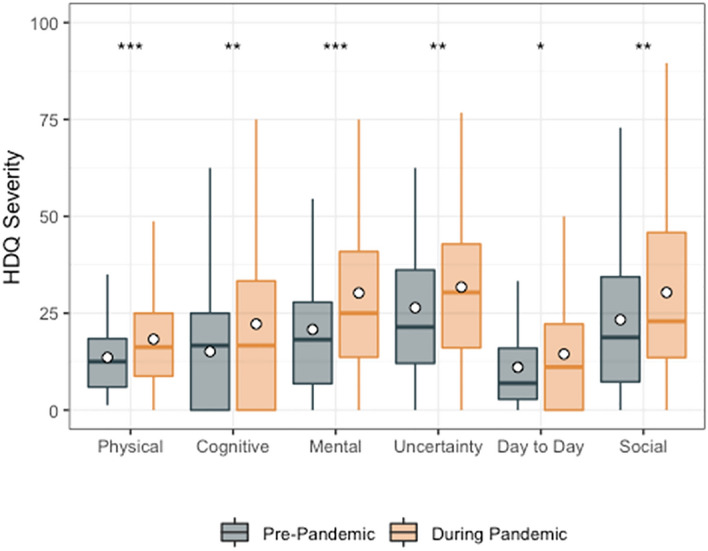
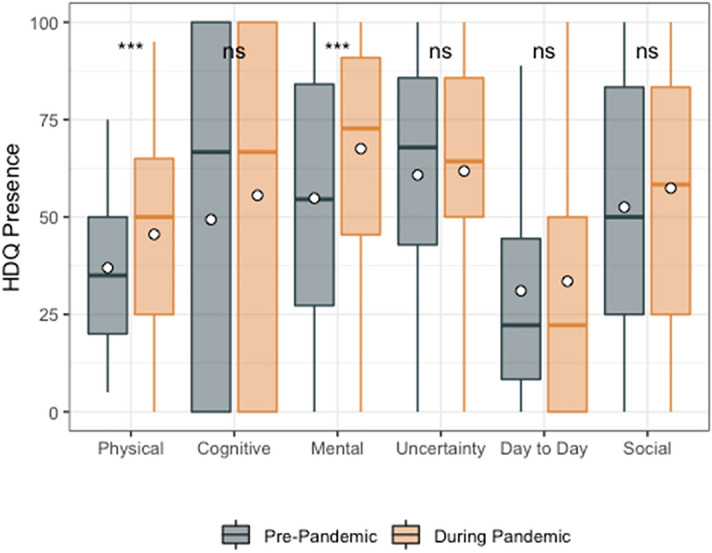
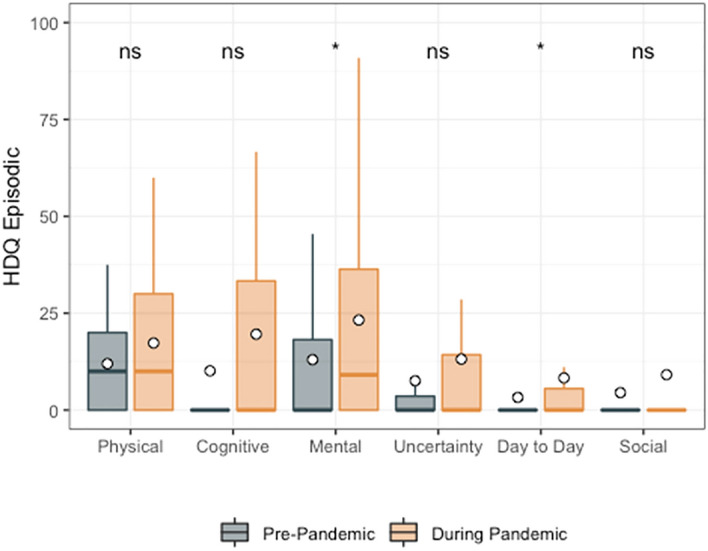
Results: Of the 63 respondents, 84% were men, median age 57 years, and 62% lived alone. During the pandemic the greatest disability severity was in the uncertainty [median 30; Interquartile range (IQR): 16, 43] and mental-emotional (25; IQR: 14, 41) domains. Among the 51 participants with pre-pandemic data, HDQ severity scores were significantly greater (worse) during the pandemic (vs prior) in all domains. Greatest change from prior to during the pandemic was in the mental-emotional domain for presence (17.7; p < 0.001), severity (11.4; p < 0.001), and episodic nature (9.3; p < 0.05) of disability. Most participants (> 60%) reported engaging a 'few times a week' or 'everyday' in self-care strategies associated with maintaining sense of control and adopting positive attitudes and beliefs.
Conclusions: People living with HIV reported high levels of uncertainty and mental-emotional health challenges during the pandemic. Disability increased across all HDQ dimensions, with the greatest worsening in the mental-emotional health domain. Results provide an understanding of disability and self-care strategy use during the COVID-19 pandemic.
Keywords: COVID-19 pandemic; Disability; HIV/AIDS; Web-based survey.
© 2021. The Author(s).
Conflict of interest statement
The authors declare that they have no competing interests.
Figures
Update of
-
Disability and Self-care Living Strategies Among Adults Living With HIV During the COVID-19 Pandemic.Res Sq [Preprint]. 2021 Sep 14:rs.3.rs-868864. doi: 10.21203/rs.3.rs-868864/v1. Res Sq. 2021. Update in: AIDS Res Ther. 2021 Nov 19;18(1):87. doi: 10.1186/s12981-021-00413-4. PMID: 34545356 Free PMC article. Updated. Preprint.
References
-
- Guaraldi G, Silva AR, Stentarelli C. Multimorbidity and functional status assessment. Curr Opin HIV AIDS. 2014;9(4):386–397. - PubMed
Publication types
MeSH terms
Grants and funding
LinkOut - more resources
Full Text Sources
Medical
