


What to feed or what not to feed-that is still the question
- PMID: 34800193
- PMCID: PMC8605975
- DOI: 10.1007/s11306-021-01855-7
What to feed or what not to feed-that is still the question
Abstract
Introduction: This review addresses metabolic diversities after grain feeding of cattle using artificial total mixed ration (TMR), in place of pasture-based feeding.
Objectives: To determine how grain feeding impairs the deuterium-depleting functions of the anaplerotic mitochondrial matrix during milk and meat production.
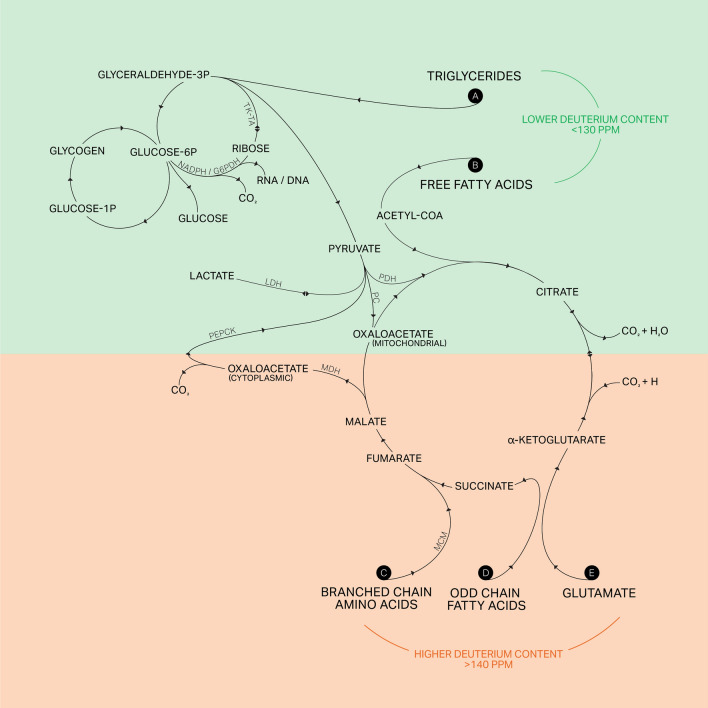
Methods: Based on published data we herein evaluate how grain-fed animals essentially follow a branched-chain amino acid and odd-chain fatty acid-based reductive carboxylation-dependent feedstock, which is also one of the mitochondrial deuterium-accumulating dysfunctions in human cancer.
Results: It is now evident that food-based intracellular deuterium exchange reactions, especially that of glycogenic substrate oxidation, are significant sources of deuterium-enriched (2H; D) metabolic water with a significant impact on animal and human health. The burning of high deuterium nutritional dairy products into metabolic water upon oxidation in the human body may contribute to similar metabolic conditions and diseases as described in state-of-the-art articles for cows. Grain feeding also limits oxygen delivery to mitochondria for efficient deuterium-depleted metabolic water production by glyphosate herbicide exposure used in genetically modified crops of TMR constituents.
Conclusion: Developments in medical metabolomics, biochemistry and deutenomics, which is the science of biological deuterium fractionation and discrimination warrant urgent critical reviews in order to control the epidemiological scale of population diseases such as diabetes, obesity and cancer by a thorough understanding of how the compromised metabolic health of grain-fed dairy cows impacts human consumers.
Keywords: Branched chain amino acids; Deupletion; Deutenomics; Grass feeding; Mitochondria; Total mixed ration.
© 2021. The Author(s).
Figures
References
-
- Bailey CD, Todt EC, Burchfield SL, Pressley AS, Denney RD, Snapp IB, Negga R, Traynor WL, Fitsanakis VA. Chronic exposure to a glyphosate-containing pesticide leads to mitochondrial dysfunction and increased reactive oxygen species production in Caenorhabditis elegans. Environmental Toxicology and Pharmacology. 2018;57:46–52. doi: 10.1016/j.etap.2017.11.005. - DOI - PMC - PubMed
Publication types
MeSH terms
Grants and funding
LinkOut - more resources
Full Text Sources