Review
. 2022 Feb;1867(2):159072.
doi: 10.1016/j.bbalip.2021.159072. Epub 2021 Nov 18.

The HDL Proteome Watch: Compilation of studies leads to new insights on HDL function

Affiliations
Review

The HDL Proteome Watch: Compilation of studies leads to new insights on HDL function

W Sean Davidson et al. Biochim Biophys Acta Mol Cell Biol Lipids. 2022 Feb.

Abstract

Purpose of review: High density lipoproteins (HDL) are a heterogeneous family of particles that contain distinct complements of proteins that define their function. Thus, it is important to accurately and sensitively identify proteins associated with HDL. Here we highlight the HDL Proteome Watch Database which tracks proteomics studies from different laboratories across the world.

Recent findings: In 45 published reports, almost 1000 individual proteins have been detected in preparations of HDL. Of these, 251 have been identified in at least three different laboratories. The known functions of these consensus HDL proteins go well beyond traditionally recognized roles in lipid transport with many proteins pointing to HDL functions in innate immunity, inflammation, cell adhesion, hemostasis and protease regulation, and even vitamin and metal binding.

Summary: The HDL proteome derived across multiple studies using various methodologies provides confidence in protein identifications that can offer interesting new insights into HDL function. We also point out significant issues that will require additional study going forward.

Keywords: Cardiovascular disease; Hemostasis; High density lipoproteins; Immunity; Lipid transport; Mass spectrometry; Proteome; Subspecies.


Figures

Fig. 1.
Fig. 1.
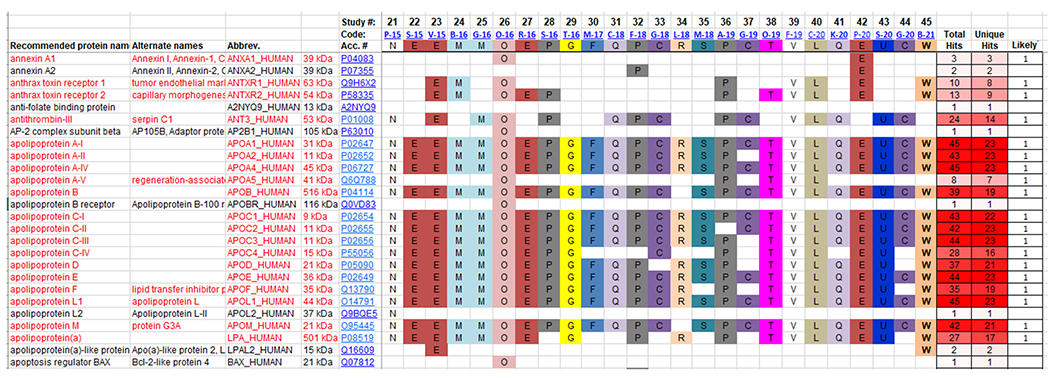
Screenshot of a portion of the HDL Proteome Watch Database. The database is in the form of an Excel spreadsheet with all proteins identified in any covered study listed on the left with alternate names, standard accession identifiers and UniProtKB codes. All cataloged studies are listed across the top (latest 24 studies are shown here) with a study code (ex. P-15) that is hyperlinked to the PubMed entry for the relevant published paper. The study code is comprised of the first letter of the first author’s last name and the year in which the study was published. Each laboratory is assigned a colored letter code. If a given protein appeared in a given study, the laboratory letter code appears in the appropriate column and row. For example, in the above shown portion of the database, annexin A1 was identified in 2 laboratories (Code O; Greifswald, Germany and Code E; University of Washington, US). The number of times a given protein was identified is shown on the right with “unique hits” (the number of times that protein was seen in different laboratories). The final righthand column contains a 1 if the protein met our criterion of appearing in at least three independent studies from three different laboratories. Currently “likely” HDL proteins are listed in red text.
Fig. 2.
Fig. 2.
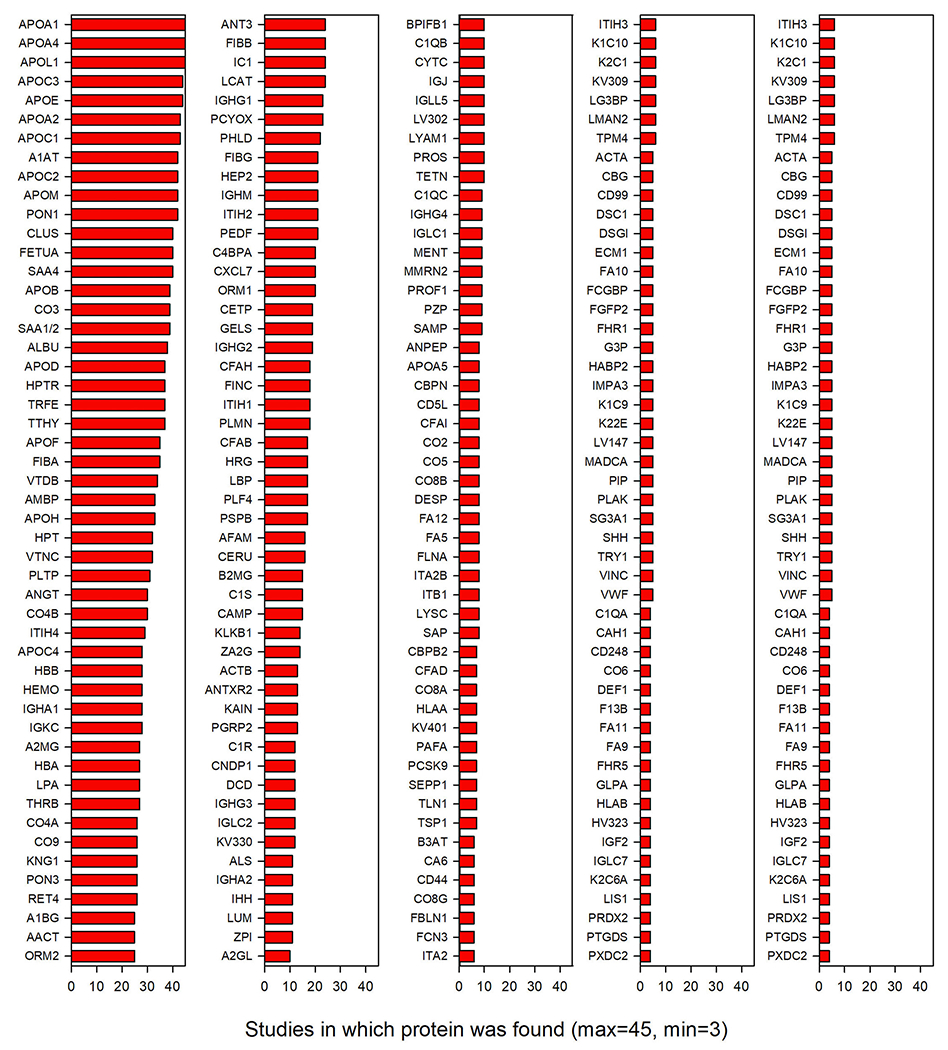
Frequency of observation of 251 “likely” HDL-associated proteins. The abbreviated protein name is shown on the left with the bar indicating the number of studies that identified it in HDL. 3 proteins were identified in all 45 of the publications that met our criterial for inclusion. Proteins with less than three identifications from three different labs are likely contaminants.
Fig. 3.
Fig. 3.
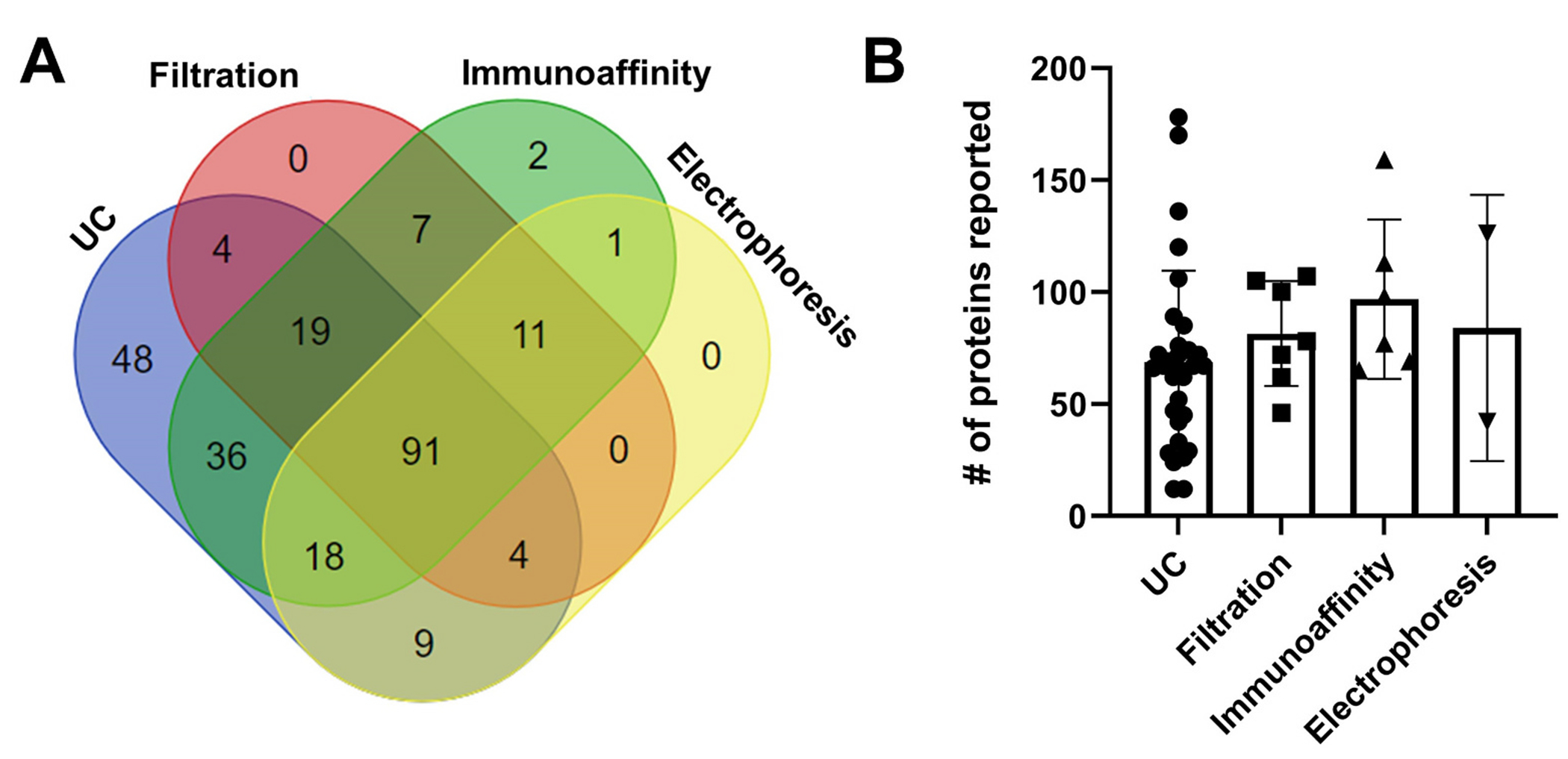
Detection of HDL-associated proteins by different isolation methods. (A) The 251 “likely” HDL-associated proteins from 45 studies were analyzed to determine if HDL isolation method has an impact on which proteins are detected. This Venn diagram displays the counts of proteins detected by each method and the overlap in detection across methods. Only 91 proteins were detected by all isolation methods and 48 were detected only in studies where HDL was isolated by ultracentrifugation (UC). The protein identities within each cluster are listed in Supplementary Table 1. (B) Examination of the total number of identified proteins reported by each of the 45 studies, grouped by HDL isolation method, reveals that roughly the same number of proteins is detected on average regardless of isolation method. Statistical comparisons were not attempted due to large differences in sample size across groups.
Fig. 4.
Fig. 4.
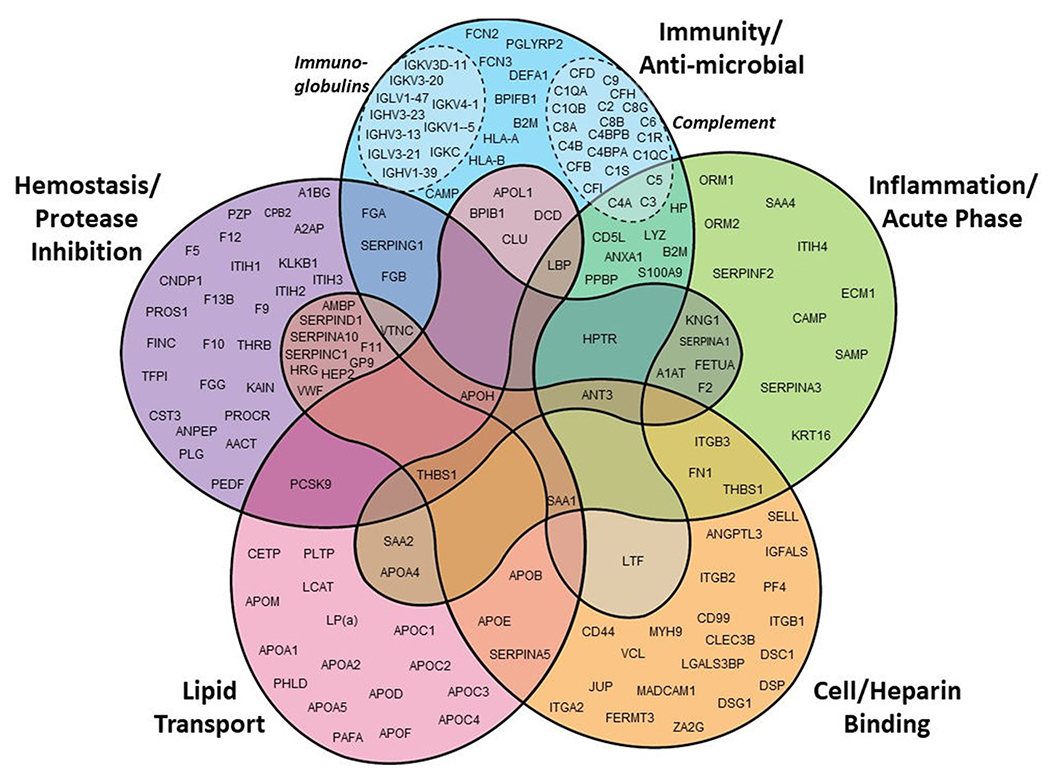
Gene Ontology (GO) keyword functional analysis of “likely” HDL proteins. Each protein was assigned to a rough functional classification based on keyword associations using the DAVID Bioinformatics Resource (DAVID.ncifcrf.gov). This is not a complete listing of all likely proteins as some were associated with functions that fell outside these major groupings.
Fig. 5.
Fig. 5.
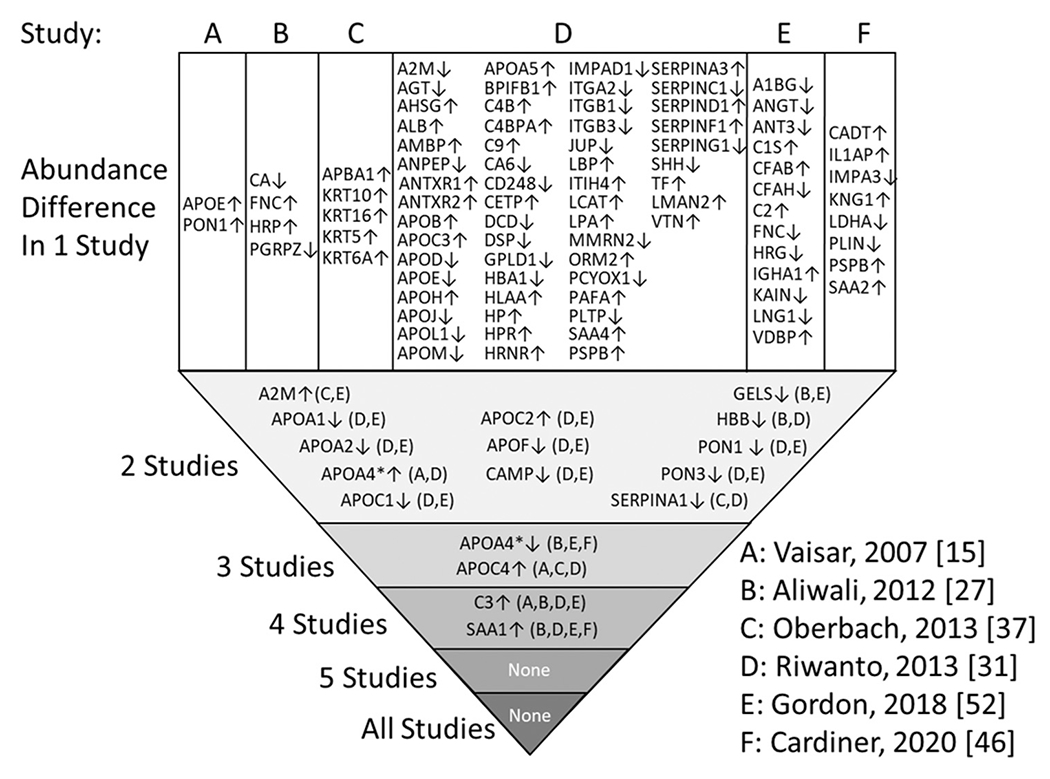
Protein abundance differences between normal and CVD patients across 6 studies. For each of the six studies, A-F, proteins found to have changed abundance by MS quantitation are shown. The arrow indicates the direction protein abundance differed between controls and CVD subjects. Protein differences identified once are at the top, listed for each study. Protein changes that reproduced between studies are shown progressing downward. APOA4 is starred because it reproducibly went down in CVD in some studies, but up in others. Reported proteins that were not considered “likely” HDL proteins as defined here are not listed. Note: No consideration was given for differences in methodology or criteria for indicating a difference in protein abundance between the studies. In some cases, controls were compared to stable CAD and acute coronary syndrome (ACS). In such case, we used the ACS data.

References

    1. Kannel WB, Castelli WP, McNamara PM, Serum lipid fractions and risk of coronary heart disease. The Framingham study, Minn. Med 52 (8) (1969) 1225–1230. - PubMed
    1. Adorni MP, Ronda N, Bernini F, Zimetti F, High density lipoprotein cholesterol efflux capacity and atherosclerosis in cardiovascular disease: pathophysiological aspects and pharmacological perspectives, Cells 10 (3) (2021), 10.3390/cells10030574. - DOI - PMC - PubMed
    1. Brites F, Martin M, Guillas I, Kontush A, Antioxidative activity of high-density lipoprotein (HDL): mechanistic insights into potential clinical benefit, BBA Clin. 8 (2017) 66–77, 10.1016/j.bbacli.2017.07.002. - DOI - PMC - PubMed
    1. Lemmers RFH, van Hoek M, Lieverse AG, Verhoeven AJM, Sijbrands EJG, Mulder MT, The anti-inflammatory function of high-density lipoprotein in type II diabetes: a systematic review, J. Clin. Lipidol 11 (3) (2017) 712–724, 10.1016/j.jacl.2017.03.013, e5. - DOI - PubMed
    1. Barter P, Genest J, HDL cholesterol and ASCVD risk stratification: a debate, Atherosclerosis 283 (2019) 7–12, 10.1016/j.atherosclerosis.2019.01.001. - DOI - PubMed