


Morphological predictors for microsatellite instability in urothelial carcinoma
- PMID: 34801034
- PMCID: PMC8606048
- DOI: 10.1186/s13000-021-01168-2
Morphological predictors for microsatellite instability in urothelial carcinoma
Abstract
Introduction: Microsatellite instability occurs due to a series of mutations in the DNA pairing error repair (Mismatch repair; MMR) genes, which can affect germ cells as occurs in Lynch syndrome, whose patients are at high risk of developing multiple cancers. The loss of MMR protein is commonly determined by immunohistochemical studies. Although the relation between microsatellite instability and urothelial carcinomas has been widely studied, its evaluation is not currently performed in the analysis of urothelial carcinomas.
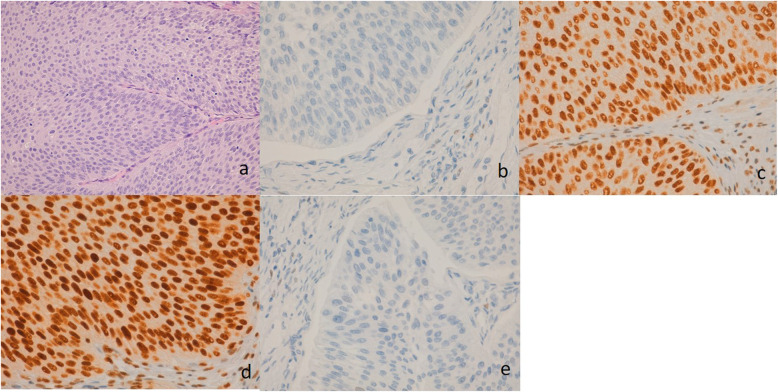
Methods: In this study, the microsatellite status of 139 urothelial carcinomas was analyzed and their clinicopathological characteristics were evaluated. We identified that 10.3% (13 patients) of urothelial carcinomas had loss of MMR protein expression (9 MLH1; 5 MSH2; 2 PMS2; 2 PSH6; n = 139).
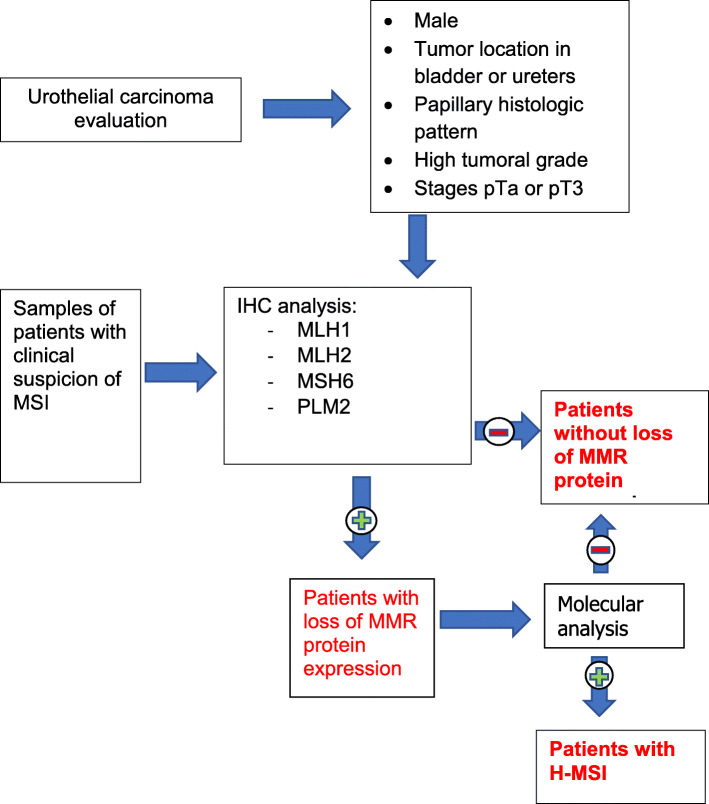
Results: Results suggest that these tumors occur more frequently in males, are more frequently located in the bladder or ureters, and present a high tumor grade with a papillary histological pattern that does not infiltrate the lamina propria or, in the case of infiltrating tumors, that grows into perivesical tissues.
Conclusions: We identified patients with the aforementioned tumor characteristics as patients with a high probability of presenting loss of MMR protein expression, and consider that only these patients should undergo further immunohistochemical and molecular techniques for proper diagnosis. Therefore, we propose that the clinicopathological characteristics found in the present study could become possible markers to determine which cases should undergo additional tests.
Keywords: Cancer; Immunohistochemistry; Mismatch repair; Screening protocol; Tissue microarray.
© 2021. The Author(s).
Conflict of interest statement
The authors declare that they have no conflict of interest.
Figures
References
-
- Siegel R, DeSantis C, Virgo K, Stein K, Mariotto A, Smith T, et al. Cancer treatment and survivorship statistics. CA Cancer J Clin. 2012;62(4):–241. 10.3322/caac.21149. - PubMed
MeSH terms
Substances
LinkOut - more resources
Full Text Sources
