


Natural sweetener Stevia rebaudiana: Functionalities, health benefits and potential risks
- PMID: 34803554
- PMCID: PMC8600158
- DOI: 10.17179/excli2021-4211
Natural sweetener Stevia rebaudiana: Functionalities, health benefits and potential risks
Abstract
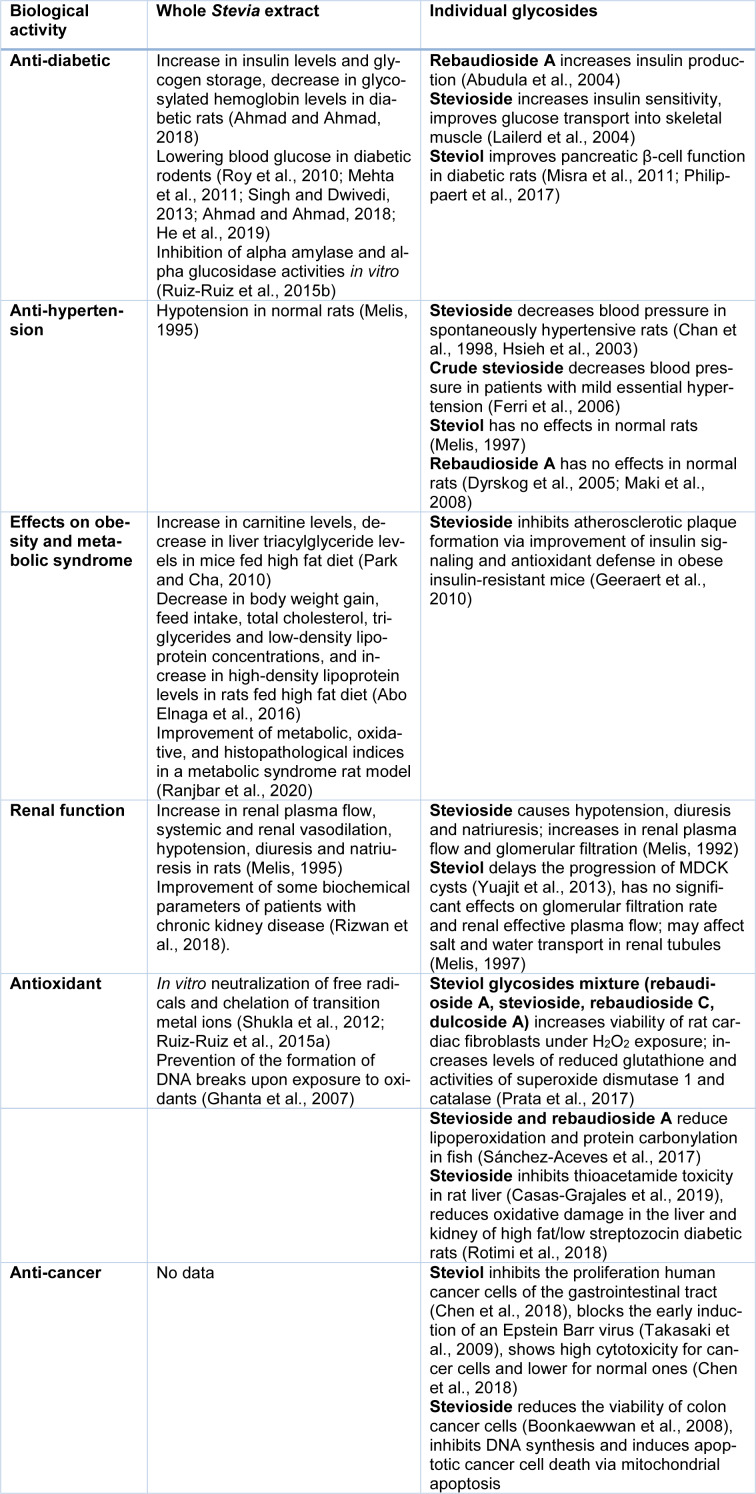
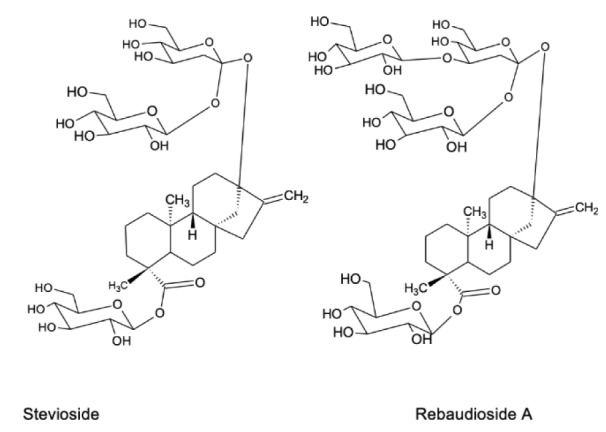
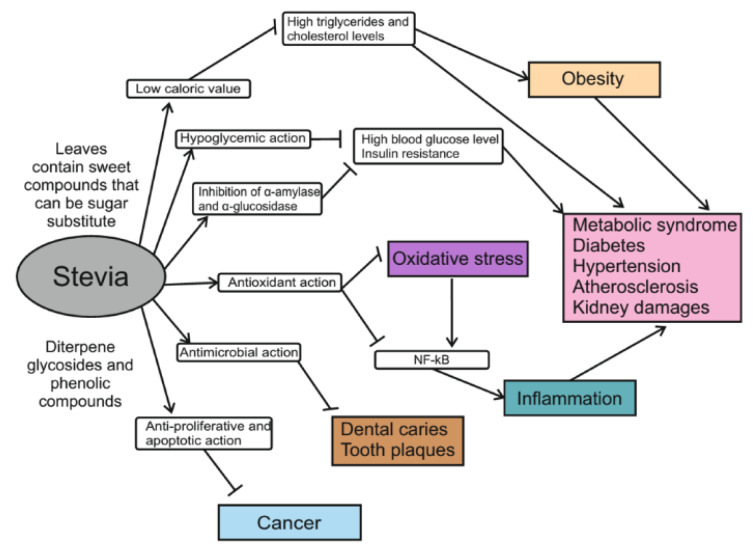
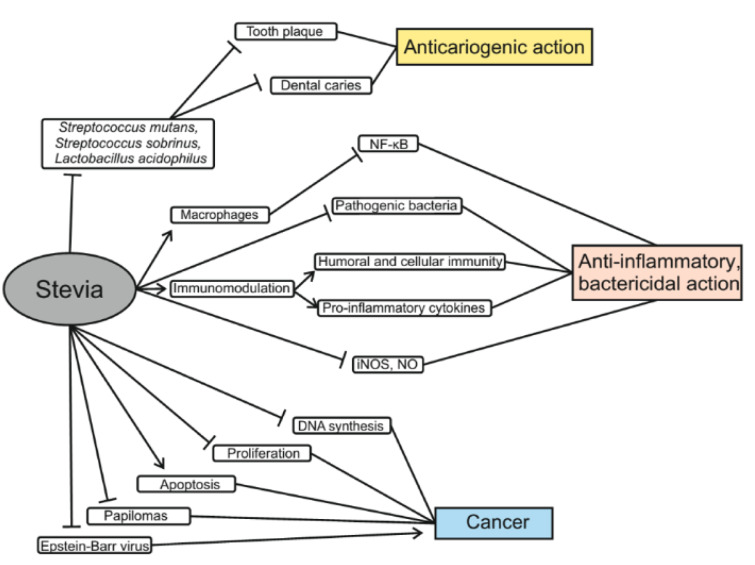
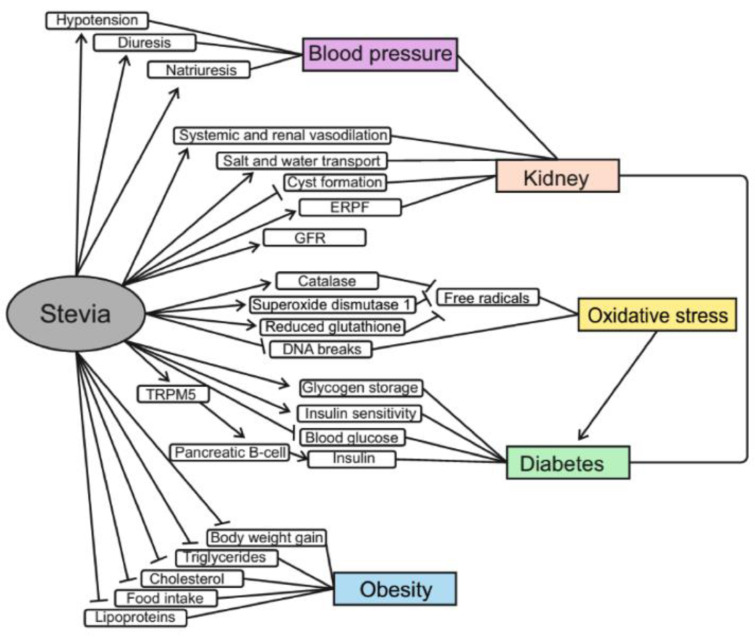
Stevia rebaudiana is a South American plant, the cultivation of which is increasing worldwide due to its high content of sweet compounds. Stevia sweetness is mainly due to steviol glycosides, that are ~250-300 times sweeter than sucrose. Many studies have suggested the benefits of Stevia extract over sugar and artificial sweeteners, but it is still not a very popular sugar substitute. This review summarizes current data on the biological activities of S. rebaudiana extract and its individual glycosides, including anti-hypertensive, anti-obesity, anti-diabetic, antioxidant, anti-cancer, anti-inflammatory, and antimicrobial effects and improvement of kidney function. Possible side effects and toxicity of Stevia extract are also discussed.
Keywords: Stevia rebaudiana; health benefits; rebaudioside A; stevioside; sweetener.
Copyright © 2021 Peteliuk et al.
Figures

References
-
- Abo Elnaga NIE, Massoud MI, Yousef MI, Mohamed HHA. Effect of Stevia sweetener consumption as non-caloric sweetening on body weight gain and biochemical’s parameters in overweight female rats. Ann Agric Sci. 2016;61(1):155–63.
-
- Abou-Arab AE, Abou-Arab AA, Abou-Salem FM. Physico-chemical assessment of natural sweeteners steviosides produced from Stevia rebaudiana Bertoni plant. Afric J Food Sci. 2010;4:269–80.
-
- Abudula R, Jeppesen PB, Rolfsen SED, Xiao J, Hermansen K. Rebaudioside A potently stimulates insulin secretion from isolated mouse islets: Studies on the dose-, glucose-, and calcium-dependency. Metabolism. 2004;53:1378–81. - PubMed
-
- Aguero SD, Onate G, Rivera HP. Consumption of non-nutritive sweeteners and nutritional status in 10-16-year-old students. Arch Argent Pediatr. 2014;112:207–14. - PubMed
Publication types
LinkOut - more resources
Full Text Sources
Other Literature Sources