


Physical Exercise Promotes a Reduction in Cardiac Fibrosis in the Chronic Indeterminate Form of Experimental Chagas Disease
- PMID: 34804007
- PMCID: PMC8599157
- DOI: 10.3389/fimmu.2021.712034
Physical Exercise Promotes a Reduction in Cardiac Fibrosis in the Chronic Indeterminate Form of Experimental Chagas Disease
Abstract
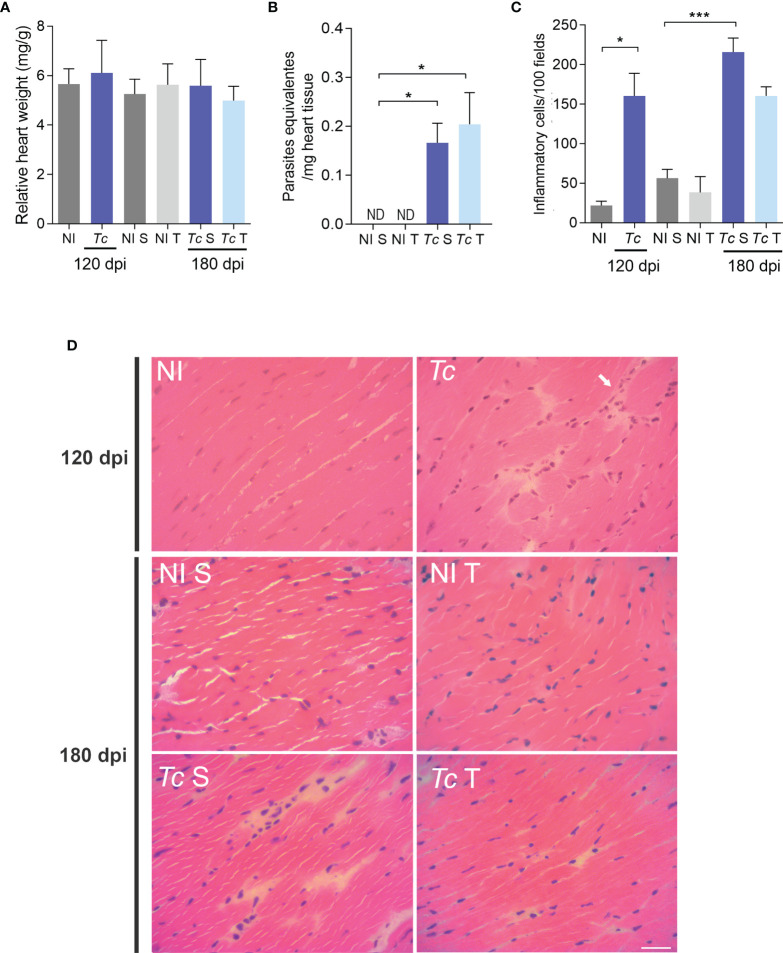
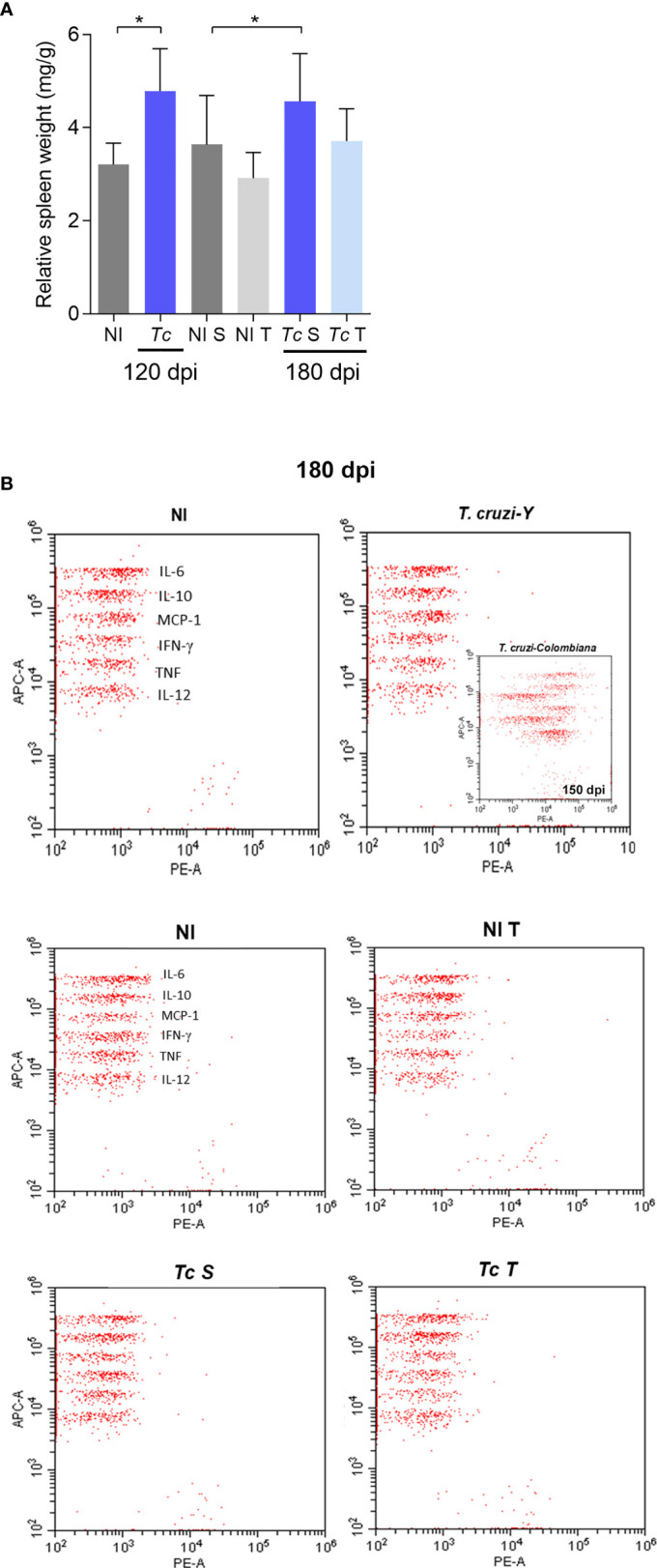
Chagas disease (CD), caused by the protozoan Trypanosoma cruzi, is a neglected tropical disease and a health problem in Latin America. Etiological treatment has limited effectiveness in chronic CD; thus, new therapeutic strategies are required. The practice of physical exercises has been widely advocated to improve the quality of life of CD patients. The most frequent clinical CD manifestation is the chronic indeterminate form (CIF), and the effect of physical exercises on disease progression remains unknown. Here, in a CIF model, we aimed to evaluate the effect of physical exercises on cardiac histological, parasitological, mitochondrial, and oxidative metabolism, electro and echocardiographic profiles, and immunological features. To establish a CIF model, BALB/c and C57BL/6 mice were infected with 100 and 500 trypomastigotes of the Y T. cruzi strain. At 120 days postinfection (dpi), all mouse groups showed normal PR and corrected QT intervals and QRS complexes. Compared to BALB/c mice, C57BL/6 mice showed a lower parasitemia peak, mortality rate, and less intense myocarditis. Thus, C57BL/6 mice infected with 500 parasites were used for subsequent analyses. At 120 dpi, a decrease in cardiac mitochondrial oxygen consumption and an increase in reactive oxygen species (ROS) were detected. When we increased the number of analyzed mice, a reduced heart rate and slightly prolonged corrected QT intervals were detected, at 120 and 150 dpi, which were then normalized at 180 dpi, thus characterizing the CIF. Y-infected mice were subjected to an exercise program on a treadmill for 4 weeks (from 150 to 180 dpi), five times per week in a 30-60-min daily training session. At 180 dpi, no alterations were detected in cardiac mitochondrial and oxidative metabolism, which were not affected by physical exercises, although ROS production increased. At 120 and 180 dpi, comparing infected and non-infected mice, no differences were observed in the levels of plasma cytokines, indicating that a crucial biomarker of the systemic inflammatory profile was absent and not affected by exercise. Compared with sedentary mice, trained Y-infected mice showed similar parasite loads and inflammatory cells but reduced cardiac fibrosis. Therefore, our data show that physical exercises promote beneficial changes that may prevent CD progression.
Keywords: Chagas disease; ROS; chronic indeterminate form; cytokines; experimental model; mitochondrial metabolism; oxidative metabolism; physical exercise.
Copyright © 2021 Pedra-Rezende, Barbosa, Bombaça, Dantas-Pereira, Gibaldi, Vilar-Pereira, dos Santos, Ramos, Silva-Gomes, Moreira, Lannes-Vieira and Menna-Barreto.
Conflict of interest statement
The authors declare that the research was conducted in the absence of any commercial or financial relationships that could be construed as a potential conflict of interest. The reviewer LC declared a shared affiliation with several of the authors, HS and IR, to the handling editor at the time of review.
Figures




References
-
- Chagas C. Nova Tripanozomiaze Humana: Estudos Sobre a Morfolojia E O Ciclo Evolutivo do Schizotrypanum Cruzi N. Gen., N. Sp., Ajente Etiolojico De Nova Entidade Morbida do Homem. Mem Inst Oswaldo Cruz (1909) 1:159–218. doi: 10.1590/S0074-02761909000200008 - DOI
-
- World Health Organization . Chagas Disease (Also Known as American Trypanosomiasis) (2021). World Health Organization. Available at: https://www.who.int/news-room/fact-sheets/detail/chagas-disease-(america... (Accessed Acessed January, 2021).
-
- Novaes RD, Sartini MVP, Rodrigues JPF, Gonçalves RV, Santos EC, Souza RLM, et al. Curcumin Enhances the Anti-Trypanosoma Cruzi Activity of Benznidazole-Based Chemotherapy in Acute Experimental Chagas Disease. Antimicrob Agents Chemother (2016) 60(6):3355–64. doi: 10.1128/AAC.00343-16 - DOI - PMC - PubMed
Publication types
MeSH terms
Substances
LinkOut - more resources
Full Text Sources
Medical
Research Materials
