


Theaflavin Chemistry and Its Health Benefits
- PMID: 34804369
- PMCID: PMC8601833
- DOI: 10.1155/2021/6256618
Theaflavin Chemistry and Its Health Benefits
Retraction in
-
Retracted: Theaflavin Chemistry and Its Health Benefits.Oxid Med Cell Longev. 2024 Jan 9;2024:9893267. doi: 10.1155/2024/9893267. eCollection 2024. Oxid Med Cell Longev. 2024. PMID: 38234551 Free PMC article.
Abstract
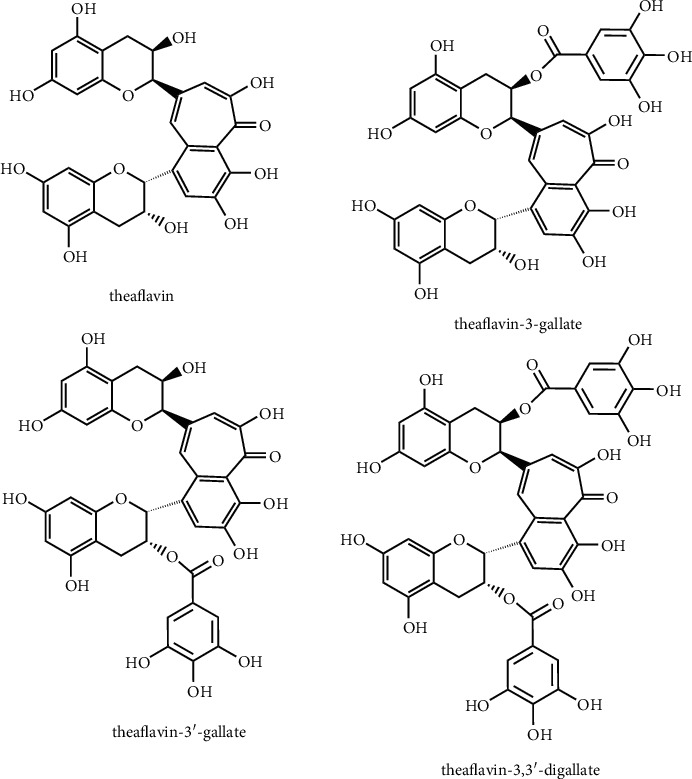
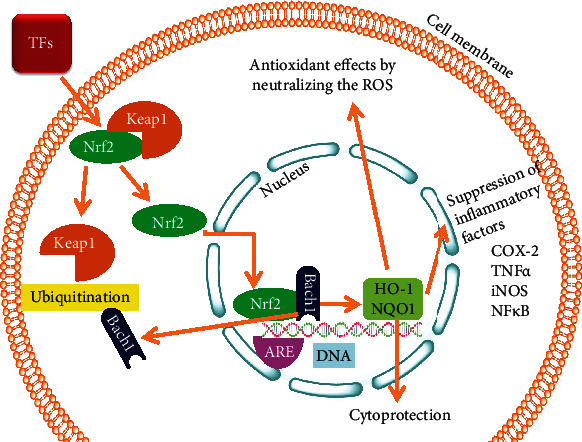
Huge epidemiological and clinical studies have confirmed that black tea is a rich source of health-promoting ingredients, such as catechins and theaflavins (TFs). Furthermore, TF derivatives mainly include theaflavin (TF1), theaflavin-3-gallate (TF2A), theaflavin-3'-gallate (TF2B), and theaflavin-3,3'-digallate (TF3). All of these TFs exhibit extensive usages in pharmaceutics, foods, and traditional medication systems. Various indepth studies reported that how TFs modulates health effects in cellular and molecular mechanisms. The available literature regarding the pharmacological activities of TFs has revealed that TF3 has remarkable anti-inflammatory, antioxidant, anticancer, antiobesity, antiosteoporotic, and antimicrobial properties, thus posing significant effects on human health. The current manuscript summarizes both the chemistry and various pharmacological effects of TFs on human health, lifestyle or aging associated diseases, and populations of gut microbiota. Furthermore, the biological potential of TFs has also been focused to provide a deeper understanding of its mechanism of action.
Copyright © 2021 Zhiguo Shan et al.
Conflict of interest statement
The authors declare no conflict of interest.
Figures
References
-
- Anderson R. Tea industry’s future depends on corporate collaboration. BBC News Business . 2014;50(5):28–37.
-
- Webster N. Webster's Third New International Dictionary of the English Language, Unabridged, vol. 1 . Merriam-Webster; 1981.
-
- Workman D. Tea Exports by Country . World’s Top Exports; 2019.
-
- Bolton D. Global Tea Production 2015 . World Tea News; 2016.
Publication types
MeSH terms
Substances
LinkOut - more resources
Full Text Sources
Medical
Miscellaneous
