


Wound Leakage With the Use of Calcium Sulphate Beads in Prosthetic Joint Surgeries: A Systematic Review
- PMID: 34804756
- PMCID: PMC8599438
- DOI: 10.7759/cureus.19650
Wound Leakage With the Use of Calcium Sulphate Beads in Prosthetic Joint Surgeries: A Systematic Review
Abstract
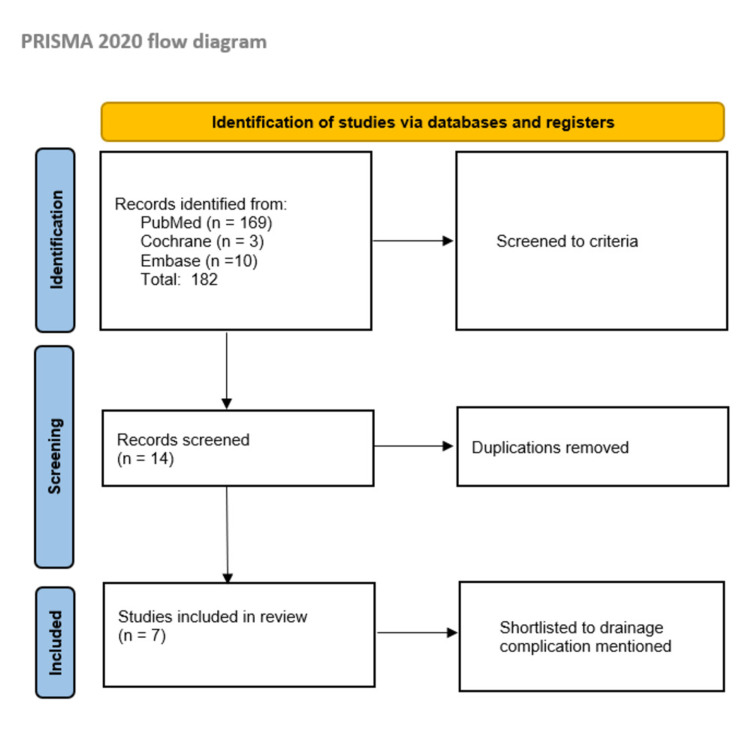
Since its first use as a bone void filler at the end of the 19th century, calcium sulphate products have been adapted in different ways to aid orthopaedic surgeons. Calcium sulphate local antibiotic delivery systems offer a promising solution in the delivery of high antibiotic concentrations locally for an extended period of time. Over the years, multiple centres have reported side effects such as wound drainage, heterotrophic ossification and hypercalcaemia. This study was carried out to assess the risk of wound drainage in prosthetic joints after implantation of antibiotic-impregnated calcium sulphate beads. Two reviewers searched the literature in three online databases using the Cochrane methodology for systematic reviews. The search of databases yielded 182 articles. The studies without reported post-operative complications, mainly drainage outcomes, were excluded. After screening, seven articles were deemed suitable and selected. Out of the 1,112 cases identified, 43 joints developed wound drainage after calcium sulphate bead placement. This complication was resolved in all these cases by either conservative or operative approaches. The factors implicated in the development of wound drainage include the volume of the product used, procedural placement and host factors. The result of this systematic review shows that calcium sulphate products can be used for treatment and prophylaxis in prosthetic joints with a risk of post-procedural wound drainage. This risk, however, is lesser with the use of synthetic calcium sulphate products as compared with conventional calcium sulphate products.
Keywords: calcium sulphate beads; pji; total hip replacement (thr); total knee replacement (tkr); wound leakage.
Copyright © 2021, Tarar et al.
Conflict of interest statement
The authors have declared that no competing interests exist.
Figures
References
-
- Joint replacement statistics. https://www.njrcentre.org.uk/njrcentre/Patients/Joint-replacement-statis... 2020
-
- Williams SN, Wolford ML, Bercovitz A. Hyattsville, MD: NCHS Data Brief: National Center for Health Statistics; 2015. Hospitalization for total knee replacement among inpatients aged 45 and over: United States, 2000-2010. - PubMed
-
- Hospitalization for total hip replacement among inpatients aged 45 and over: United States, 2000-2010. Wolford ML, Palso K, Bercovitz A. https://pubmed.ncbi.nlm.nih.gov/25714040/ NCHS Data Brief. 2015:1–8. - PubMed
-
- Projections of primary and revision hip and knee arthroplasty in the United States from 2005 to 2030. Kurtz S, Ong K, Lau E, Mowat F, Halpern M. J Bone Joint Surg Am. 2007;89:780–785. - PubMed
Publication types
LinkOut - more resources
Full Text Sources