


Safe Discharge Home With Telemedicine of Patients Requiring Nasal Oxygen Therapy After COVID-19
- PMID: 34805196
- PMCID: PMC8595095
- DOI: 10.3389/fmed.2021.703017
Safe Discharge Home With Telemedicine of Patients Requiring Nasal Oxygen Therapy After COVID-19
Abstract
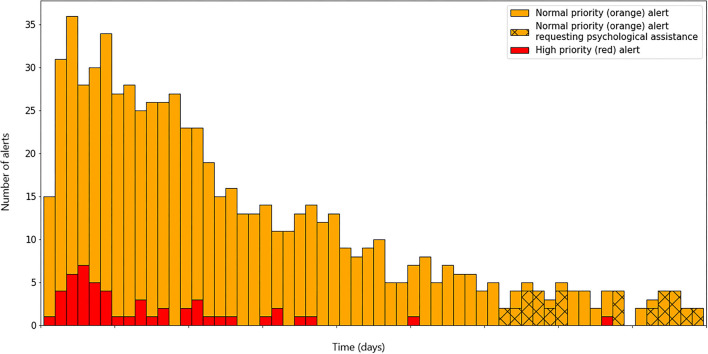
Introduction: The COVID-19 pandemic created challenges to healthcare systems worldwide. To allow overwhelmed hospitals to focus on the most fragile and severely ill patients, new types of management had to be set up. During the pandemic, patients with COVID-19 from greater Paris area were monitored at home using a web-based remote system called COVIDOM™, using self-administered questionnaires, which triggered alerts to a regional control center. To ease hospital discharge and to prevent hospital from being overwhelmed, patients still requiring low-flow oxygen therapy discharged home were also included in this telemedicine solution. We aim to evaluate the safety of this original management. Methods: We conducted a retrospective multicenter cohort of patients discharged home from hospital after COVID-19 and still requiring nasal oxygen therapy, who were monitored by questionnaire and trained physicians using COVIDOM. During late follow-up, the status of the patients using a Euro-Qol (EQ-5D-5L) questionnaire, and the Medical Research Council (MRC) Dyspnea scale was collected. Results: From March 21st to June 21st 2020, 73 COVID-19 patients still receiving nasal oxygen at hospital discharge were included. Median [Inter-Quartile Range (IQR)] age was 62.0 [52.5-69.0] years, 64.4% were male. Altogether, risk factors were observed in 49/73 (67%) patients, mainly hypertension (35.6%), diabetes mellitus (15.1%) and active neoplasia (11.0%). Among the cohort, 26% of patients were previously managed in ICU. Oxygen therapy was required for a median [IQR] of 20 [16-31] days. No death or urgent unplanned hospitalization were observed during the COVIDOM telemonitoring. During the late follow-up evaluation (6 months after inclusion), the mean EQ-5D-5L questionnaire score was 7.0 ± 1.6, and the mean MRC dyspnea scale was 0.8 ± 1.0, indicating absence of dyspnea. Five patients have died from non-COVID causes. Conclusions: In this preliminary study, early discharge home of patients with severe COVID-19 disease who still required low-oxygen therapy seems to be safe.
Keywords: COVID-19; home monitoring; oxygen therapy; pneumonia; telesurveillance.
Copyright © 2021 Dinh, Mercier, Jaulmes, Artigou, Juillière, Yordanov, Jourdain and The AP-HP/Universities/INSERM COVID-19 Research Collaboration.
Conflict of interest statement
The authors declare that the research was conducted in the absence of any commercial or financial relationships that could be construed as a potential conflict of interest.
Figures
References
LinkOut - more resources
Full Text Sources
