


Hypertension and its management in COVID-19 patients: The assorted view
- PMID: 34806090
- PMCID: PMC8590508
- DOI: 10.1016/j.ijcrp.2021.200121
Hypertension and its management in COVID-19 patients: The assorted view
Abstract
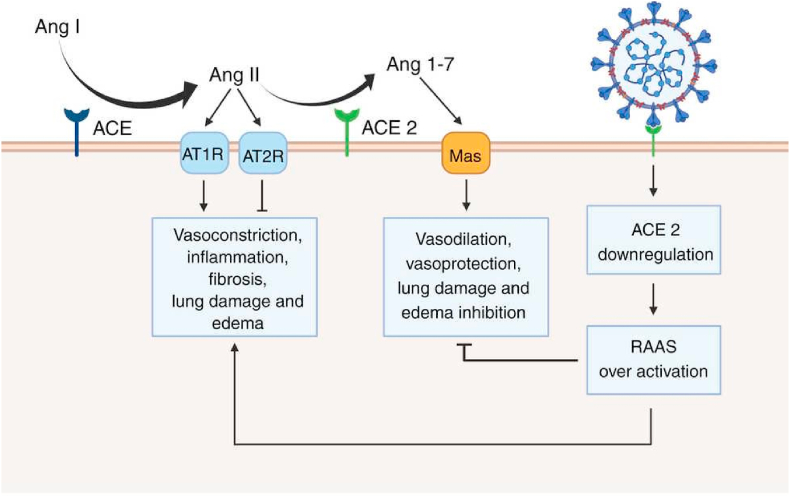
Background: Coronavirus disease 2019 (COVID-19) is suspected to mainly be more deleterious in patients with underlying cardiovascular diseases (CVD). There is a strong association between hypertension and COVID-19 severity. The binding of SARS-CoV-2 to the angiotensin-converting enzyme 2 (ACE2) leads to deregulation of the renin-angiotensin-aldosterone system (RAAS) through down-regulation of ACE2 with subsequent increment of the harmful Ang II serum levels and reduction of the protective Ang-(1-7). Both angiotensin receptor blockers (ARBs) and angiotensin-converting enzyme inhibitors (ACEIs) are commonly used to manage hypertension.
Objective: Objective was to illustrate the potential link between hypertension and COVID-19 regarding the role of angiotensin receptor blockers (ARBs) and angiotensin-converting enzyme inhibitors (ACEIs) in hypertensive patients with COVID-19.
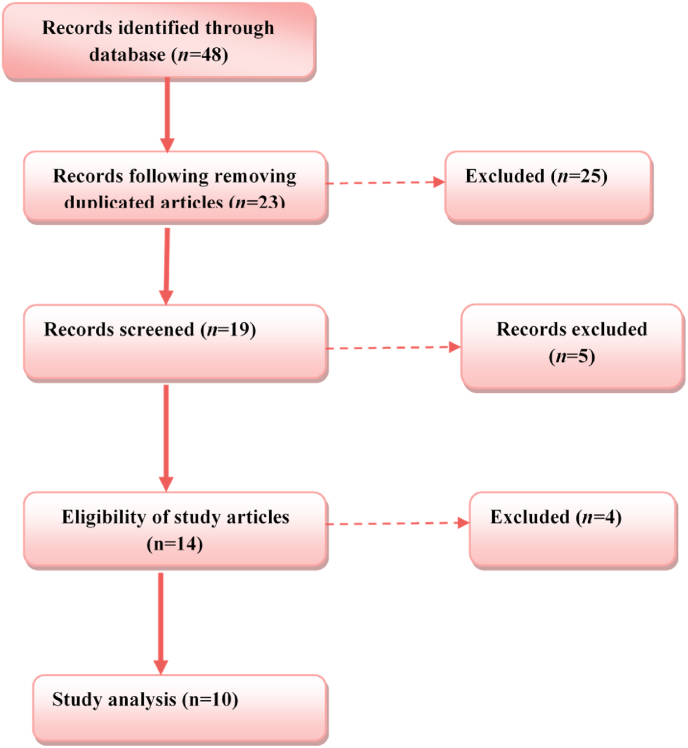
Methods: We carried out comprehensive databases search from late December 2019 to early January 2021 by using online engines of Web of Science, Research gate, Scopus, Google Scholar, and PubMed for published and preprinted articles.
Results: The present study's findings showed that hypertension is regarded as an independent risk factor for COVID-19 severity. Both ACEIs and ARBs are beneficial in managing hypertensive patients.
Conclusion: This study concluded that hypertension increases COVID-19 severity due to underlying endothelial dysfunctions and coagulopathy. COVID-19 might augment the hypertensive complications due to down-regulation of ACE2. The use of ACEIs or ARBs might be beneficial in the management of hypertensive patients with COVID-19.
Keywords: ACE2; Coronavirus disease 2019; Hypertension; SARS-CoV-2.
© 2021 The Authors.
Conflict of interest statement
The authors declare no conflict of interests.
Figures
References
-
- Al-Kuraishy H.M., Hussien N.R., Al-Naimi M.S., Al-Buhadily A.K., Al-Gareeb A.I., Lungnier C. Is ivermectin–Azithromycin combination the next step for COVID-19? Biomed. Biotechnol. Res. J. 2020;4:101–103.
-
- Conversano A., Melillo F., Napolano A., Fominskiy E., Spessot M., Ciceri F., et al. Renin-angiotensin-aldosterone system inhibitors and outcome in patients with SARS-CoV-2 pneumonia: a case series study. Hypertension. 2020;76:e10–e12. - PubMed
-
- Wu Z., McGoogan J.M. Characteristics of and important lessons from the coronavirus disease 2019 (COVID-19) outbreak in China: summary of a report of 72 314 cases from the Chinese Center for Disease Control and Prevention. J. Am. Med. Assoc. 2020;323:1239–1242. - PubMed
Publication types
LinkOut - more resources
Full Text Sources
Miscellaneous